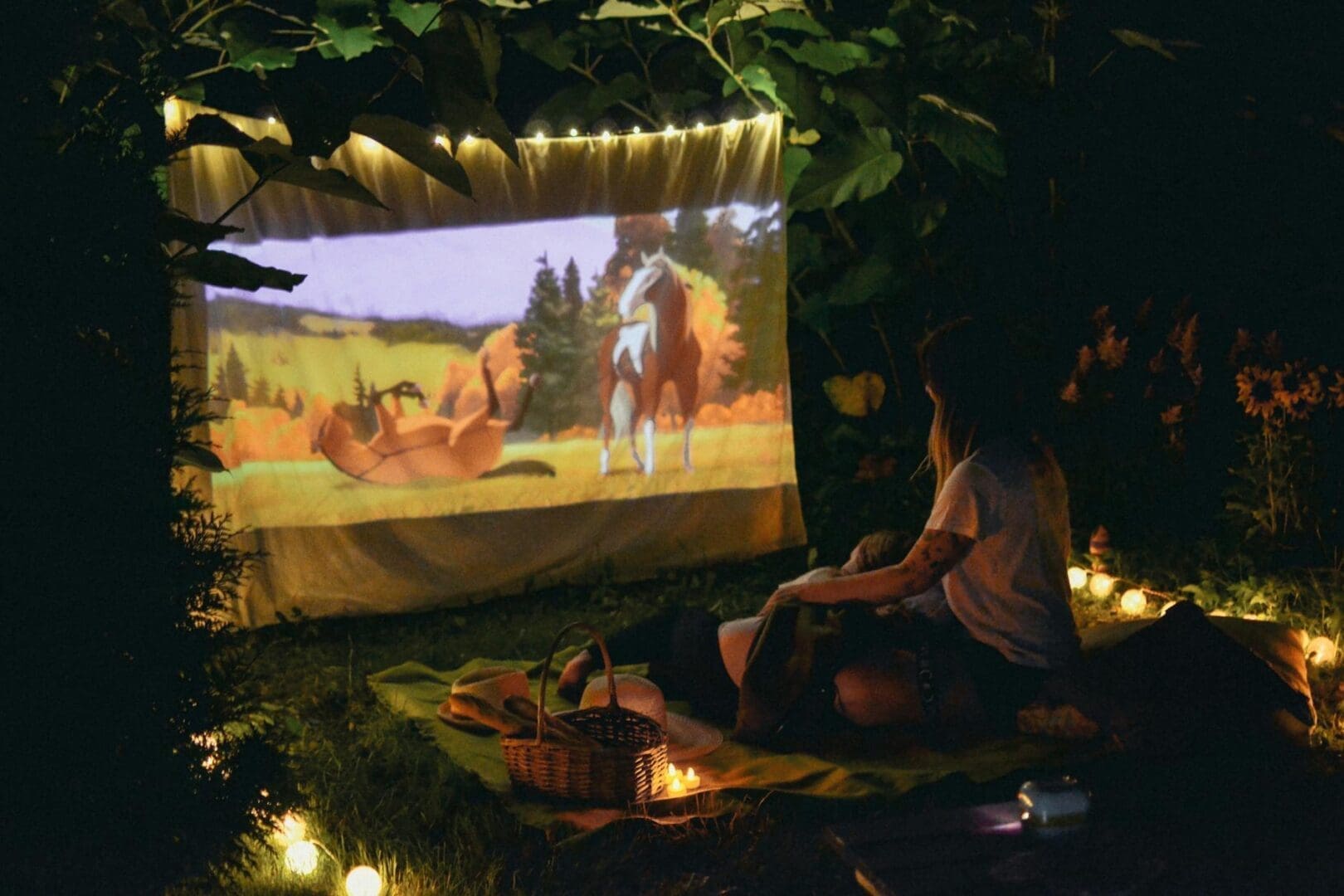
There’s something magical about watching movies under the stars, and creating your own outdoor cinema is easier than you might think. Whether you’re envisioning family movie nights on the patio or weekend screenings with friends, the key is setting up a space that’s comfortable enough that people will actually want to use it—not just once for the novelty, but all season long.
Choosing Your Seating Setup
Your seating makes or breaks the experience. Uncomfortable chairs mean people will head inside after twenty minutes, no matter how good the movie is.
For a dedicated movie area, deep-seat outdoor sectionals work beautifully. Look for pieces at least 35 inches deep with plush, weather-resistant cushions. These run $800-2,500 for a good-quality set that’ll last several seasons. If you’re working with a smaller budget, consider outdoor floor cushions or poufs ($40-120 each) that you can stack and store easily. They’re perfect for kids and create that casual, lounge-y vibe.
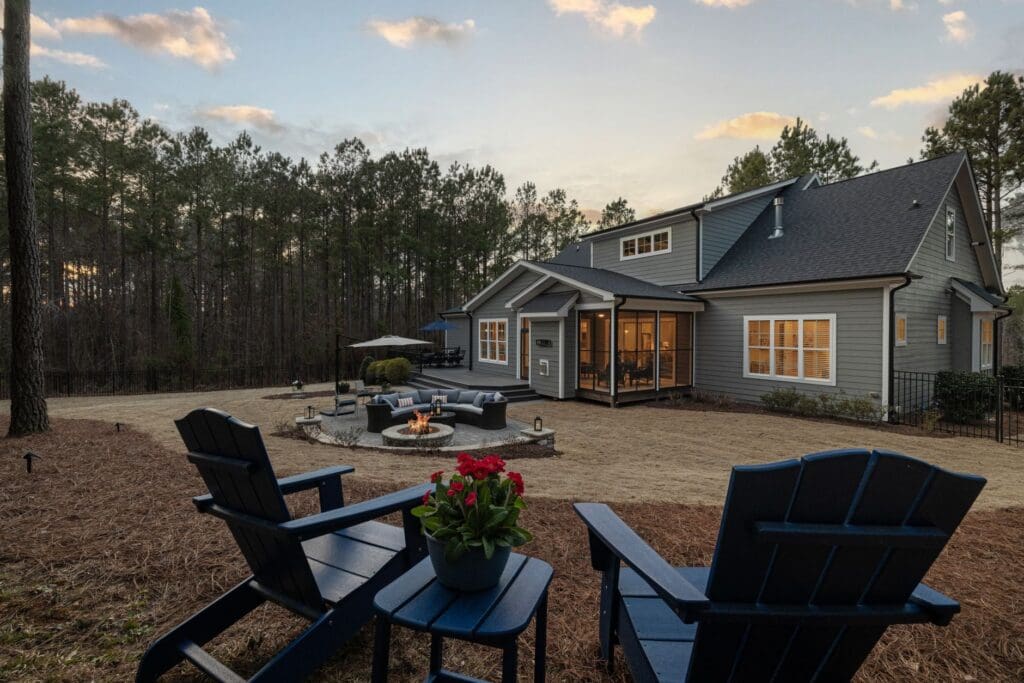
Adirondack chairs might look charming, but they’re terrible for movie watching—you can’t see the screen comfortably while reclined. Instead, consider:
Zero-gravity loungers that let you adjust your viewing angle ($80-200 each)
Outdoor daybeds with back cushions for ultimate comfort ($600-1,800)
Weather-resistant bean bags for a relaxed, casual setup ($60-150 each)
Hanging egg chairs positioned at an angle to the screen ($200-500)
Whatever you choose, arrange seating in a gentle arc facing the screen, and make sure there’s enough room between rows if you’re doing multiple levels. Nobody wants to crane their neck around someone’s head for two hours.
Screen and Projection Essentials
You don’t need a permanent structure to create a great viewing experience. A quality portable projection screen ($100-400) works perfectly and stores away when you’re not using it. Look for screens between 100-120 inches diagonal—big enough to feel immersive but not so massive that you need a professional-grade projector.
For a more budget-friendly option, a white bedsheet works in a pinch, though the picture quality won’t compare. If you’re ready to invest, motorized retractable screens ($500-1,200) mount to your house or a pergola and disappear when not in use.
The projector itself matters more than the screen. Outdoor-friendly projectors need at least 3,000 lumens for evening viewing (don’t bother trying to watch in full daylight). Expect to spend $300-600 for a decent model. Position it on a stable cart or table—wheeled media carts ($80-200) let you roll everything out when needed and store it away afterward.
Creating Comfort and Ambiance
Once the sun goes down, temperatures drop. Stock your movie area with cozy accessories so guests stay comfortable through the whole film. Outdoor storage benches ($150-400) are perfect for stashing blankets and pillows—they double as extra seating too.
Keep a basket of outdoor throw blankets within easy reach. Look for water-resistant or quick-drying options ($30-80 each) that won’t get ruined if someone forgets to bring them in. Outdoor pillows with removable, washable covers ($25-60 each) add comfort without the maintenance headache.
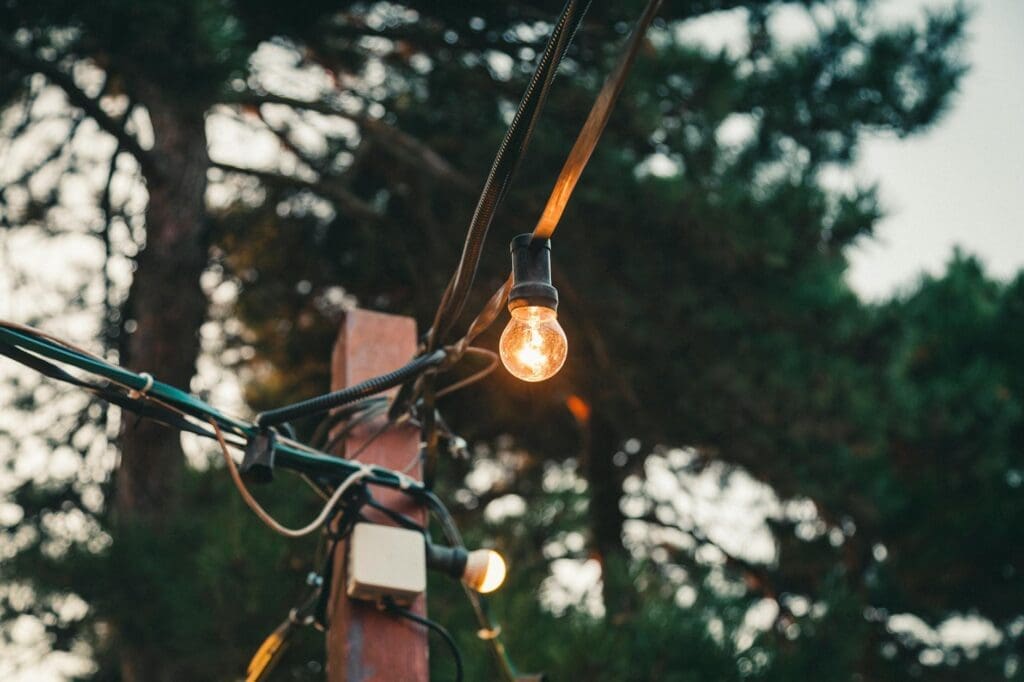
For lighting, you want enough to navigate safely but not so much that it creates screen glare. Solar pathway lights along walkways, string lights hung behind the seating area (not near the screen), or small LED lanterns on side tables all work well. A couple of weatherproof side tables ($60-180 each) give people a place to set drinks and snacks without balancing everything in their laps.
Sound and Practical Considerations
Built-in projector speakers rarely cut it outdoors. A portable Bluetooth speaker ($100-300) designed for outdoor use will give you much better sound quality. Position it centrally, slightly in front of the seating area for the best audio distribution.
Think about power sources before your first screening. Extension cords running across the yard are a tripping hazard. Outdoor-rated power strips ($25-50) and cable covers ($15-30) keep things safer, or position your setup near existing outdoor outlets. For a truly wireless setup, battery-powered projectors exist but typically sacrifice brightness.
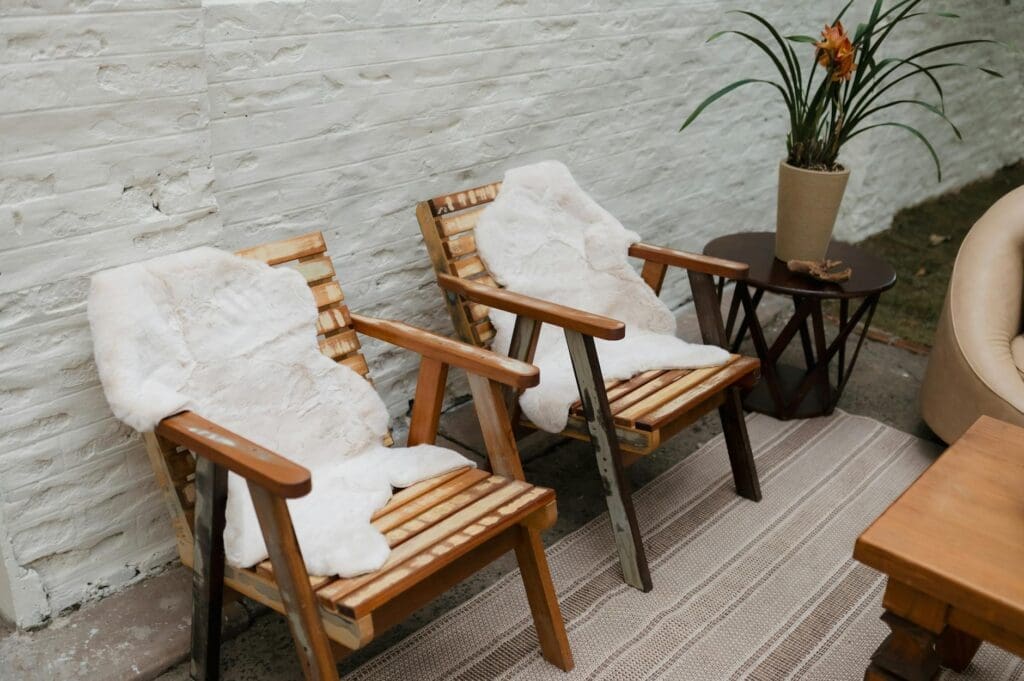
Finally, consider adding an outdoor rug ($120-400) to define the space and make it feel more room-like. It also keeps feet warm and adds another layer of comfort.
Creating an outdoor movie area doesn’t require a massive investment or permanent installation. Start with comfortable seating and a decent projector, then add comfort layers as you figure out how you actually use the space. The goal is a setup that’s easy enough to use regularly—because the best outdoor cinema is the one that actually gets used.
There’s something wonderfully ironic about the Adirondack chair’s origin story. Back in 1903, Thomas Lee was vacationing in Westport, New York, frustrated by the lack of comfortable outdoor seating that could handle the sloped terrain of his property. So he built a wide-backed, slatted chair with a reclined seat—and accidentally created an icon. Today, you’ll […]
A dark backyard feels smaller, less usable, and honestly a bit uninviting once the sun goes down. Whether you’re trying to make your outdoor space safer, extend your entertaining hours, or simply discourage unwanted visitors, the right flood lights can completely transform how you use your yard after dark. The challenge is figuring out which […]
You’ve found the perfect outdoor rug to tie your patio together, but three months later it’s faded, mildewed, or falling apart. Sound familiar? The material makes all the difference when it comes to outdoor rugs that actually last. Unlike indoor rugs that live cushy lives away from the elements, your outdoor rug needs to handle […]