Your entryway console table is the first thing guests see when they walk through your door—and likely the last thing you look at before rushing out in the morning. Yet somehow, it either becomes a dumping ground for keys and mail, or sits there awkwardly bare. The good news? Styling a console table isn’t complicated once you understand a few foundational principles. Let’s walk through how to create a look that’s both beautiful and actually useful.
Start with the Right Foundation Piece
Before we dive into styling, make sure your console table itself fits the space. For standard entryways, look for tables between 30-36 inches tall and 12-18 inches deep—anything deeper will make your entry feel cramped. Width depends on your wall space, but most entryway consoles range from 36 to 60 inches wide.
The style of your console sets the tone for everything else. A sleek glass and metal table calls for minimal, modern accessories, while a rustic wood console can handle more eclectic, layered styling. If you’re starting from scratch, narrow console tables in walnut or oak finishes (typically $200-$600) are versatile enough to work with most decor styles. Splurge-worthy options in marble or with intricate details can run $800-$1,500 but become statement pieces on their own.
Layer Your Heights and Textures
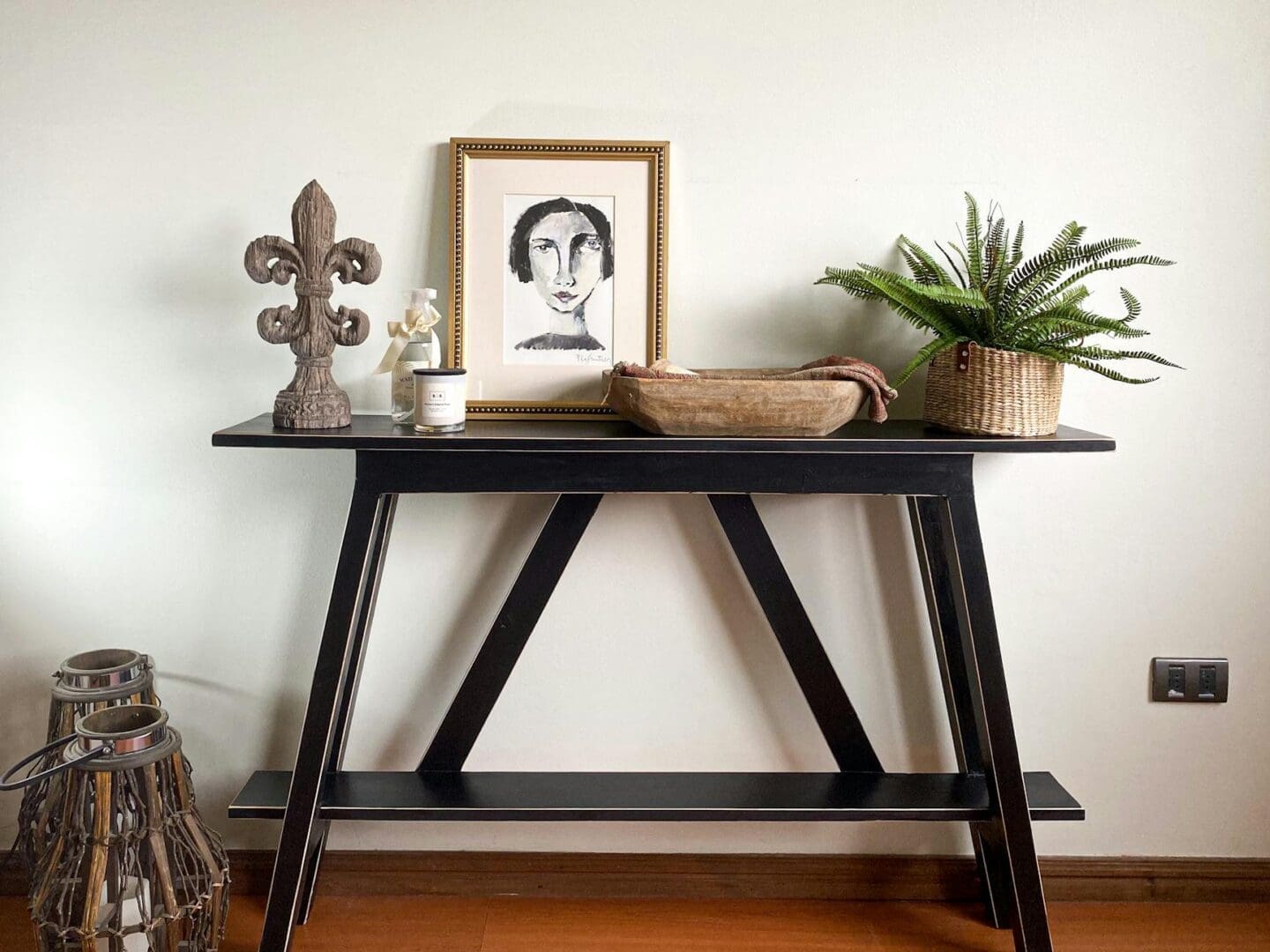
The secret to professional-looking console styling is creating visual interest through varying heights. Think of it in three tiers: something tall (a lamp or mirror), something medium (a vase or stack of books), and something low (a small bowl or decorative box).
Start with a mirror or piece of artwork above the console—this anchors the entire vignette. A mirror that’s roughly two-thirds the width of your console creates nice proportion. Then add a table lamp on one end; this serves double duty by providing ambient lighting and adding height (aim for 24-30 inches tall including the shade).
On the opposite end, try a medium-height element like a vase with fresh stems or branches, or stack 3-4 decorative coffee table books. In the remaining space, add a small catchall dish or decorative object. This asymmetrical triangle approach feels collected rather than staged. Don’t forget texture—mix smooth ceramic with rough wood, shiny metal with matte finishes.
Balance Beauty with Function
An entryway console needs to work as hard as it looks good. The trick is integrating functional items so they feel intentional, not cluttered.
Use a decorative tray (look for ones in wood, metal, or lacquer ranging from $30-$100) to corral everyday items like keys, sunglasses, and mail. When these necessities sit on a pretty tray, they become part of the styling rather than visual noise. If your console has drawers, even better—stash items like dog leashes, spare masks, and reusable shopping bags there.
Consider adding a small bowl for spare change, a candle you actually light when you’re home, or a bud vase you can refresh with grocery store flowers. These small touches make your entryway feel lived-in and welcoming rather than like a hotel lobby. If you have space underneath, tuck a basket for shoes or a small bench for pulling on boots.
Edit, Then Edit Again
Here’s where most people go wrong: they add and add until the console feels crowded. Professional stylists typically use 3-5 items total on a console table, not counting what’s hanging above it. If you’ve styled your table and it feels “off,” the answer is almost always to remove something, not add more.
Stand back and look at your console from where people will actually see it—usually from the doorway and the main living space. Does your eye move comfortably across the arrangement, or does it feel chaotic? Are there open spots where the table surface shows through? That negative space is important; it gives your eye a place to rest.
Remember that styling isn’t permanent. Swap in seasonal elements—a small pumpkin in fall, fresh greenery in spring, a wooden bowl filled with ornaments in winter. This keeps your entryway feeling fresh without requiring a complete overhaul.
The perfect entryway console balances form and function—it should make you smile when you come home while actually serving your daily routines. Start with your foundation piece, build up with varied heights and textures, incorporate the practical items you need anyway, then pare back until it feels just right. Your entryway is ready for styling that actually sticks.
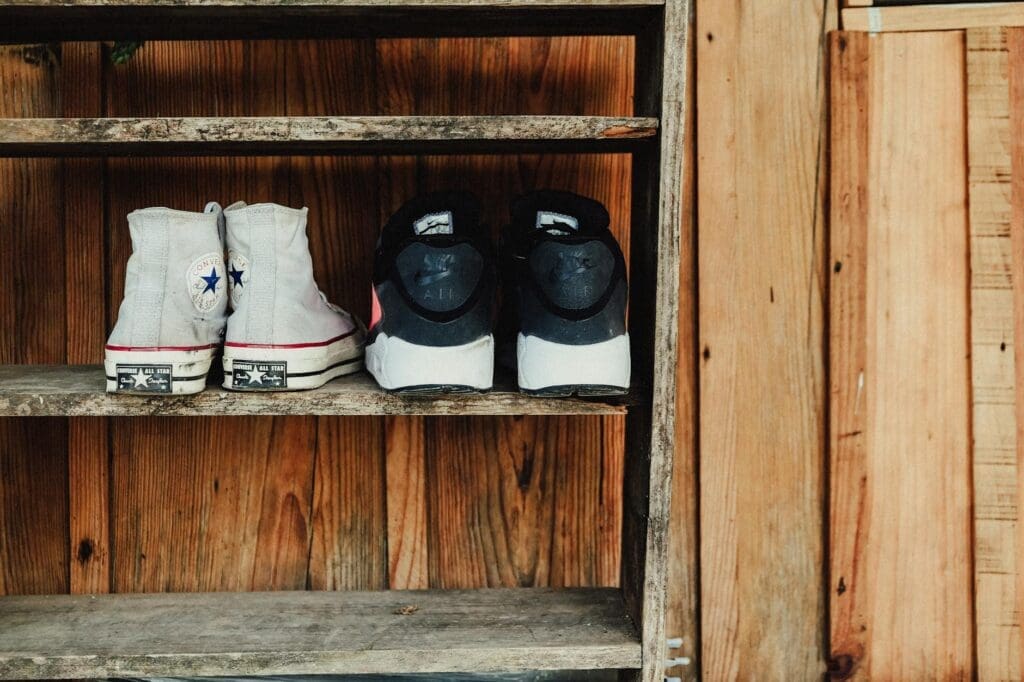
A cramped entryway with shoes scattered everywhere isn’t just frustrating—it’s usually the first thing you and your guests see when walking through the door. The good news? Even the smallest entryway can stay organized with the right shoe rack. The challenge is finding one that actually fits your space without making it feel even more […]
That pile of shoes by the door isn’t going to organize itself, and your coats deserve better than being draped over the nearest chair. A coat rack with built-in shoe storage solves both problems in one piece of furniture, making it perfect for entryways, mudrooms, or even bedroom corners where clutter tends to accumulate. The […]
A cramped entryway doesn’t mean you’re doomed to trip over piles of coats or hunt for misplaced keys every morning. The right coat rack can transform even the tiniest entry into an organized, welcoming space. The challenge is finding one that holds what you need without making your small entryway feel even smaller. Consider Your […]