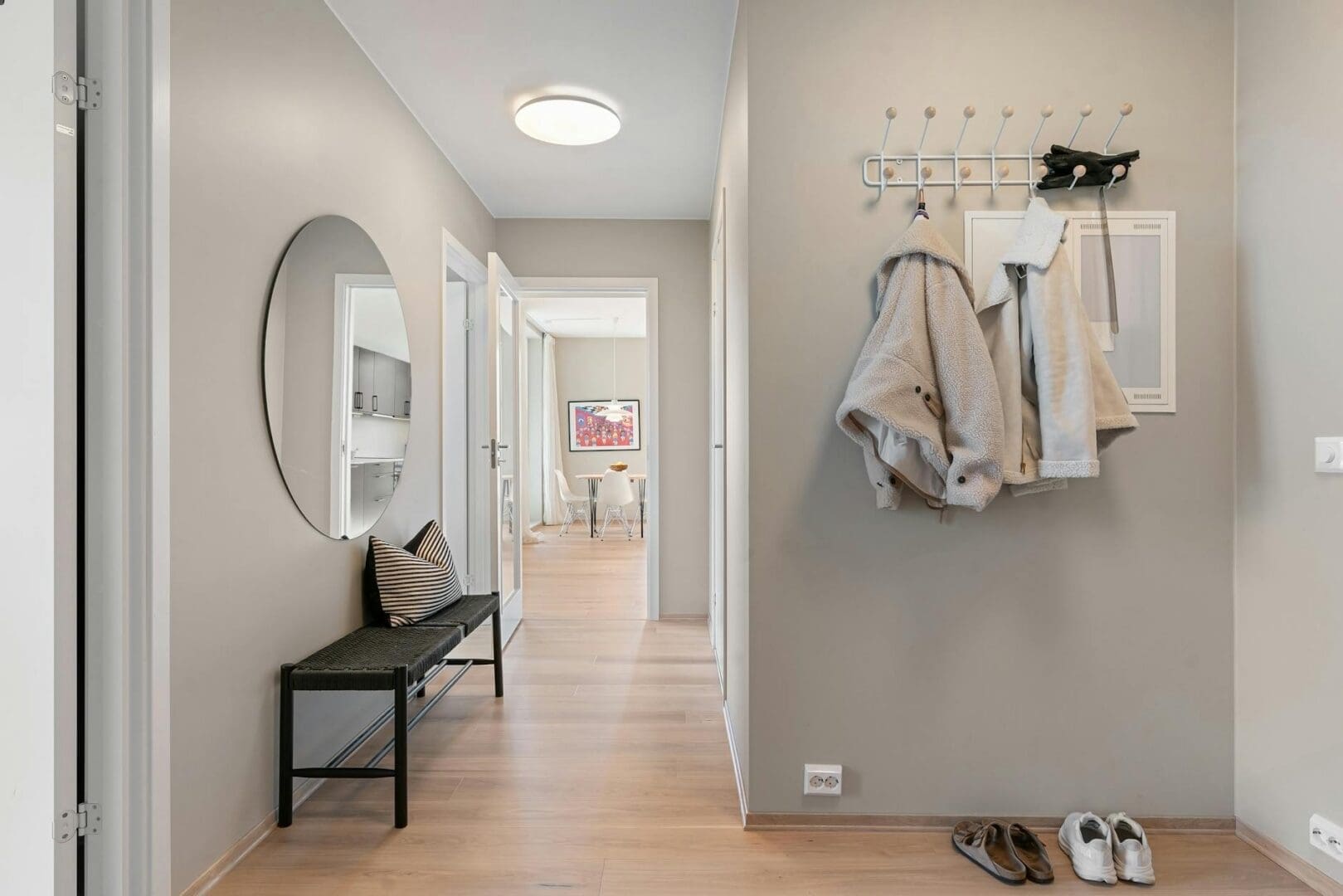
Your entryway sets the tone for your entire home, and the right mirror can completely transform that first impression. Beyond the obvious benefit of checking your hair before you head out, a well-chosen entryway mirror adds light, creates the illusion of more space, and serves as a functional focal point. But walk into any furniture store and you’ll face hundreds of options in every conceivable size, shape, and style. Here’s how to narrow down your choices and find the mirror that works for your space.
Getting the Size and Proportion Right
The most common mistake is choosing a mirror that’s too small for the space. As a general rule, your entryway mirror should be roughly two-thirds to three-quarters the width of the furniture piece below it—whether that’s a console table, credenza, or bench. If you’re hanging the mirror on a blank wall without furniture beneath it, aim for something that takes up about half to two-thirds of the available wall width.
For height, consider who’ll be using it. A functional mirror should start about 4-6 inches above your console table and hang high enough that the tallest person in your household can see their face comfortably. Full-length mirrors work beautifully in entryways and typically need at least 50-60 inches of vertical space, with the bottom positioned 2-4 inches off the floor.
Common entryway mirror sizes include:
Small accent mirrors: 24-30 inches wide (budget: $50-150)
Medium statement mirrors: 30-40 inches wide (mid-range: $150-400)
Large focal point mirrors: 40-60+ inches wide (splurge: $400-1,200+)
Full-length mirrors: 18-24 inches wide by 60-72 inches tall ($100-600)
Choosing a Shape That Complements Your Space
Mirror shape affects the entire feel of your entryway. Rectangular and square mirrors offer classic versatility and work especially well in traditional or transitional spaces. They’re the easiest to position and provide the most usable reflection area for their size.
Round and oval mirrors soften angular spaces and have become increasingly popular in modern and contemporary entryways. They’re particularly effective when you have lots of straight lines and rectangular furniture—the curved shape creates visual balance. Arched mirrors bridge traditional and contemporary styles beautifully and add architectural interest to plain walls.
Sunburst, scalloped, and geometric mirrors make bold statements and work best when they’re the primary focal point. If your entryway already has strong patterns or multiple decorative elements, stick with simpler shapes to avoid visual competition.
Frame Style and Material Considerations
The frame you choose should coordinate with both your entryway furniture and the overall style flowing through your home. Wood frames in finishes like walnut, oak, or painted options offer warmth and traditional appeal. They’re durable and work across most design styles, from farmhouse to mid-century modern.
Metal frames—whether brass, black iron, gold, or chrome—tend to feel more contemporary and are excellent for adding a touch of glamour. They’re also typically lighter than wood, which matters for hanging larger mirrors safely. Frameless mirrors or those with minimal beveled edges create a sleek, modern look and work well in smaller spaces where you want maximum reflection with minimal visual weight.
If you’re working with a tight budget, look for simple frames with clean lines rather than cheap ornate options—simplicity ages better than poorly executed detail. In the mid-range, you’ll find solid wood and quality metal frames with better finishes. Splurge-worthy mirrors often feature hand-carved details, artisan metalwork, or unique vintage and antique pieces.
Practical Features Worth Considering
Think about how you’ll actually use this mirror daily. If you have kids, a full-length option lets everyone do a final check before leaving. Mirrors with built-in hooks or shelves add functionality in compact entryways where every inch counts.
Consider the lighting in your entryway, too. Mirrors reflect whatever light is available, so positioning yours opposite a window or near light fixtures maximizes brightness. If your entryway lacks natural light, you might choose a mirror with a lighter-colored or reflective frame that bounces more light around.
The right entryway mirror balances form and function while fitting your space and budget. Measure carefully, consider your daily needs, and choose a style that makes you smile every time you walk through the door. Your entryway deserves that considered touch—it’s the space that welcomes you home every single day.
A cramped entryway with shoes scattered everywhere isn’t just frustrating—it’s usually the first thing you and your guests see when walking through the door. The good news? Even the smallest entryway can stay organized with the right shoe rack. The challenge is finding one that actually fits your space without making it feel even more […]
That pile of shoes by the door isn’t going to organize itself, and your coats deserve better than being draped over the nearest chair. A coat rack with built-in shoe storage solves both problems in one piece of furniture, making it perfect for entryways, mudrooms, or even bedroom corners where clutter tends to accumulate. The […]
A cramped entryway doesn’t mean you’re doomed to trip over piles of coats or hunt for misplaced keys every morning. The right coat rack can transform even the tiniest entry into an organized, welcoming space. The challenge is finding one that holds what you need without making your small entryway feel even smaller. Consider Your […]