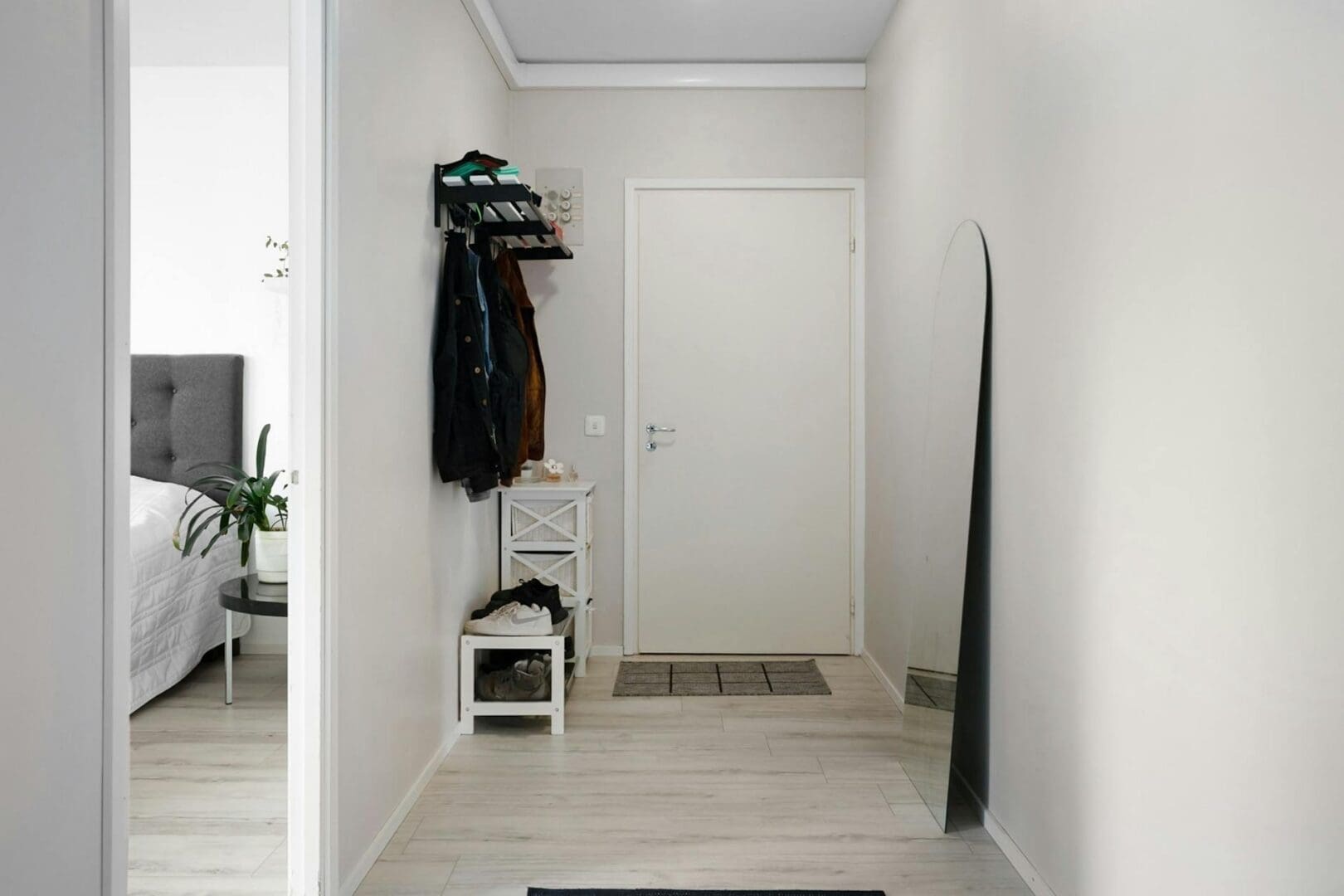
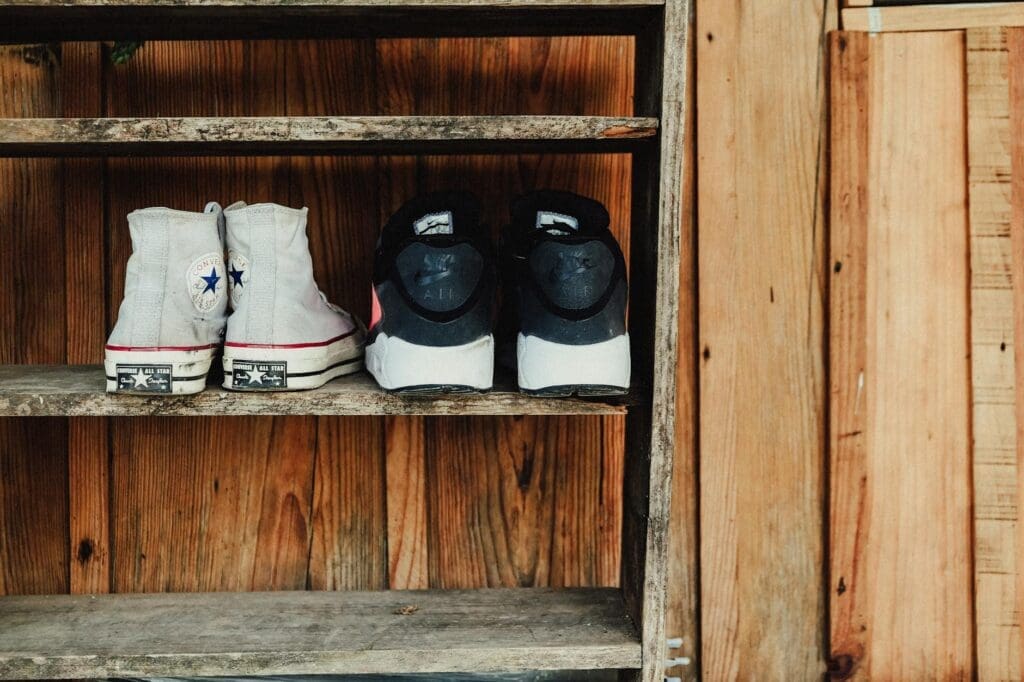
There’s nothing quite like tripping over a pile of shoes the moment you walk through your front door. In a small entryway, even a few pairs can create chaos, making your home feel cluttered before you’ve taken two steps inside. The good news? You don’t need a sprawling mudroom to keep shoes organized and out of sight.
Measure Your Space Before You Shop
The biggest mistake people make is buying shoe storage that simply doesn’t fit. Before you fall in love with any piece, grab a tape measure and check three key dimensions: the width of your entryway, the depth you can afford to lose without blocking traffic, and the height of your space (especially important if you have low ceilings or wall-mounted elements).
For truly tight spaces, look for pieces no deeper than 12 inches. Slim shoe cabinets with tilting drawers work beautifully here because they hold shoes at an angle, maximizing vertical space while keeping the footprint minimal. These typically run $80-$200 for budget options, while solid wood versions with better hardware land in the $250-$500 range.
If you have even 18 inches of depth to work with, you open up more possibilities like narrow benches with storage underneath or stackable shoe cubbies.
Choose Storage That Multitasks
In a small entryway, every piece of furniture needs to earn its place. Storage benches are the workhorses of compact entryways because they give you a place to sit while putting shoes on, plus hidden storage underneath for the shoes themselves. Look for benches with lift-top lids or pull-out drawers rather than open cubbies if you want to keep visual clutter at bay.
Wall-mounted solutions deserve serious consideration too. Floating shelves with a lip, wall-mounted shoe racks, or even a narrow console table (6-8 inches deep) with baskets underneath can hold a surprising number of pairs without eating up floor space. Wall hooks above any of these pieces give you spots for bags, umbrellas, or keys.
Combination coat and shoe storage units work particularly well if you’re starting from scratch. These tower-style pieces typically include hooks or a hanging rod up top with shoe cubbies or a cabinet below, keeping everything you need near the door in one tidy footprint.
Match Storage Type to Your Household Habits
Be honest about how your family actually uses the entryway. If everyone kicks off shoes the second they walk in, you need open storage they can toss shoes into without thinking—closed cabinets will just result in piles on the floor. Stackable shoe boxes, open cubbies, or large baskets work better for quick-drop households.
For tidier households willing to take an extra second, closed cabinets keep everything hidden and create a cleaner look. Shoe cabinets with tilting compartments (sometimes called “shoe drawers”) can hold 12-24 pairs depending on size, and they’re particularly good if you’re dealing with a very narrow entryway since they’re typically only 8-11 inches deep.
If you’re storing shoes for multiple people, consider color-coded baskets or labeled cubbies. A cubby organizer with 6-9 compartments gives everyone their own designated spot and runs anywhere from $50 for laminate versions to $300+ for solid wood.
Think Vertical When You’re Short on Square Footage
When floor space is precious, look up. Over-the-door shoe organizers aren’t just for closets—they work on the back of an entryway door too, holding 12-24 pairs depending on the style. The clear pocket versions let you see everything at a glance, while fabric pockets create a softer look.
Tall, narrow shoe towers (often around 12 inches wide and 48-60 inches tall) can tuck into corners or beside the door, holding 15-30 pairs vertically. Ladder-style shoe racks lean against the wall and offer a more decorative look if your entryway is visible from main living spaces.
Just remember that anything over waist-height becomes less convenient for daily-wear shoes, so save top shelves for out-of-season or occasional-use pairs.
The right shoe storage transforms a cluttered entryway into a functional, welcoming space. Start by measuring what you’re working with, think about how many pairs you actually need at the door (the rest can live in bedroom closets), and pick a solution that matches how your household really behaves. Whether that’s a streamlined shoe cabinet, a hardworking bench, or a wall-mounted rack, the best choice is the one you’ll actually use every single day.
A cramped entryway with shoes scattered everywhere isn’t just frustrating—it’s usually the first thing you and your guests see when walking through the door. The good news? Even the smallest entryway can stay organized with the right shoe rack. The challenge is finding one that actually fits your space without making it feel even more […]
That pile of shoes by the door isn’t going to organize itself, and your coats deserve better than being draped over the nearest chair. A coat rack with built-in shoe storage solves both problems in one piece of furniture, making it perfect for entryways, mudrooms, or even bedroom corners where clutter tends to accumulate. The […]
A cramped entryway doesn’t mean you’re doomed to trip over piles of coats or hunt for misplaced keys every morning. The right coat rack can transform even the tiniest entry into an organized, welcoming space. The challenge is finding one that holds what you need without making your small entryway feel even smaller. Consider Your […]