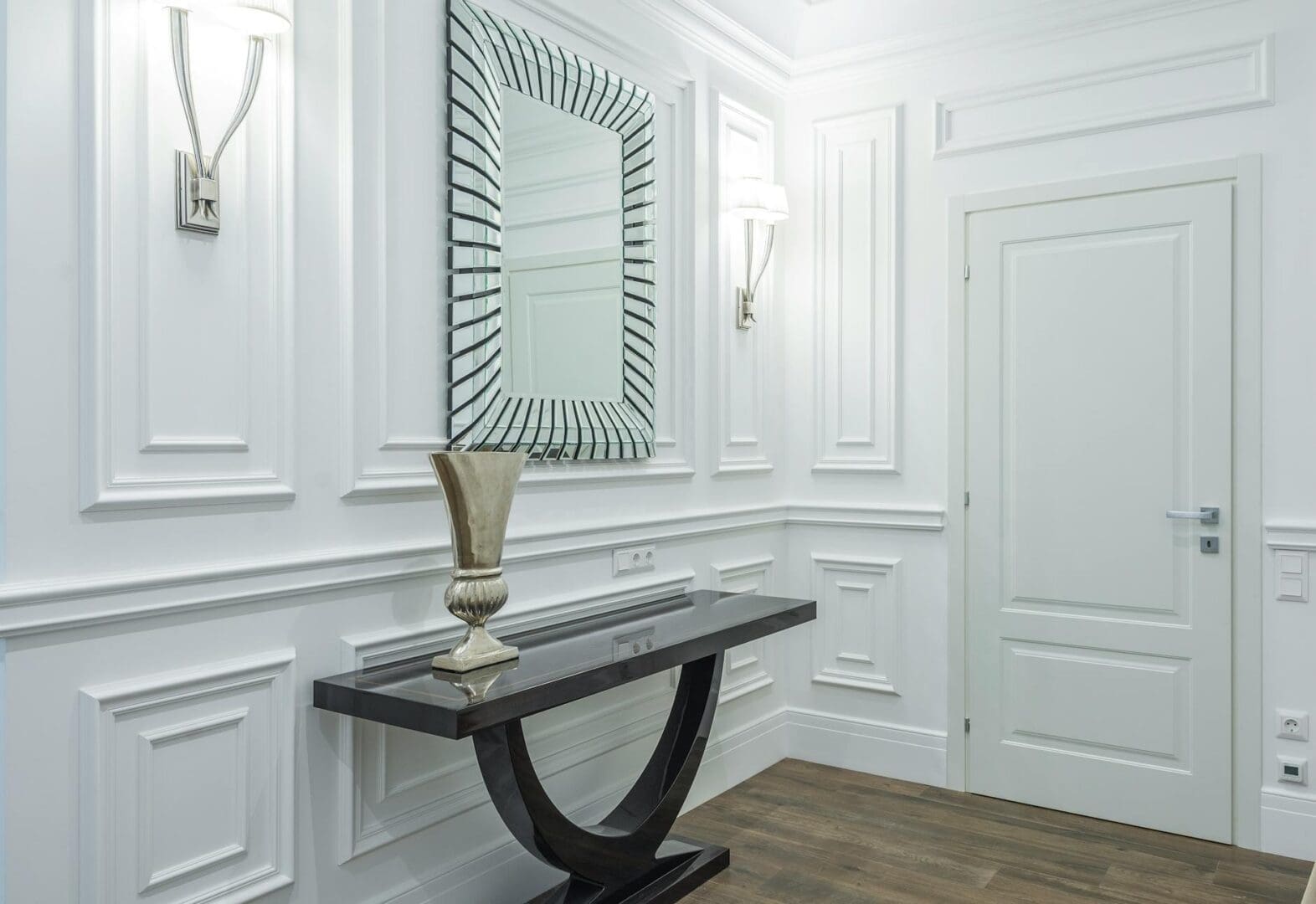
Your entryway sets the tone for your entire home, and a console table can transform that awkward space between your front door and living area into something both beautiful and functional. Whether you’re dealing with a narrow hallway or a spacious foyer, the right console table gives you a spot to toss keys, display décor, and make a great first impression on guests.
Getting the Size Right
The most common mistake people make is choosing a console table that’s either too large for the space or so small it looks lost. For narrow entryways, look for tables that are 10-14 inches deep—they’ll provide surface space without making you squeeze past every time you walk by. Standard console tables typically run 24-30 inches deep, which works beautifully if you have at least 42 inches of total walkway width.
Length matters too. Measure your wall space and aim for a table that’s about two-thirds the width of that area. A 48-inch table is the sweet spot for most entryways, but you’ll find options ranging from compact 36-inch models up to statement-making 60-inch pieces. And don’t forget about height—standard console tables sit around 30-32 inches tall, which puts them at the perfect level for grabbing items as you head out the door and allows you to hang a mirror or artwork above without weird spacing.
Style and Design Features
Console tables come in every style imaginable, so think about what matches your home’s personality. Modern entryways look sharp with clean-lined tables featuring metal frames and glass or marble tops. Traditional homes pair nicely with wood consoles that have turned legs and decorative details. Farmhouse fans should look for distressed finishes and chunky proportions, while industrial styles combine metal and reclaimed wood for that urban loft vibe.
Beyond aesthetics, consider these practical features:
Drawers: Essential if you need to hide mail, dog leashes, or random junk that accumulates by the door
Shelves: Open lower shelves give you space for baskets, shoes, or decorative items while keeping things visible
Outlets: Some higher-end consoles include built-in electrical outlets and USB ports—surprisingly handy for charging phones
Mirrored or glass elements: These can make small entryways feel more spacious by reflecting light
Material Matters
The material you choose affects both durability and maintenance. Solid wood console tables are investment pieces that last decades and develop character over time. Expect to pay $300-$800 for quality hardwood options in oak, walnut, or acacia. They handle daily wear well but may need occasional polishing.
Engineered wood or MDF consoles with veneer finishes offer good looks at budget-friendly prices, typically $150-$400. They’re perfectly serviceable for light use but won’t hold up as well to scratches and water rings. Metal and glass combinations ($200-$600) bring contemporary style and are extremely durable, though glass tops show fingerprints and dust easily.
For high-traffic homes with kids or pets, skip anything with a high-gloss white finish unless you enjoy constant cleaning. Instead, look for medium to dark wood tones, matte finishes, or textured surfaces that hide the inevitable wear and tear.
Budget Guidelines and What to Expect
You can find serviceable console tables starting around $100-$200, but these budget options usually sacrifice either size or quality. They’re fine for apartments or starter homes where you don’t plan to stay long.
The $250-$500 mid-range is the sweet spot for most shoppers. Here you’ll find solid construction, attractive designs, and enough variety to match nearly any style. These tables should last 5-10 years with normal use.
Splurge-worthy consoles ($600 and up) feature premium materials like solid hardwood or marble, superior craftsmanship, and designer details. If your entryway is the first thing everyone sees and you plan to stay in your home long-term, this investment makes sense.
The right console table turns your entryway from a pass-through space into an organized, welcoming area that sets the mood for your entire home. Focus on getting the measurements right first, then choose a style and features that match both your aesthetic and how you actually use the space. With options at every price point, you’re really just a few clicks away from finding the perfect piece.
A cramped entryway with shoes scattered everywhere isn’t just frustrating—it’s usually the first thing you and your guests see when walking through the door. The good news? Even the smallest entryway can stay organized with the right shoe rack. The challenge is finding one that actually fits your space without making it feel even more […]
Standing in your entryway surrounded by coats draped over chairs, bags on the floor, and scarves piled on the console table? You need a proper place to hang things—but should you go with a freestanding coat rack or install wall hooks? Both solve the same basic problem, yet they work very differently in practice. Let’s […]
That pile of shoes by the door isn’t going to organize itself, and your coats deserve better than being draped over the nearest chair. A coat rack with built-in shoe storage solves both problems in one piece of furniture, making it perfect for entryways, mudrooms, or even bedroom corners where clutter tends to accumulate. The […]