If your entryway looks like a sporting goods store exploded into a pile of backpacks, you’re not alone. Between soccer cleats, winter coats, school bags, and everyone’s random pocket debris, the space where your family enters and exits can quickly become the most chaotic spot in your home. A well-designed mudroom changes that — giving everything a place and making those rushed morning departures just a little less frantic.
The good news? You don’t need a massive space or a huge budget to create a mudroom that actually functions for your family. Whether you’re working with a dedicated room, a hallway, or just a wall near the back door, the right combination of furniture and storage can transform your daily routine.
Start with a Bench That Does Double Duty
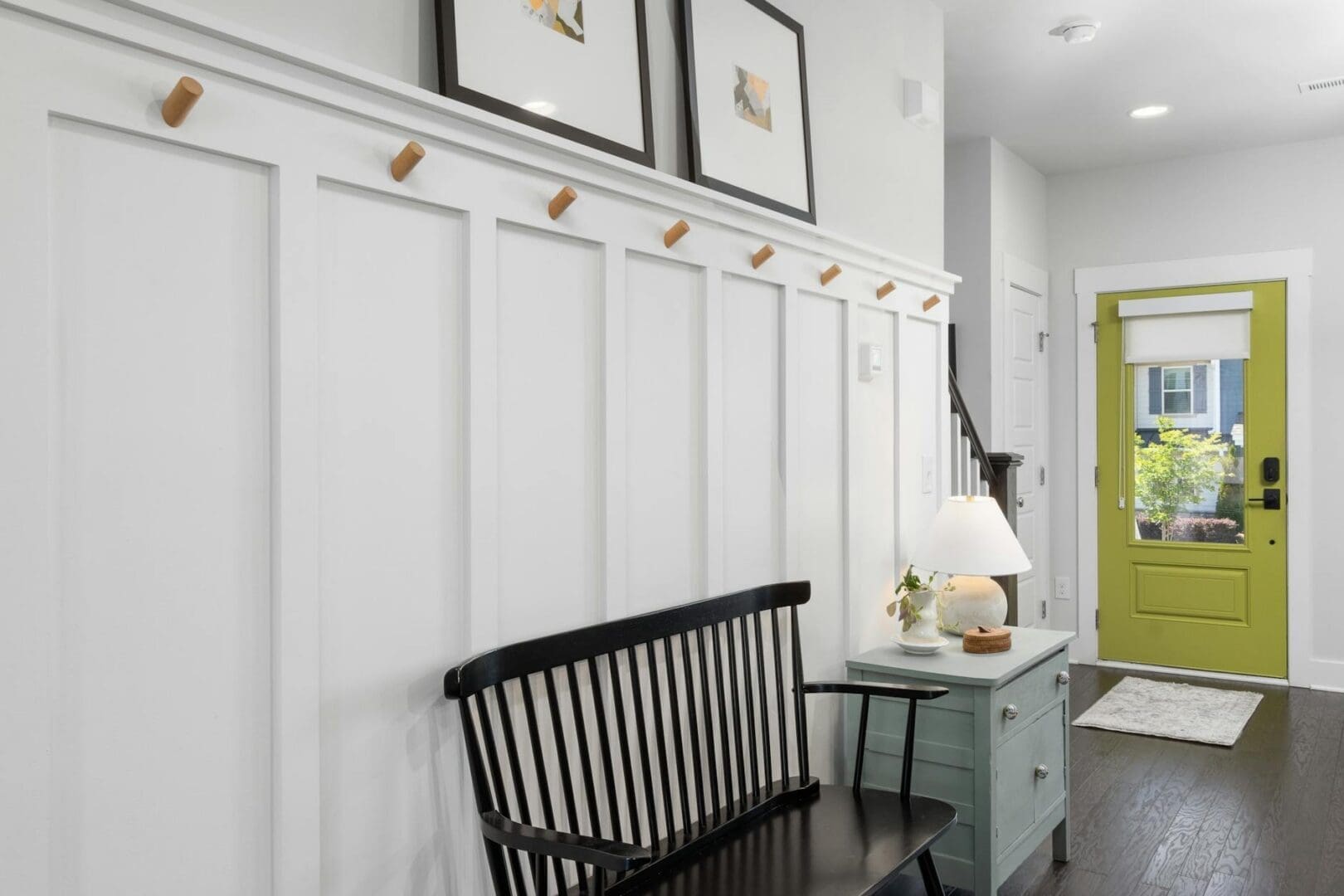
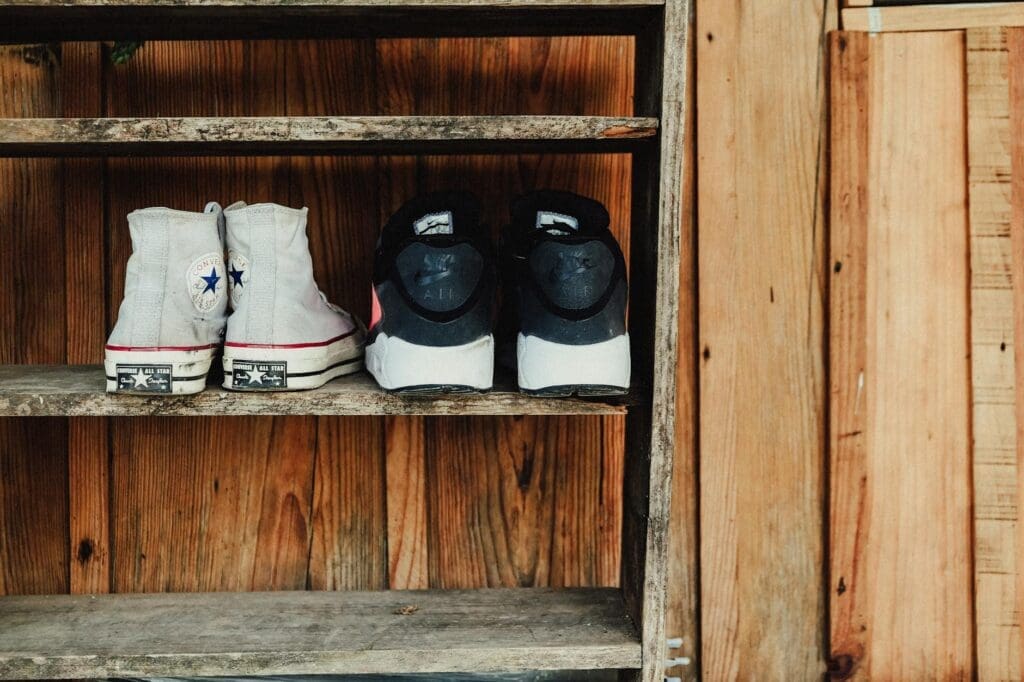
A mudroom bench is your foundation piece, and it needs to work hard. Look for benches with built-in storage underneath — either cubbies or a lift-top design. This is where shoes live, and trust me, you want them contained but accessible.
For families with younger kids, a bench height of 18 inches works well since little ones can actually climb onto it to put their shoes on themselves. If you’ve got teenagers or all adults, you can go up to 20 inches for more comfortable seating.
Budget-friendly benches with basic cubby storage start around $150-200, while solid wood options with cushioned seats and multiple compartments run $400-800. If you’re really investing in this space, custom built-ins with bench seating range from $1,200-3,000 but can be sized perfectly to your wall and painted to match your trim.
Hooks and Storage That Can Handle the Load
Here’s where most mudrooms fail: wimpy hooks that can’t handle a wet winter coat plus a backpack. You need sturdy wall-mounted hooks or a coat rack system that’s anchored into studs, not just drywall.
Give each family member their own designated hook or section — this prevents the “whose coat is this?” morning scramble. Double hooks work brilliantly here, with the top hook for coats and the lower one for bags. Plan for at least 6-8 inches of space between hooks so bulky items don’t crowd each other.
Wall-mounted hook rails run $30-100 depending on material and length. Individual heavy-duty hooks cost $8-25 each. For a more polished look, hall tree units combine hooks with a bench and sometimes a mirror, ranging from $200-600.
Cubbies and Lockers for Personal Zones
If you have the wall space, individual cubbies or locker-style units give each family member their own mini command center. These work especially well for families with school-age kids who need a consistent spot for backpacks, permission slips, and library books that absolutely must go back tomorrow.
Look for units with a mix of open and closed storage. Open cubbies at the top for daily-use items like hats and bags, and doors or baskets at the bottom to hide the mess. Some systems include a small shelf or cork board inside each locker — perfect for hanging keys or pinning sports schedules.
Modular cubby systems start around $200-300 for a basic 3-4 person unit. Wood locker-style furniture runs $500-1,200. Custom built-in locker systems typically cost $2,000-4,000 but maximize awkward spaces and can include features like charging stations and pull-out bins.
The Small Additions That Make It Actually Work
Once you have your main furniture pieces, a few smaller additions make your mudroom genuinely functional:
Boot trays: Rubber or metal trays (under $30) catch snow, mud, and water without staining your floor
Baskets or bins: Label them for gloves, dog leashes, sports equipment — whatever your family’s specific chaos looks like
A small mirror: For last-minute checks before everyone heads out the door
Wall-mounted organizer: Mail sorters or key hooks keep small items from disappearing into coat pockets
Cushions: If your bench doesn’t come with one, add a weather-resistant cushion for comfort
Your mudroom doesn’t need to be picture-perfect — it needs to handle the reality of your family’s daily comings and goings. Start with the pieces that solve your biggest pain points, whether that’s shoe storage, coat overflow, or backpack chaos. Once you’ve got those basics working, you can add the extras that make the space feel finished. The best mudroom is the one your family will actually use, every single day.
A cramped entryway with shoes scattered everywhere isn’t just frustrating—it’s usually the first thing you and your guests see when walking through the door. The good news? Even the smallest entryway can stay organized with the right shoe rack. The challenge is finding one that actually fits your space without making it feel even more […]
Standing in your entryway surrounded by coats draped over chairs, bags on the floor, and scarves piled on the console table? You need a proper place to hang things—but should you go with a freestanding coat rack or install wall hooks? Both solve the same basic problem, yet they work very differently in practice. Let’s […]
That pile of shoes by the door isn’t going to organize itself, and your coats deserve better than being draped over the nearest chair. A coat rack with built-in shoe storage solves both problems in one piece of furniture, making it perfect for entryways, mudrooms, or even bedroom corners where clutter tends to accumulate. The […]