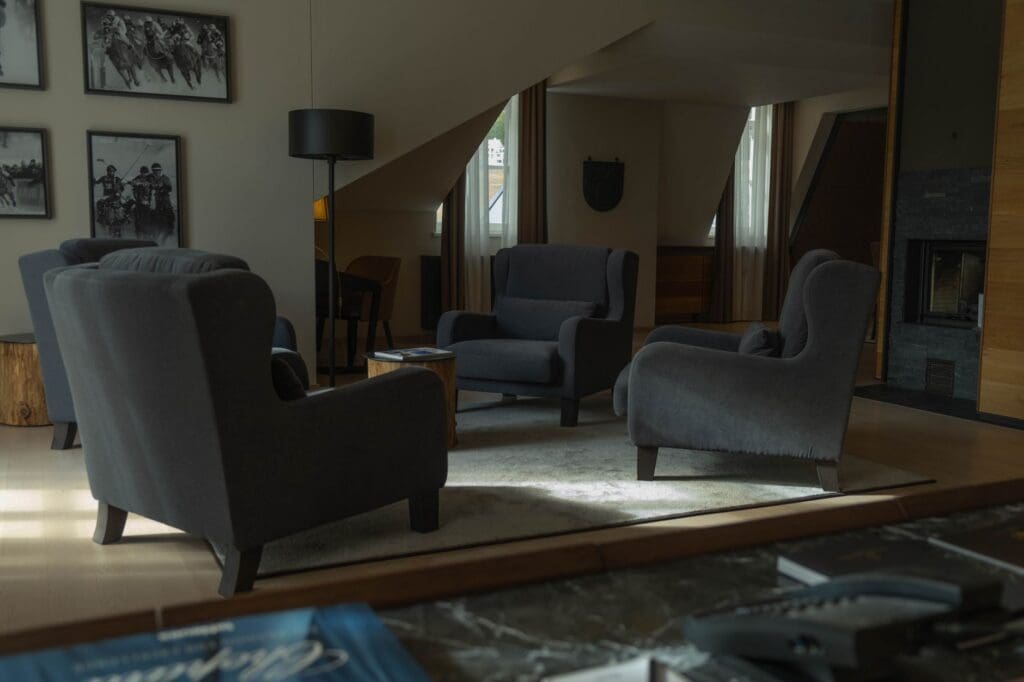
There’s something deeply satisfying about a chair and ottoman combo—it’s the furniture equivalent of finding the perfect pair of shoes. When done right, you get a reading nook that actually invites you to sit down, a corner that feels intentionally designed, and a spot where you can finally prop up your feet after a long day. But walk into any furniture store (or scroll through endless online options), and you’ll quickly realize that choosing the right set isn’t as simple as picking what looks pretty.
Size and Proportion Matter More Than You Think
The most common mistake people make is choosing a chair and ottoman set based purely on looks, then discovering it overwhelms their space or looks awkwardly small. Start by measuring your available area—you’ll need at least 4 feet by 5 feet for a standard chair and ottoman setup, including walkway clearance.
The chair itself should fit your body. If you’re taller than average, look for chairs with seat depths of at least 22 inches and backs that reach mid-shoulder or higher. Petite folks often find standard recliners too deep, so aim for 18-20 inch seat depths. Sit in chairs before buying when possible—your feet should rest flat on the floor with your back against the cushion.
For the ottoman, the sweet spot is about two-thirds the width of your chair. So if your chair is 36 inches wide, look for an ottoman around 24 inches. The height matters too: your ottoman should sit 1-2 inches lower than the chair seat so your legs rest comfortably without your knees bending at an awkward angle.
Matching Styles Without Being Too Matchy-Matchy
Chair and ottoman sets typically come in three formats: exact matches sold as a pair, coordinating pieces from the same collection, or mix-and-match separates you put together yourself.
Matching sets take the guesswork out—same fabric, same legs, same vibe. They’re perfect if you want a cohesive look without overthinking it. Mid-century modern sets with tapered wooden legs, oversized contemporary club chairs with sleek ottomans, and traditional wingback chairs with tufted ottomans all work beautifully when designed as intentional pairs.
But mixing can create more visual interest. Try pairing a leather chair with a patterned fabric ottoman, or a solid upholstered chair with a textured ottoman in a complementary color. The key is ensuring the styles share some DNA—similar leg finishes, comparable proportions, or a unified era. A streamlined Scandinavian chair won’t feel right with an ornate Victorian ottoman, no matter how much you love both pieces individually.
Material Choices for Real-Life Living
Your fabric choice should match how you’ll actually use this furniture. Honest assessment here saves future headaches.
Leather and faux leather are incredibly practical for high-traffic areas or homes with pets. They wipe clean easily and develop a lived-in patina over time. Expect to pay $800-2,500 for genuine leather sets, or $400-900 for quality faux leather options. Top-grain leather wears better than bonded leather, which can peel after a few years.
Performance fabrics have come a long way from the stiff, plasticky options of the past. Modern performance weaves resist stains, repel liquids, and feel like regular upholstery. They’re ideal for families with kids or anyone who eats snacks in their chair (no judgment). Look for fabrics with a double-rub count above 30,000 for durability.
Velvet and linen create gorgeous, luxe looks but require more maintenance. Velvet shows wear patterns and crushes where you sit regularly. Linen wrinkles and stains more easily. Save these for formal living rooms or spaces that don’t get daily use. Budget-wise, you’re looking at $600-1,800 for mid-range upholstered sets in these materials.
Features That Add Function (and When They’re Worth It)
Basic chair and ottoman sets start around $300-500 for simple designs from big-box retailers. These work fine for occasional use or temporary spaces, though construction quality may not last beyond five years.
Mid-range options ($600-1,500) typically offer better frame construction, higher-density foam cushions, and more fabric choices. This is the sweet spot for most people furnishing a primary living space where the chair will get regular use.
Swivel bases add about $100-200 to the cost but make a chair significantly more versatile—you can pivot to face the TV, the window, or conversation without moving the whole piece. Reclining chair and ottoman sets start around $700 and can exceed $2,000 for power-reclining options with USB ports and adjustable headrests.
Storage ottomans cost $50-150 more than standard versions but provide hidden space for blankets, remotes, or kids’ toys. If you’re working with a smaller room, that dual function justifies the upcharge.
A chair and ottoman set isn’t just furniture—it’s an investment in actually using and enjoying a space in your home. Take the time to get the sizing right, choose materials that match your lifestyle, and pick a style that makes you happy every time you walk past it. The right combination will have you wondering why you waited so long to create that perfect corner.
They don’t have to match exactly, but they should coordinate. Many sets come as matching pairs, but you can also mix complementary fabrics or materials as long as the scale and style feel cohesive. The key is making sure they look intentional together.
What is the ideal distance between a chair and ottoman?
Place your ottoman about 12-18 inches from the chair seat for comfortable leg extension. You should be able to rest your feet naturally without stretching or cramping your knees. This distance also allows easy movement around the furniture.
Can you use an ottoman without a chair?
Absolutely. Ottomans work beautifully as standalone pieces for extra seating, coffee tables, or footstools. Many people buy them separately to add flexibility to their space, especially storage ottomans that serve multiple purposes.
How much should I spend on a chair and ottoman set?
Budget sets start around $300-500, mid-range options run $600-1,200, and high-end sets can exceed $2,000. Your budget should reflect how often you’ll use it and the quality of construction you need for longevity.
What size ottoman should I get for my chair?
Your ottoman should be roughly two-thirds the width of your chair and slightly lower than the seat height. This proportion looks balanced and provides proper leg support. The ottoman seat height should ideally be 1-2 inches lower than the chair seat.
You’ve found the perfect accent chair—the lines are beautiful, the color is spot-on, and it fits your budget. But here’s the thing that’ll matter most six months from now: what’s it covered in? The fabric you choose determines whether your chair becomes a beloved, well-worn favorite or a source of constant stress every time someone […]
You’ve seen them on Instagram, in design magazines, and probably in at least one friend’s living room. Egg chairs—those sculptural, cocoon-like seats that look like they belong in a retro-futuristic movie—have become a serious design moment. But with price tags ranging from a few hundred to several thousand dollars, you’re probably wondering if this trendy […]
Your boho living room already has the layered rugs, the plants, the collection of textiles—but something’s missing. You need that perfect accent chair, the one that invites people to curl up with a book while adding another layer of personality to your space. The challenge? Boho style is all about eclectic, collected-over-time vibes, which makes […]