There’s nothing worse than ordering bar stools online, waiting for delivery, and discovering they’re way too tall or awkwardly low for your counter. You’re left hunching over your breakfast or dangling your feet like a kid at the grown-ups’ table. The good news? Getting the right bar stool height is actually straightforward once you know what to measure and what those numbers mean.
The Golden Rule: Leave 10-12 Inches of Clearance
The most important measurement isn’t the stool height itself—it’s the space between the top of the seat and the underside of your counter or bar. You’ll want 10 to 12 inches of clearance for comfortable seating. This gives you enough room to sit naturally without your knees hitting the counter or feeling like you’re perched too far below it.
Here’s how to measure: Grab a tape measure and check the distance from your floor to the underside of your counter overhang. Write that number down. Then subtract 10 to 12 inches. That’s your target seat height range.
For example, if your counter measures 36 inches from the floor, you’ll want bar stools with seat heights between 24 and 26 inches. If your bar top sits at 42 inches, look for stools in the 30 to 32-inch range.
Know Your Counter Type
Not all counters are created equal, and the terminology can get confusing. Here’s what you’re typically working with:
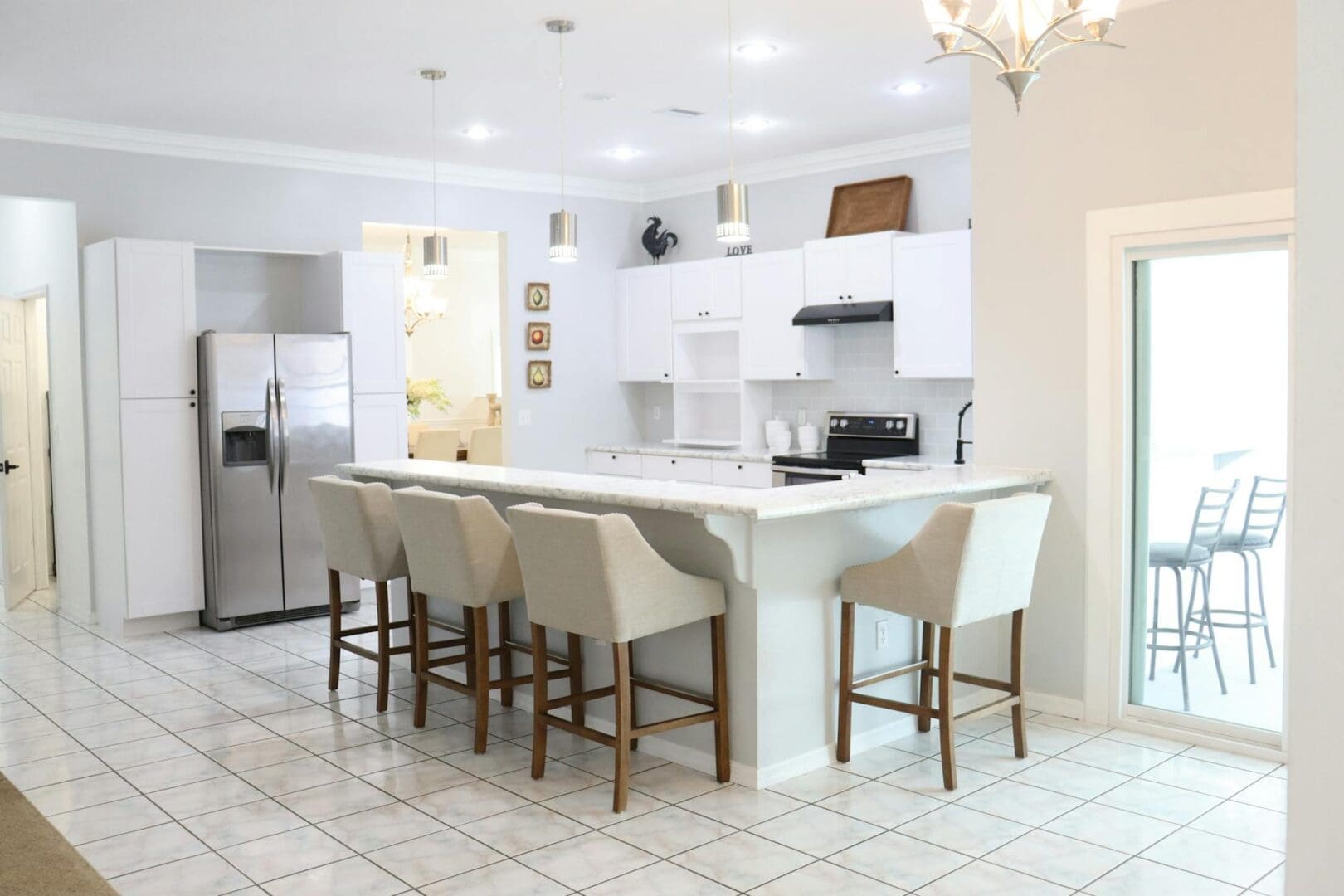
Kitchen counters and islands (36 inches high): These pair with counter-height stools, which have seat heights of 24 to 26 inches. These are the most common in homes and tend to offer the widest selection of styles.
Bar-height counters (40-42 inches high): These need bar-height stools with seats at 28 to 32 inches. You’ll often see these in home bars, pub tables, or raised breakfast bars.
Extra-tall bars (44-46 inches high): Less common but not unheard of, especially in commercial-style setups. Look for extra-tall bar stools with 32 to 36-inch seat heights.
If your counter falls somewhere in between these standards, don’t panic. Adjustable-height stools are lifesavers for non-standard measurements or if you need stools that work at multiple surfaces.
Factor in Footrests and Swivel
Comfort goes beyond just getting the height right. A footrest isn’t just a nice-to-have—it’s essential for proper posture and comfort, especially if you’re sitting for more than a few minutes. Look for stools with footrests positioned about 12 to 18 inches below the seat.
Swivel seats add convenience, making it easier to get in and out, particularly in tight spaces. Backless stools work well when you want them to tuck completely under the counter, but if you’re planning to linger over coffee or meals, stools with backs provide crucial support. Low backs (10-12 inches high) give you support without blocking sightlines, while full backs are better for dedicated dining spaces.
Also consider the stool’s footprint. Measure how much space you have along your counter and leave at least 6 inches between each stool for elbow room. Most stools need about 24 to 26 inches of counter space per seat.
Don’t Forget About Your Overhang
Even perfectly measured stools won’t work if your counter doesn’t have adequate overhang. You need at least 9 to 12 inches of overhang to comfortably fit your knees under the counter. If you’re designing or renovating, 15 inches is even better for maximum comfort.
For kitchen islands, check if there’s a support panel or cabinet underneath that might limit knee space. Some islands have storage on all sides, which looks great but makes seating impossible. Measure the actual usable depth, not just the overhang.
Getting your bar stool height right makes the difference between seating that’s functional and seating that you’ll actually want to use every day. Take five minutes to measure carefully now, and you’ll save yourself the hassle of returns and the disappointment of stools that just don’t work. Once you know your target seat height, you can shop confidently and focus on finding the style that makes your space feel complete.
Did You Know? The Declaration of Independence Was Likely Written in a Windsor Chair As America celebrates 250 years of independence, it’s worth looking at one of the quieter witnesses to that history: the humble Windsor chair. Thomas Jefferson is said to have drafted the Declaration of Independence while seated in an unusual revolving Windsor […]
Shopping for a dining table when you have a family of six means you need something that works for Tuesday night homework sessions, weekend pancake breakfasts, and holiday dinners with grandparents—all without taking over your entire dining room. The right table makes family life easier. The wrong one? You’ll feel it every single day. Let’s […]
If you’re working with a compact dining area, you’ve probably already discovered that square and rectangular tables can feel like furniture Tetris. Round dining tables are often the smartest solution for small spaces—they eliminate sharp corners that eat up valuable square footage, create better traffic flow, and somehow make a room feel more spacious even […]