Your entryway sets the tone for your entire home, and if yours feels stuck in 2019, you’re not alone. The good news? The trends emerging for 2026 are less about chasing what’s trendy and more about creating entryways that are genuinely functional, beautiful, and welcoming. Here’s what’s gaining momentum and how to incorporate these ideas without a full renovation.
Curved Furniture Is Taking Over Console Tables
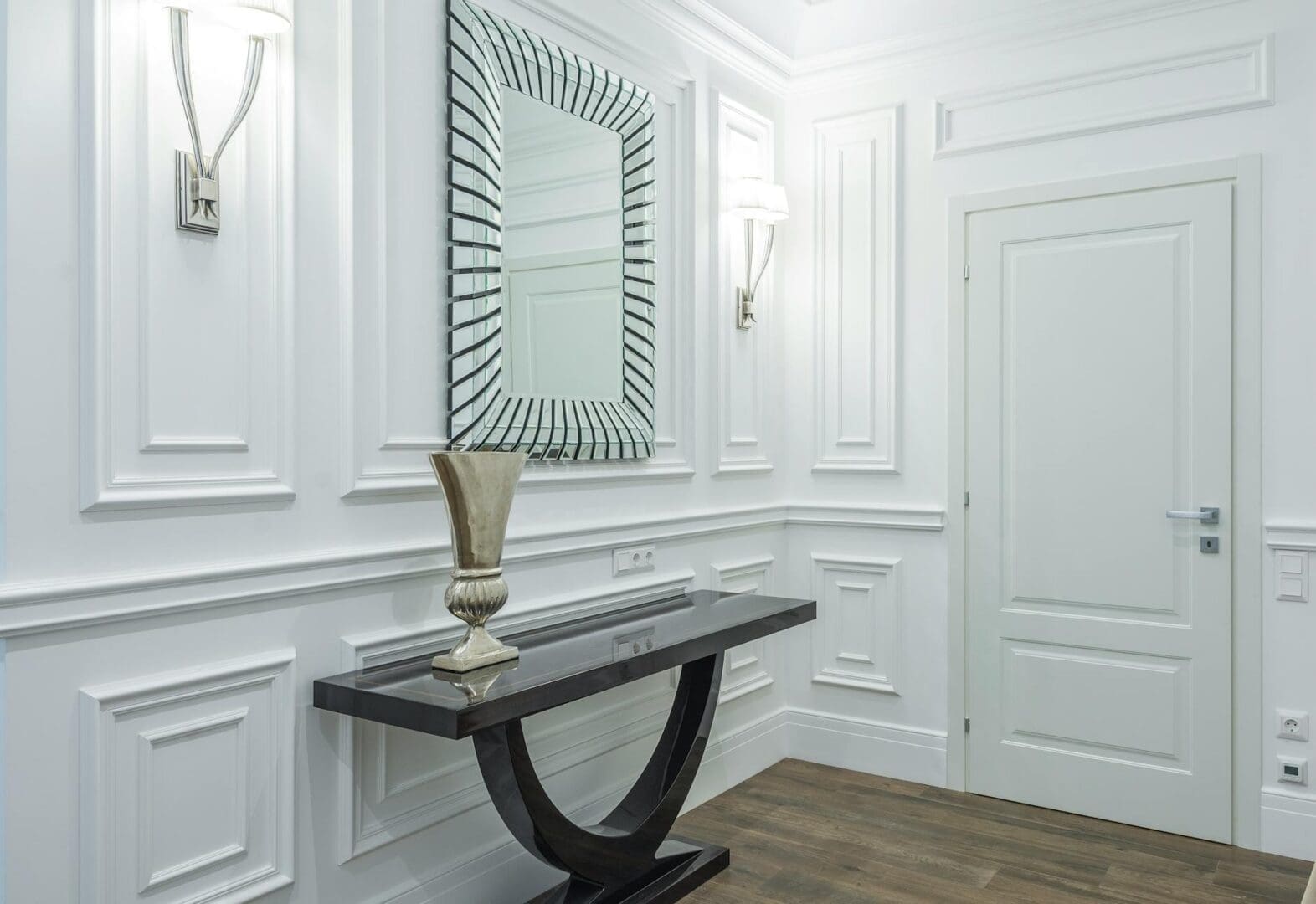
Sharp edges are stepping aside for softer, more sculptural silhouettes. Curved console tables—whether they feature rounded edges, arched bases, or kidney-shaped tops—are becoming the star piece in entryways. This shift isn’t just aesthetic; curved furniture flows better in tight spaces and feels more inviting when you walk through the door.
Look for consoles with organic, flowing lines in materials like oak, walnut, or lacquered MDF. Budget-friendly options in engineered wood start around $200-$350, while solid wood pieces with hand-carved details run $600-$1,200. If you’re working with a narrow entryway, a demilune (half-moon) console hugs the wall beautifully without protruding too far into your pathway.
Layered Lighting Creates Depth and Drama
Single overhead lighting is out. The 2026 entryway features multiple light sources at different heights—think a statement pendant or chandelier paired with wall sconces or even a table lamp on your console. This layered approach makes your entry feel intentional and eliminates that harsh, one-dimensional lighting that flattens the space.
Brass and brushed gold finishes continue to dominate, but we’re seeing a resurgence of sculptural fixtures in matte black and aged bronze. For pendants, look for geometric shapes, oversized globes, or handblown glass designs. Expect to spend $150-$300 for quality sconces and $300-$800 for a statement pendant. The key is choosing fixtures that complement each other without being matchy-matchy—they should feel like a collected look rather than a set.
Texture Layering Replaces Minimalism
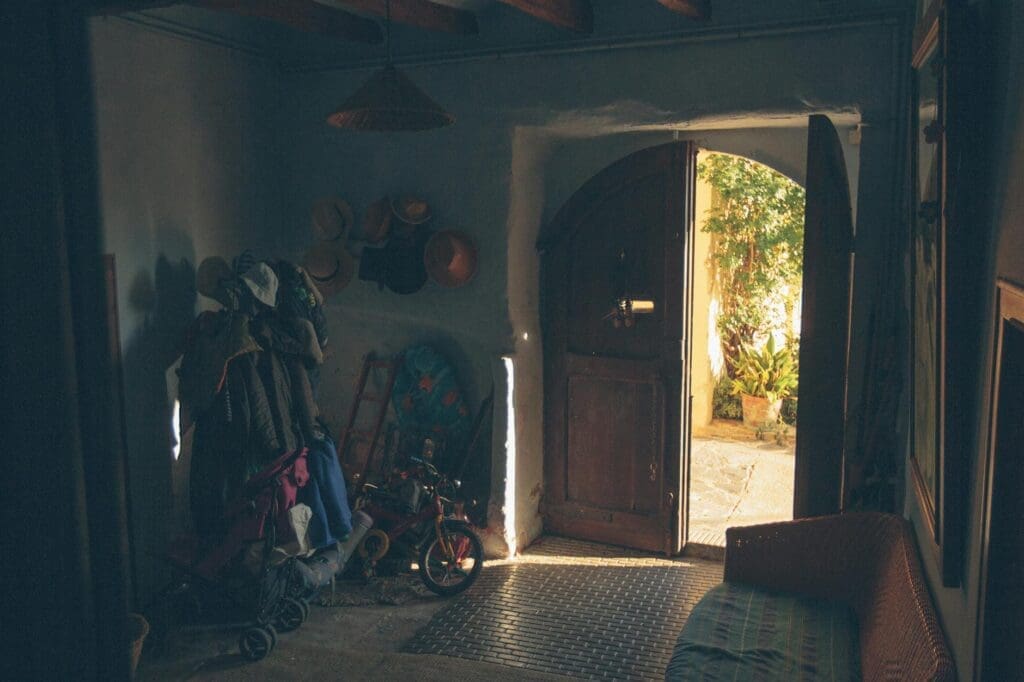
The stark, bare-bones entryway is giving way to spaces with rich textural contrast. We’re talking chunky woven baskets for shoe storage, bouclé benches, natural fiber rugs layered over hardwood, and stone or ceramic accessories. The goal is to create visual interest through materials rather than clutter.
Start with your foundational pieces: a jute or wool runner grounds the space and defines the entry zone. Add a bench or stool in a textured fabric like linen, velvet, or bouclé—these range from $180 for simple upholstered designs to $500+ for solid wood frames with premium fabrics. Then layer in organic elements: a wooden bowl for keys, a ceramic vase, or rattan storage baskets. This approach works because it adds warmth without requiring you to commit to a specific color scheme.
Multifunctional Storage That Doesn’t Look Like Storage
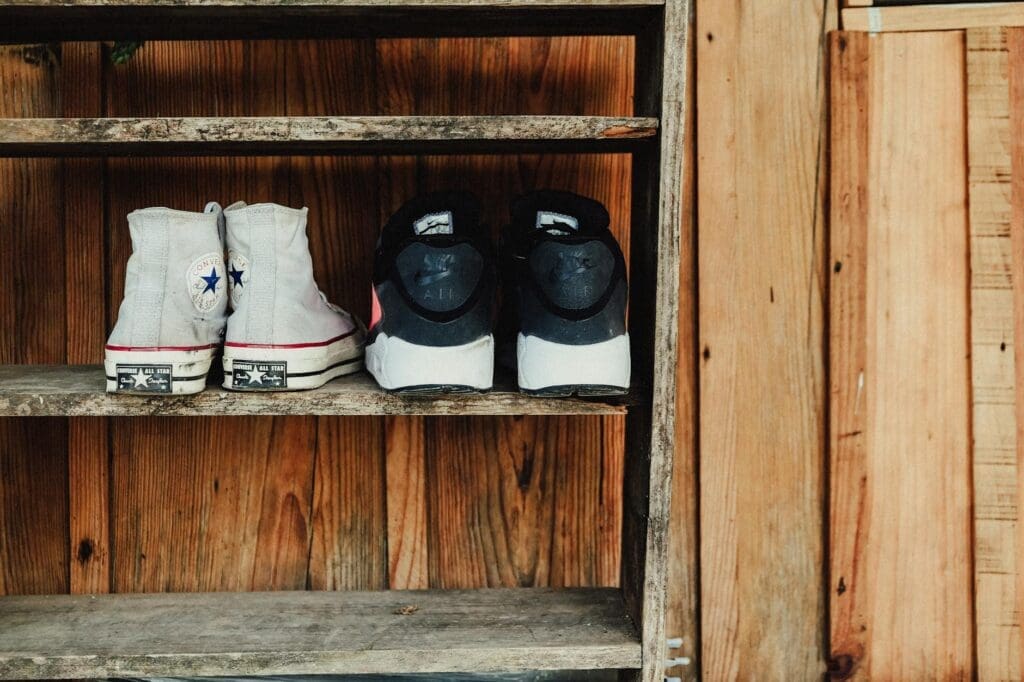
Entryway storage is evolving beyond basic hooks and shoe racks. The trend for 2026 is furniture that conceals storage while looking like a design statement. Hall trees with enclosed cabinets, benches with hidden compartments, and console tables with woven baskets tucked underneath are replacing open shelving and exposed coat racks.
Look for pieces that serve double duty: a bench with lift-top storage ($250-$500), a console with drawers and lower shelving ($300-$700), or a cabinet-style hall tree ($400-$900) that hides everything behind doors. The most successful entryways incorporate closed storage for visual calm while keeping frequently-used items easily accessible. A small catch-all tray or bowl on your console keeps keys and sunglasses from becoming clutter, while hooks inside a cabinet door handle coats and bags out of sight.
The entryway trends for 2026 all point in the same direction: creating spaces that feel collected, comfortable, and genuinely useful. You don’t need to incorporate every trend—choose one or two elements that solve a specific problem in your space. Whether it’s upgrading to a curved console for better flow, adding a second light source for ambiance, or finally investing in storage that doesn’t look like an afterthought, small changes make a noticeable impact. Your entryway is the first thing you see when you come home—it’s worth making it feel intentional.
A cramped entryway with shoes scattered everywhere isn’t just frustrating—it’s usually the first thing you and your guests see when walking through the door. The good news? Even the smallest entryway can stay organized with the right shoe rack. The challenge is finding one that actually fits your space without making it feel even more […]
That pile of shoes by the door isn’t going to organize itself, and your coats deserve better than being draped over the nearest chair. A coat rack with built-in shoe storage solves both problems in one piece of furniture, making it perfect for entryways, mudrooms, or even bedroom corners where clutter tends to accumulate. The […]
A cramped entryway doesn’t mean you’re doomed to trip over piles of coats or hunt for misplaced keys every morning. The right coat rack can transform even the tiniest entry into an organized, welcoming space. The challenge is finding one that holds what you need without making your small entryway feel even smaller. Consider Your […]