If you’re planning to refresh your outdoor space this year, you’re probably wondering which trends will actually stand the test of time—and which will feel dated by next season. The good news? The outdoor furniture landscape for 2026 leans toward pieces that are both stylish and genuinely functional, with manufacturers finally catching up to what homeowners have been asking for: furniture that looks great and can handle real life outdoors.
Modular and Reconfigurable Seating Takes Center Stage
The biggest shift in outdoor furniture is the move toward modular systems that adapt to how you actually use your space. Rather than committing to a fixed sectional, look for pieces with movable ottomans, armless middle sections, and corner units that can be rearranged for everything from intimate dinners to larger gatherings.
These systems typically start around $1,200 for a basic three-piece set in budget-friendly materials, while mid-range options with better cushions and frames run $2,500-$4,500. High-end modular collections in premium teak or powder-coated aluminum can reach $6,000-$10,000, but they’re built to last decades.
What makes this trend particularly practical: you’re not stuck with one configuration. Host a party and need more seating? Separate the pieces. Want a cozy conversation area? Push them together. This flexibility means you’ll get more use from your investment than traditional static furniture.
Weather-Smart Materials That Actually Deliver
Gone are the days when “outdoor fabric” meant stiff, plasticky cushions. The materials coming out for 2026 are legitimately impressive—think solution-dyed acrylic fabrics that resist fading for years, quick-dry foam that won’t get moldy, and marine-grade upholstery that feels soft but sheds water instantly.
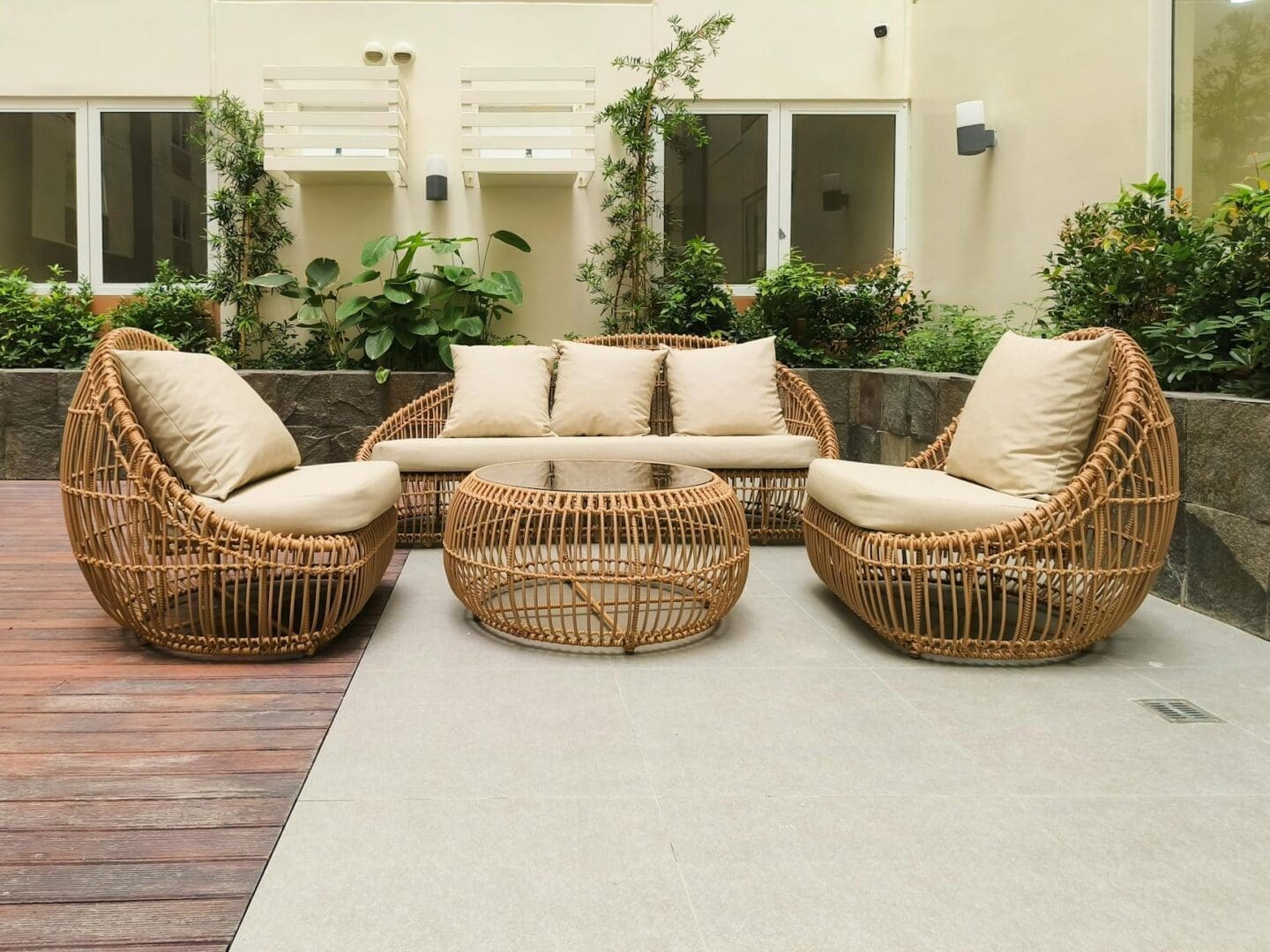
For frames, powder-coated aluminum remains the gold standard for durability without maintenance. Teak continues strong for those who love the look (and don’t mind it silvering with age, or committing to annual oiling). The surprise newcomer is high-density polyethylene (HDPE) wicker that’s nearly indistinguishable from natural rattan but won’t crack, fade, or unravel.
When shopping, press on cushions to check for that quick-dry foam—regular foam will feel denser and bounce back slowly. Ask about UV ratings on fabrics; anything above 500 hours of UV resistance will hold up well. Budget pieces often skimp on these materials, which is why that $400 conversation set might look rough by year two.
Smaller-Scale Pieces for Compact Spaces
Manufacturers are finally acknowledging that not everyone has a sprawling patio. The trend toward apartment-friendly outdoor furniture means more loveseats instead of full sofas, bistro sets that fit on 4×6 balconies, and nesting tables that tuck away when not needed.
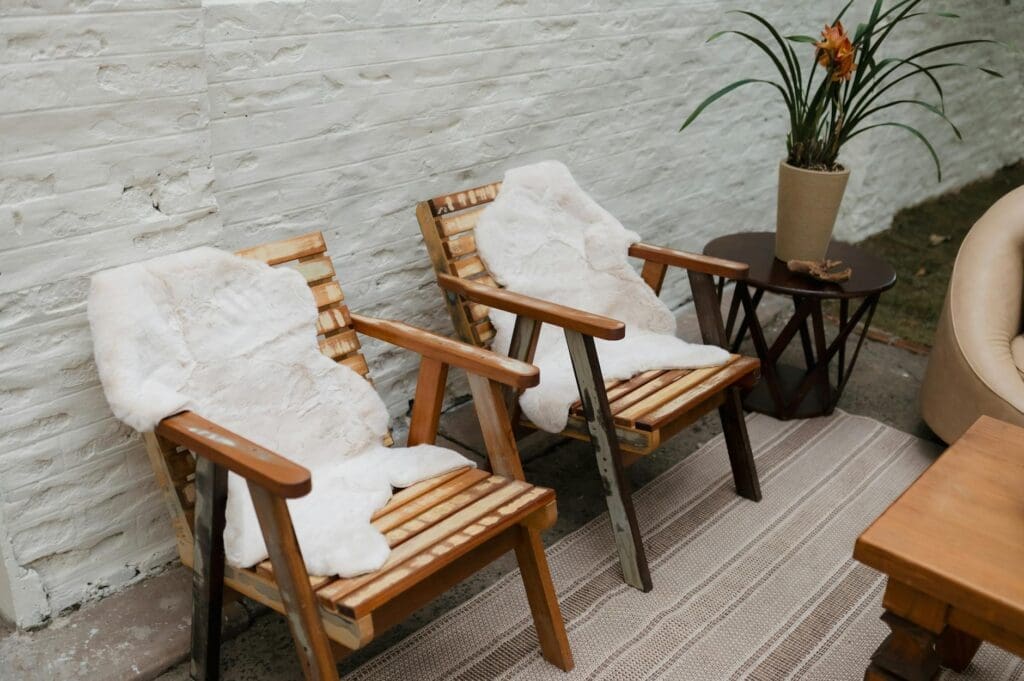
Look for pieces with slim profiles and clean lines—they’ll make small spaces feel larger. A loveseat measuring 50-55 inches wide works better than a 72-inch sofa on most balconies. Folding chairs have gotten a major style upgrade too, with slatted wood and metal designs that you’ll actually want to display rather than hide in storage.
These compact pieces typically run $300-$800 for a bistro set, $600-$1,500 for a quality loveseat, making them more accessible entry points than full outdoor living room sets.
Organic Curves and Softer Silhouettes
The stark, angular modern look is giving way to gentler curves and rounded edges. Barrel chairs, circular coffee tables, and sofas with curved backs create a more inviting, less rigid outdoor space. This softer aesthetic pairs beautifully with natural materials and creates conversation areas that feel intimate rather than formal.
This trend works across price points—even budget retailers are introducing curved silhouettes. The difference in higher-end pieces shows in the details: smoother welds on metal frames, more sophisticated cushion tailoring, and curves that flow rather than look forced.
When combining curved pieces with existing furniture, stick to a consistent material or color palette. A curved loveseat in natural teak can mix with straight-lined teak chairs, for instance, without the space feeling disjointed.
The outdoor furniture hitting showrooms for 2026 reflects a more thoughtful approach to how we live outside—flexible enough for real life, durable enough to justify the investment, and stylish enough to make your outdoor space feel like a true extension of your home. Focus on quality materials and modular flexibility, and you’ll end up with pieces that work as hard as they look good.
There’s something wonderfully ironic about the Adirondack chair’s origin story. Back in 1903, Thomas Lee was vacationing in Westport, New York, frustrated by the lack of comfortable outdoor seating that could handle the sloped terrain of his property. So he built a wide-backed, slatted chair with a reclined seat—and accidentally created an icon. Today, you’ll […]
A dark backyard feels smaller, less usable, and honestly a bit uninviting once the sun goes down. Whether you’re trying to make your outdoor space safer, extend your entertaining hours, or simply discourage unwanted visitors, the right flood lights can completely transform how you use your yard after dark. The challenge is figuring out which […]
You’ve found the perfect outdoor rug to tie your patio together, but three months later it’s faded, mildewed, or falling apart. Sound familiar? The material makes all the difference when it comes to outdoor rugs that actually last. Unlike indoor rugs that live cushy lives away from the elements, your outdoor rug needs to handle […]