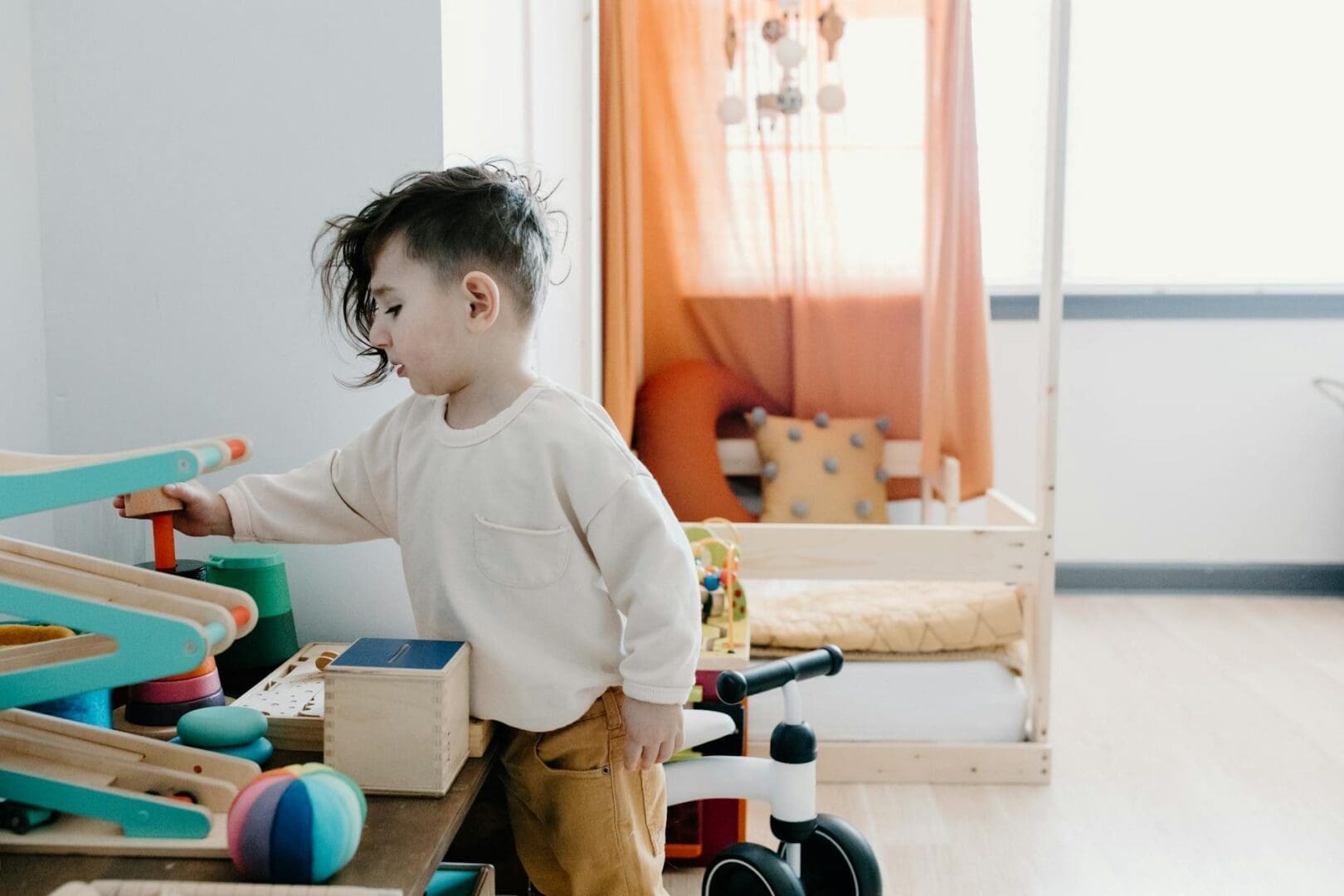
Designing a toddler’s bedroom feels like hitting a moving target. One day they’re obsessed with cartoon characters, and the next they’re declaring themselves “too old” for anything that feels babyish. The good news? With a few strategic choices, you can create a space that transitions smoothly from ages 2 to 12 without requiring a complete overhaul every few years.
Start with Full-Size Furniture
The biggest mistake parents make is buying furniture scaled for tiny humans. Those adorable toddler beds might look perfect now, but your child will outgrow them by age 5 or 6, forcing you to buy all over again.
Instead, invest in a twin or full-size bed from the start. If you’re worried about safety, use guardrails that attach to standard bed frames—they’re removable once your child is comfortable sleeping in a bigger bed. Look for simple platform beds or basic frames in neutral finishes like white, natural wood, or gray. Budget options start around $150-200, while solid wood frames that’ll truly last run $400-800.
The same thinking applies to dressers and nightstands. A quality six-drawer dresser serves a toddler just as well as a teenager. Skip the juvenile details like cartoon knobs or pastel colors, and choose classic designs with clean lines. You can always add personality with changeable elements like drawer pulls, which cost $3-10 each and take minutes to swap out.
Choose a Neutral Base Layer
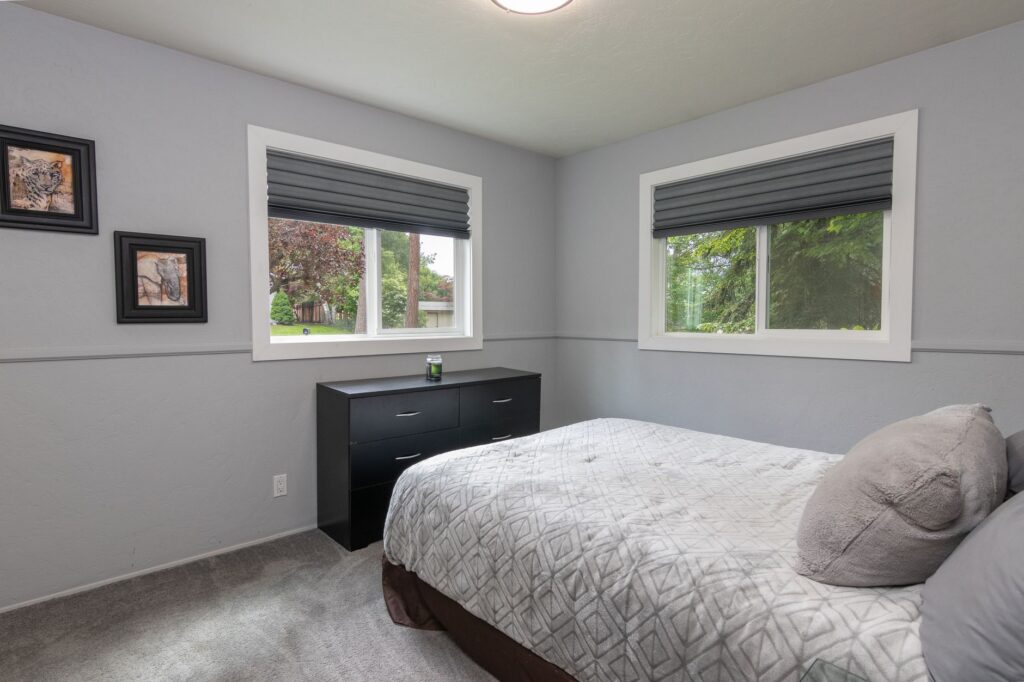
Here’s where restraint pays off: keep walls, flooring, and major furniture pieces neutral. This doesn’t mean boring—it means timeless. Soft grays, warm whites, beiges, or even a muted sage green create a backdrop that works whether your child is into dinosaurs or K-pop.
If you’re painting, choose a durable finish like eggshell or satin that can handle the inevitable scuffs and sticky fingerprints. Most paint brands offer “wash and wear” or “scrubbable” formulas that actually deliver on that promise.
For flooring, consider area rugs instead of wall-to-wall carpeting. A 5×7 or 8×10 rug provides softness for play time and can be replaced as tastes change for $80-400, depending on quality. Machine-washable rugs are worth seeking out for the toddler years—brands now make surprisingly stylish options in this category.
Build in Flexible Storage Solutions
Storage needs evolve dramatically from toddlerhood through the tween years, but the amount of stuff somehow never decreases. Focus on modular systems that adapt to changing needs.
Cube storage units are workhorses in kids’ rooms. With fabric bins, they corral toys. With bins removed, those same cubes display books, trophies, and collectibles. Look for units with 6, 9, or 12 cubes that can be oriented horizontally or vertically—most range from $60-150.
Add a bookshelf with adjustable shelving so you can accommodate board books now and textbooks later. Open shelving works better than closed cabinets for kids because they can actually see and access what they own. Wall-mounted options ($40-120) save floor space, while freestanding bookshelves ($80-300) offer more capacity.
Don’t forget hooks and pegboards. These simple additions grow with your child’s needs—perfect for hanging dress-up clothes and backpacks initially, then sports equipment and hoodies later.
Layer in Personality Through Changeable Décor
This is where your child’s current interests can shine without committing you to a themed room that feels dated in eighteen months. Bedding, curtains, wall art, and accessories are your flexible layers.
Choose basic white or solid-colored sheets and layer on a character duvet cover or quilt that’s easy to swap out. Budget duvet covers run $25-50, mid-range options with better fabric quality cost $60-100, and high-end versions reach $150-200.
For walls, try removable decals, framed prints, or a gallery wall with clips where artwork can be easily changed. Avoid permanent murals unless you’re absolutely certain you want to repaint in a few years. Floating shelves ($15-40 each) provide display space for rotating interests—stuffed animals, rock collections, model cars, whatever captures their imagination.
Window treatments deserve attention too. Simple roller shades or classic curtain panels in solid colors work through all ages. Blackout options help with toddler sleep schedules and tween sleep-ins alike.
Designing a room that grows with your child comes down to spending wisely on the permanent pieces and staying flexible everywhere else. When you choose quality basics and resist the urge to over-theme, you create a foundation that adapts to your child’s changing personality without constant renovation. Your future self—and your wallet—will thank you for thinking long-term from the start.
Shopping for a dresser for your child’s room feels different than buying one for yourself. You’re not just thinking about today—you’re wondering if it’ll survive the toddler years, hold up through elementary school, and maybe even make it to the teenage bedroom. The good news? With the right approach, you can find a dresser that […]
You’ve found the perfect bed frame, but now your old dresser looks completely out of place. Or maybe you’re starting fresh and wondering whether you need to buy a matching bedroom set. The truth is, coordinating your dresser and bed frame isn’t about finding exact matches—it’s about creating visual harmony through smart choices about style, […]
Adding a dresser to your walk-in closet can transform it from a simple hanging space into a fully functional dressing room. But unlike choosing a dresser for your bedroom, closet dressers have different requirements—they need to fit within existing dimensions, complement built-in systems, and maximize storage without creating obstacles. Whether you’re designing a new closet […]