If you’re tossing and turning at night or waking up groggy despite getting eight hours, your bedroom lighting might be sabotaging your sleep. The right lighting setup does more than just help you find your way to bed—it actually signals your body when it’s time to wind down and when it’s time to wake up. Let’s talk about creating a lighting plan that works with your natural sleep rhythms, not against them.
Understanding Light Temperature and Sleep Quality
Here’s what most people don’t realize: not all light bulbs are created equal when it comes to sleep. The color temperature of your bulbs, measured in Kelvins, directly affects your body’s production of melatonin—the hormone that makes you sleepy.
For bedroom lighting, you’ll want warm white bulbs in the 2700K-3000K range for evening hours. These emit a soft, amber glow that mimics candlelight and sunset, encouraging your brain to produce melatonin. Save the bright, cool white bulbs (4000K+) for your office or kitchen—they’re great for alertness but terrible for winding down.
Smart bulbs take this a step further. Options from brands like Philips Hue or LIFX let you program your lights to automatically shift from energizing cool tones in the morning to warm, dim tones at night. Expect to spend $15-25 per smart bulb (budget), $30-50 for full-featured options with better color accuracy (mid-range), or $60+ for premium systems with advanced scheduling features.
Layering Your Bedroom Lighting
The biggest mistake people make is relying solely on harsh overhead lighting. Instead, think in layers: ambient, task, and accent lighting that you can adjust based on what you’re doing.
Your ambient layer provides overall illumination. A ceiling fixture with a dimmer switch gives you flexibility—bright enough for cleaning or getting dressed, but dimmable to 10-20% for nighttime. Flush mount or semi-flush fixtures work well in bedrooms with standard ceiling heights, while pendant lights or chandeliers can add style to rooms with higher ceilings.
Task lighting handles specific activities like reading. Adjustable wall-mounted reading lights or swing-arm lamps let you direct light exactly where you need it without illuminating the entire room. This is especially thoughtful if you share a bed with someone who has a different sleep schedule. Look for fixtures with separate switches so you’re not fumbling around trying to turn them off.
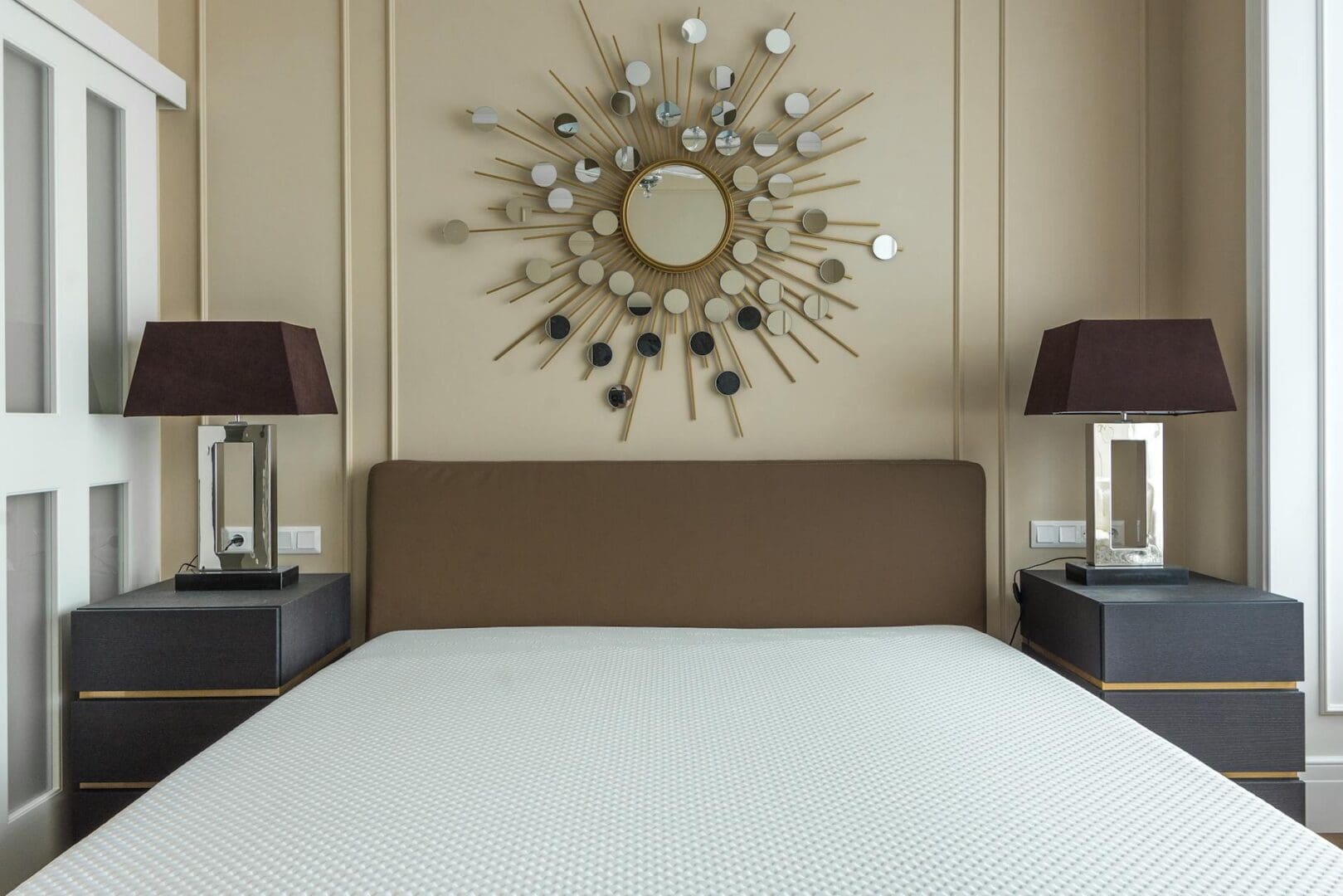
Finally, accent lighting creates ambiance. Small table lamps, LED strip lights behind headboards, or even battery-operated puck lights in shelving add gentle pools of light that feel cozy without being stimulating.
Smart Controls and Automation
The convenience factor matters when you’re already tired. Installing dimmer switches should be your first move—they typically cost $15-40 per switch and make any fixture more sleep-friendly. Make sure you choose LED-compatible dimmers if you’re using LED bulbs.
Motion-sensor night lights are genuinely helpful for those middle-of-the-night bathroom trips. Place them low on the wall or use plug-in versions that automatically illuminate your path with just enough light to see without fully waking you up. These run $10-30 depending on features and style.
If you want to get more sophisticated, smart lighting systems let you create scenes and schedules. Program “reading mode” with warm, medium-brightness lights, “bedtime mode” with ultra-dim warm lighting, and “wake up mode” that gradually brightens over 15-30 minutes to simulate sunrise. Yes, it’s an investment—starter kits begin around $70-100—but the automation eliminates the mental load of adjusting lights manually every night.
Practical Placement and Power Considerations
Even the best fixtures won’t help if they’re poorly positioned. Bedside table lamps should sit at eye level when you’re seated in bed—roughly 24-27 inches tall including the shade. This prevents glare while reading. Wall-mounted fixtures should be 40-60 inches from the floor, adjusted based on your mattress height.
Think about switch accessibility too. Three-way switches at both the bedroom entrance and bedside mean you’ll never have to cross a dark room or get out of bed to turn lights off. If rewiring isn’t realistic, wireless smart switches or remote-controlled outlets offer similar convenience without the electrical work.
Your bedroom lighting should work as hard as you do to protect your sleep. Start with warm bulbs and dimmers as your foundation, then add layers and smart features based on your budget and lifestyle. When your lighting automatically shifts from energizing morning brightness to calming evening warmth, you’re not just decorating—you’re creating an environment where quality sleep happens naturally. Sweet dreams start with the flip of the right switch.
Shopping for a dresser for your child’s room feels different than buying one for yourself. You’re not just thinking about today—you’re wondering if it’ll survive the toddler years, hold up through elementary school, and maybe even make it to the teenage bedroom. The good news? With the right approach, you can find a dresser that […]
You’ve found the perfect bed frame, but now your old dresser looks completely out of place. Or maybe you’re starting fresh and wondering whether you need to buy a matching bedroom set. The truth is, coordinating your dresser and bed frame isn’t about finding exact matches—it’s about creating visual harmony through smart choices about style, […]
Adding a dresser to your walk-in closet can transform it from a simple hanging space into a fully functional dressing room. But unlike choosing a dresser for your bedroom, closet dressers have different requirements—they need to fit within existing dimensions, complement built-in systems, and maximize storage without creating obstacles. Whether you’re designing a new closet […]