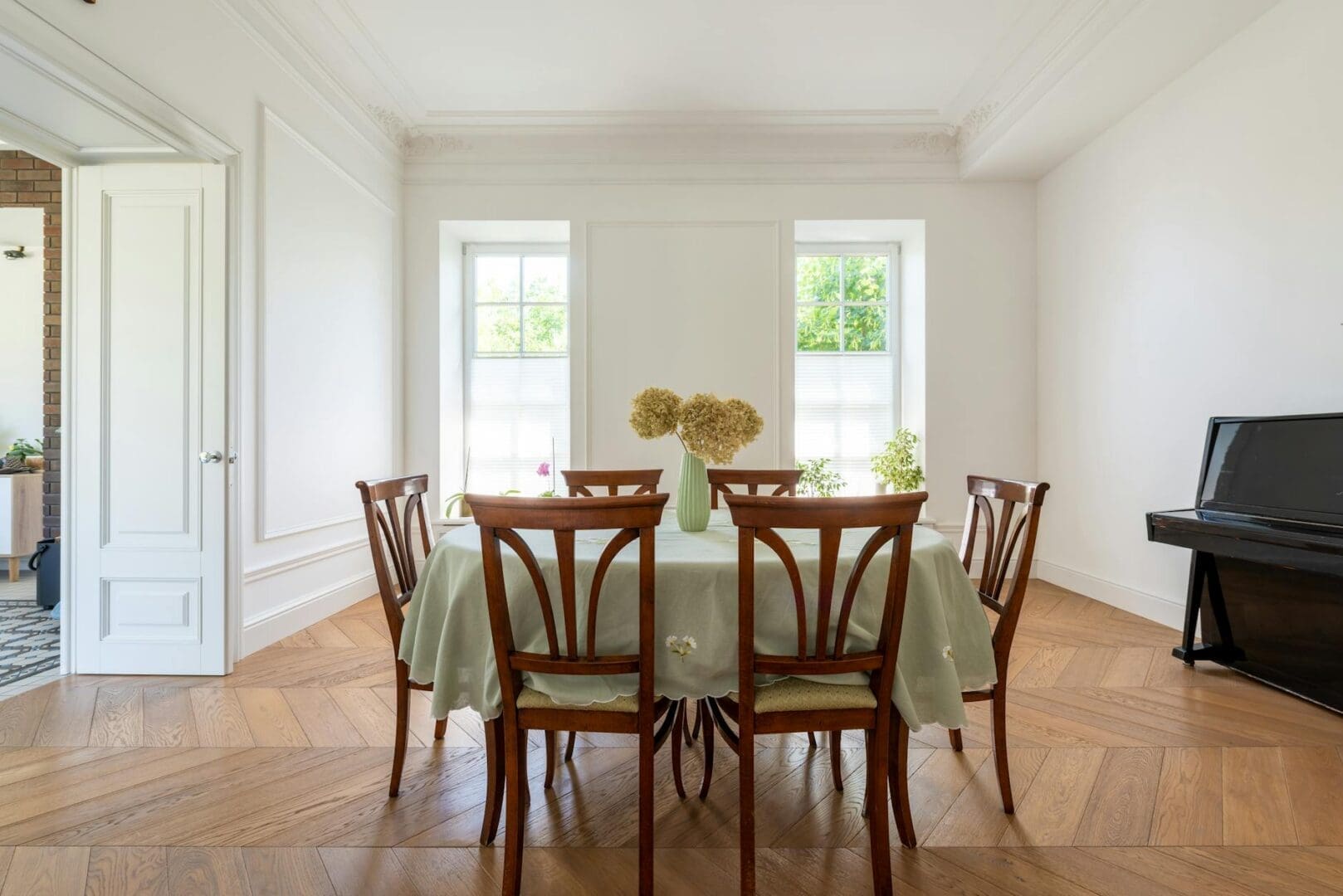
Standing in a showroom staring at two beautiful dining tables—one round, one rectangular—wondering which one actually makes sense for your home? You’re not alone. Table shape affects everything from how many people you can seat to how easily you can navigate your dining room, and getting it right matters more than you might think.
The good news is that choosing between round and rectangular comes down to a few practical considerations. Let’s walk through what really matters so you can pick the right shape with confidence.
Consider Your Room Shape and Size
Your room’s dimensions will often point you in the right direction. Rectangular tables naturally complement long, narrow dining rooms and create a balanced look in most traditional dining spaces. They fit neatly against walls when needed and work well in open-concept layouts where the dining area is part of a larger room.
Round tables shine in square rooms, breakfast nooks, and smaller spaces. A 48-inch round table fits comfortably in a 10×10 foot space, while you’d need at least 10×12 feet for a comparable rectangular table (around 60×36 inches). If your dining area feels cramped or awkward, a round table often solves the problem by eliminating corners that jut into walkways.
Here’s a quick reality check: measure your space and subtract at least 3 feet on all sides for chair clearance. If you’re left with a narrow footprint, rectangular is probably your answer. If you have roughly equal dimensions to work with, round tables typically feel more spacious.
Think About Your Seating Needs
Rectangular tables win the capacity game, especially for larger gatherings. A standard 72-inch rectangular table seats 6-8 people comfortably, and you can easily add extensions to accommodate 10 or more. Budget options start around $400-600, while solid wood tables with quality construction run $1,200-2,500.
Round tables create intimate dining experiences but max out faster. A 48-inch round seats four comfortably, a 60-inch round fits six, and anything larger starts feeling awkward (nobody wants to shout across a 72-inch diameter). For families of four or couples who occasionally entertain, this works beautifully. Expect to pay $350-800 for budget-friendly options, $900-2,000 for mid-range tables, and $2,000+ for designer pieces or premium materials.
If you regularly host dinner parties with eight or more guests, rectangular tables with leaves give you flexibility. For everyday family dinners with four people, round tables encourage better conversation since everyone faces each other equally.
Match Your Lifestyle and Flow
Round tables are safer for homes with young children—no sharp corners to bump into—and they make mealtime conversation easier since no one’s stuck at an awkward corner seat. They also create better traffic flow in rooms where people need to walk around the table frequently.
Rectangular tables offer more surface area for spreading out, which matters if you use your dining table as a workspace, homework station, or serving buffet during parties. They also pair better with benches, which many families prefer for flexible seating and space-saving storage underneath.
Think about how you actually live: Do you need a table that doubles as a workspace? Rectangular. Want everyone to feel equally included in conversation? Round. Have kids who are constantly running through the room? Round tables reduce collision injuries.
Style and Visual Weight
Rectangular tables anchor a room and create formal, traditional looks—they’re the default choice for good reason. They work with virtually any chair style and fit the proportions of most dining rooms without much fuss.
Round tables feel more casual and contemporary, though they certainly come in formal styles too. A pedestal base (single central support) maximizes leg room and looks sculptural, while four-leg round tables can feel more traditional. Round tables also make small spaces feel larger because the curved shape is less visually heavy than a rectangular slab.
If your home leans traditional or farmhouse, rectangular tables feel natural. For modern, eclectic, or cozy spaces, round tables often enhance the vibe you’re going for.
Choosing your table shape really comes down to measuring your space honestly, counting how many people you need to seat regularly, and thinking about how you use your dining area daily. Round tables excel in smaller spaces and create intimate dining experiences, while rectangular tables handle larger groups and provide more versatile surface area. Neither choice is wrong—but one is definitely right for your particular home and lifestyle.
Hallways are the overlooked workhorses of our homes—they connect every room, but rarely get the storage love they deserve. A well-chosen sideboard transforms that narrow stretch of wall into genuinely useful space without making your hallway feel like an obstacle course. The trick is finding one that fits the proportions of the room while actually […]
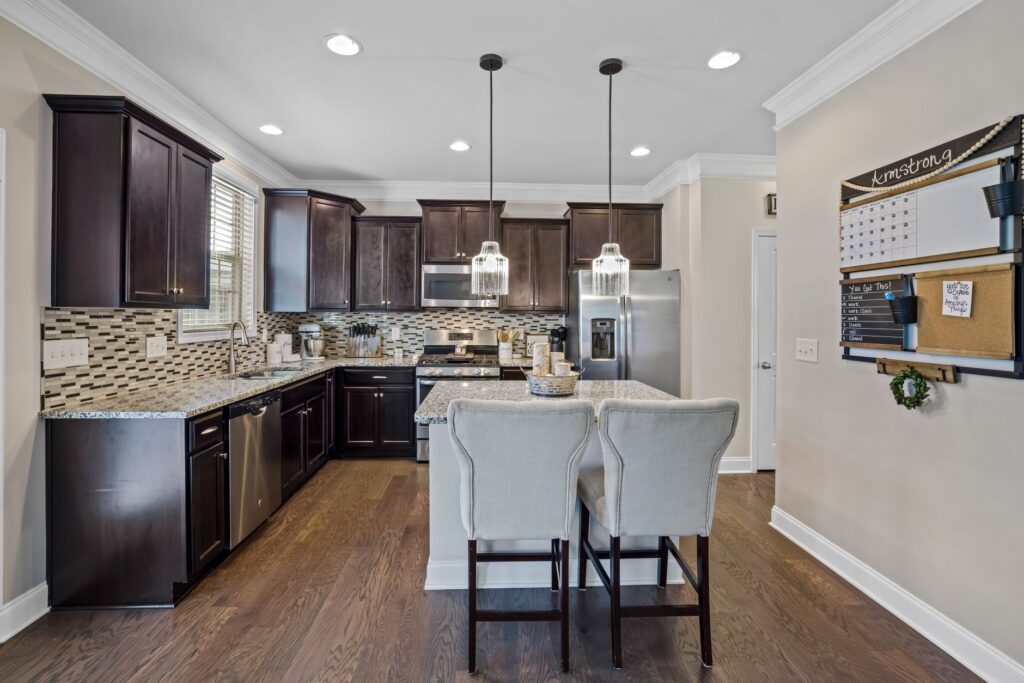
Dark kitchens—whether they feature rich espresso cabinets, moody charcoal walls, or black granite countertops—create incredible drama and sophistication. But they also present a unique challenge when it comes to choosing bar stools. Pick the wrong ones, and your beautiful space can feel cave-like or visually heavy. Choose wisely, and your stools become the bright spot […]
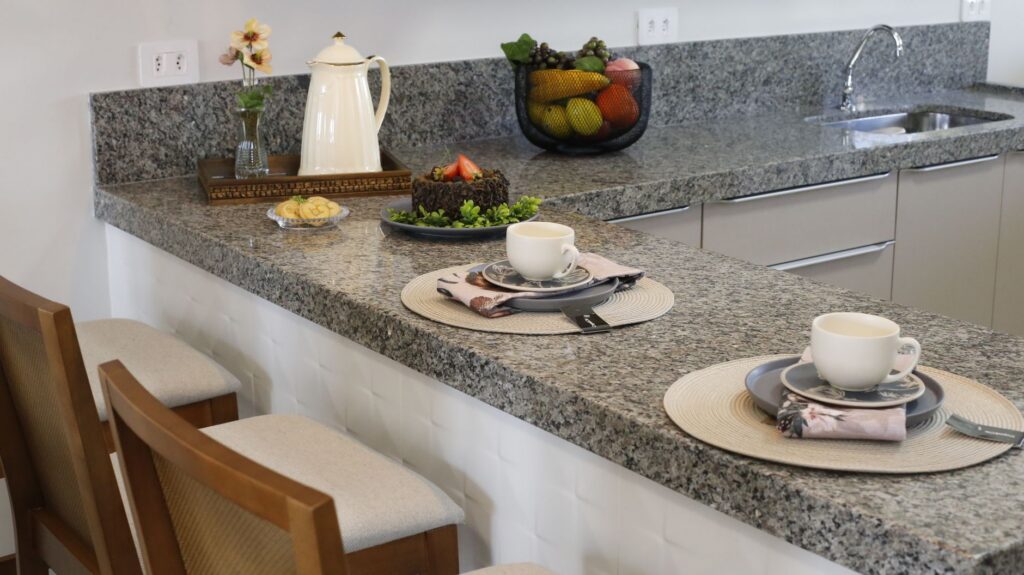
Your kitchen peninsula is prime real estate—it’s where morning coffee happens, where kids do homework while you’re prepping dinner, and where guests naturally gather during parties. Getting the right bar stools makes all the difference between a peninsula that feels welcoming and one that sits empty. But with so many options for height, style, and […]