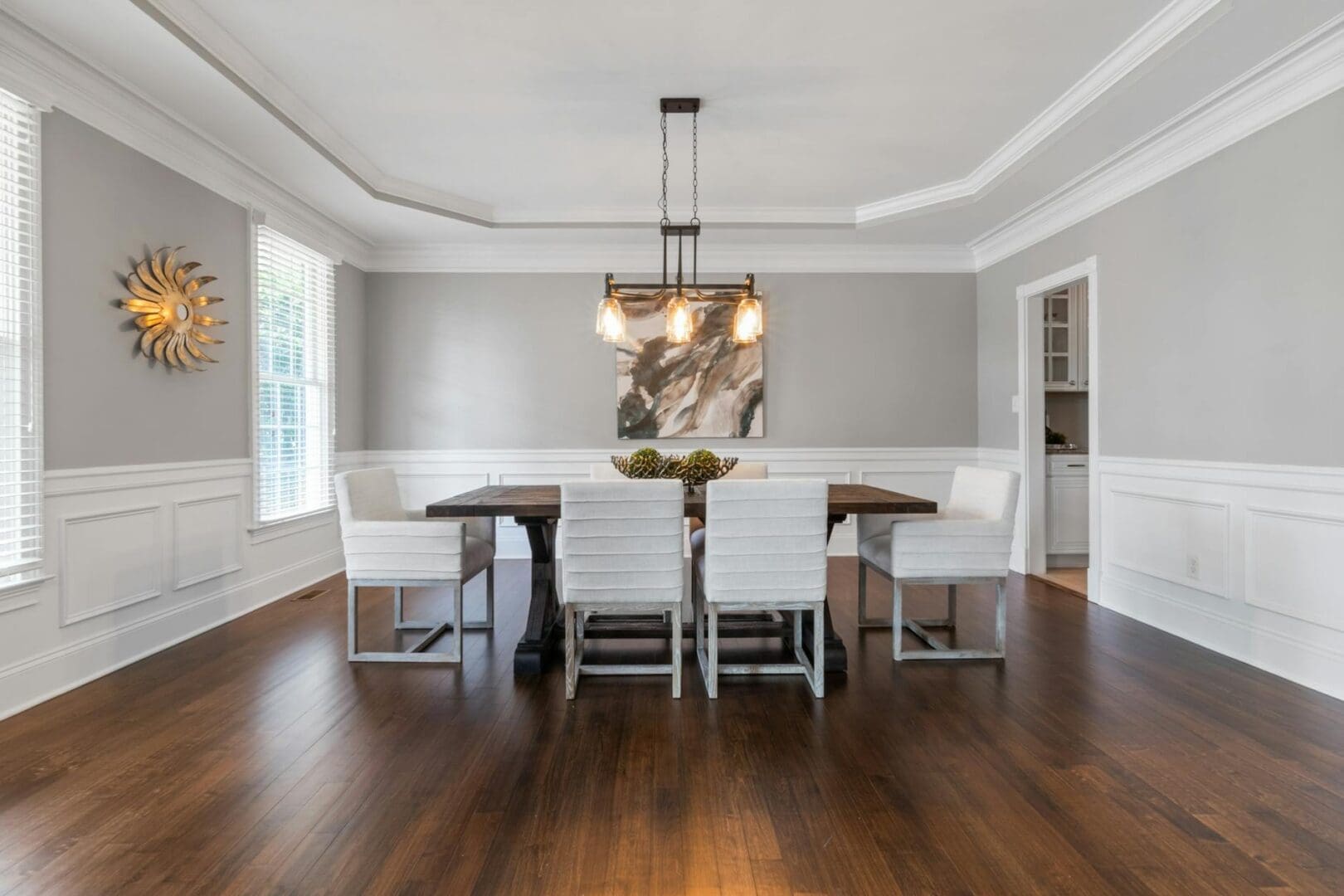
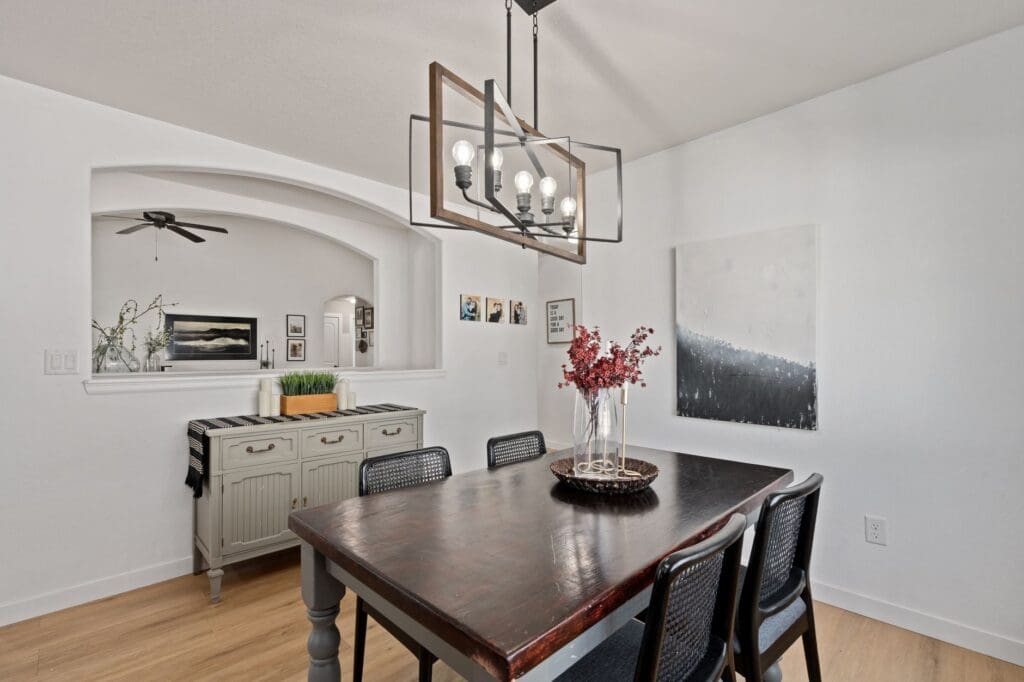
If you’ve been squinting at your dinner plate or dealing with harsh overhead lighting that makes everyone look exhausted, a linear pendant might be exactly what your dining room needs. These elongated fixtures bring focused light right where you need it while adding a serious style upgrade to one of your home’s most important gathering spaces.
Unlike traditional chandeliers or flush-mount fixtures, linear pendants stretch horizontally above your table, providing even illumination across the entire dining surface. But with options ranging from minimalist metal bars to elaborate multi-light designs, choosing the right one takes more than just picking what looks pretty online.
Getting the Size and Scale Right
The most common mistake people make is choosing a fixture that’s too small for their table. Your linear pendant should be roughly two-thirds to three-quarters the length of your dining table. So if you have a 72-inch table, look for pendants in the 48 to 54-inch range.
For width, the fixture should be at least 12 inches narrower than your table’s width to prevent head-bumping disasters when people sit down. If your table is 36 inches wide, keep your pendant to 24 inches wide or less.
Height matters just as much. The bottom of your pendant should hang 30 to 36 inches above the table surface. Lower works for intimate, moody vibes, while higher placements feel more open but may not light your table as effectively. If you have especially tall ceilings (over 9 feet), add 3 inches of chain or rod length for every additional foot of ceiling height.
Light Output and Bulb Considerations
You’ll want between 300 and 400 lumens per person at your table for comfortable dining. For a six-person table, that’s roughly 1,800 to 2,400 total lumens. Most linear pendants with three to five bulbs can hit this target easily.
Look for fixtures that accept standard E26 bulbs rather than proprietary options. This gives you flexibility to choose LED bulbs in your preferred color temperature—2700K for warm, restaurant-style ambiance or 3000K for a crisper, more contemporary feel. Dimmable fixtures are worth the extra investment, letting you adjust from bright task lighting for board games to soft mood lighting for dinner parties.
Some linear pendants come with integrated LED arrays. These are energy-efficient and long-lasting, but confirm the color temperature works for you since you can’t swap them out later. Budget fixtures with integrated LEDs start around $150, while quality options run $300 to $600.
Style and Material Options
Linear pendants fall into a few distinct style categories. Minimalist bar pendants feature a simple horizontal element with exposed bulbs—these work beautifully in modern and transitional spaces and typically range from $200 to $800.
Geometric cage designs use metal frames in rectangular, hexagonal, or abstract shapes. They add architectural interest without overwhelming smaller rooms and run $250 to $1,000 depending on finish quality and size.
Drum-style linear pendants feature fabric or metal shades that soften the light. These suit traditional and transitional dining rooms and generally cost $300 to $1,200.
For material finishes, matte black and brushed brass are current favorites that won’t feel dated in five years. Oil-rubbed bronze works in traditional settings, while polished chrome or nickel keeps things crisp and contemporary. If your dining room has other prominent metal finishes (cabinet hardware, faucet visible from an adjacent kitchen), try to coordinate your pendant’s finish.
Installation and Practical Matters
Most linear pendants require a standard junction box, but larger fixtures (over 50 pounds) need a reinforced mounting system. Check your fixture’s weight before ordering, and factor in $150 to $300 for professional installation if you’re not comfortable with electrical work.
Consider your ceiling configuration. Vaulted or sloped ceilings require pendants with adjustable canopies or angled mounting hardware—not all fixtures accommodate this, so read specifications carefully.
If your dining table isn’t centered under your existing ceiling box, you have options. Some linear pendants come with off-center canopies, or you can use a ceiling canopy system that redistributes weight while repositioning the fixture.
The right linear pendant transforms your dining room from purely functional to genuinely inviting. Start with your table measurements, think about the lighting quality you want, then narrow down style options that complement your space. With those parameters in place, you’ll find a fixture that does exactly what you need it to—without second-guessing yourself after the electrician leaves.
You’ve measured your dining room, you know you need more storage, and now you’re staring at dozens of sideboards wondering: doors or open shelves? It’s not just an aesthetic choice—it affects how you’ll actually use this piece every single day. Let’s walk through what really matters so you can pick the sideboard that works for […]
Did You Know? The Declaration of Independence Was Likely Written in a Windsor Chair As America celebrates 250 years of independence, it’s worth looking at one of the quieter witnesses to that history: the humble Windsor chair. Thomas Jefferson is said to have drafted the Declaration of Independence while seated in an unusual revolving Windsor […]
Shopping for a dining table when you have a family of six means you need something that works for Tuesday night homework sessions, weekend pancake breakfasts, and holiday dinners with grandparents—all without taking over your entire dining room. The right table makes family life easier. The wrong one? You’ll feel it every single day. Let’s […]