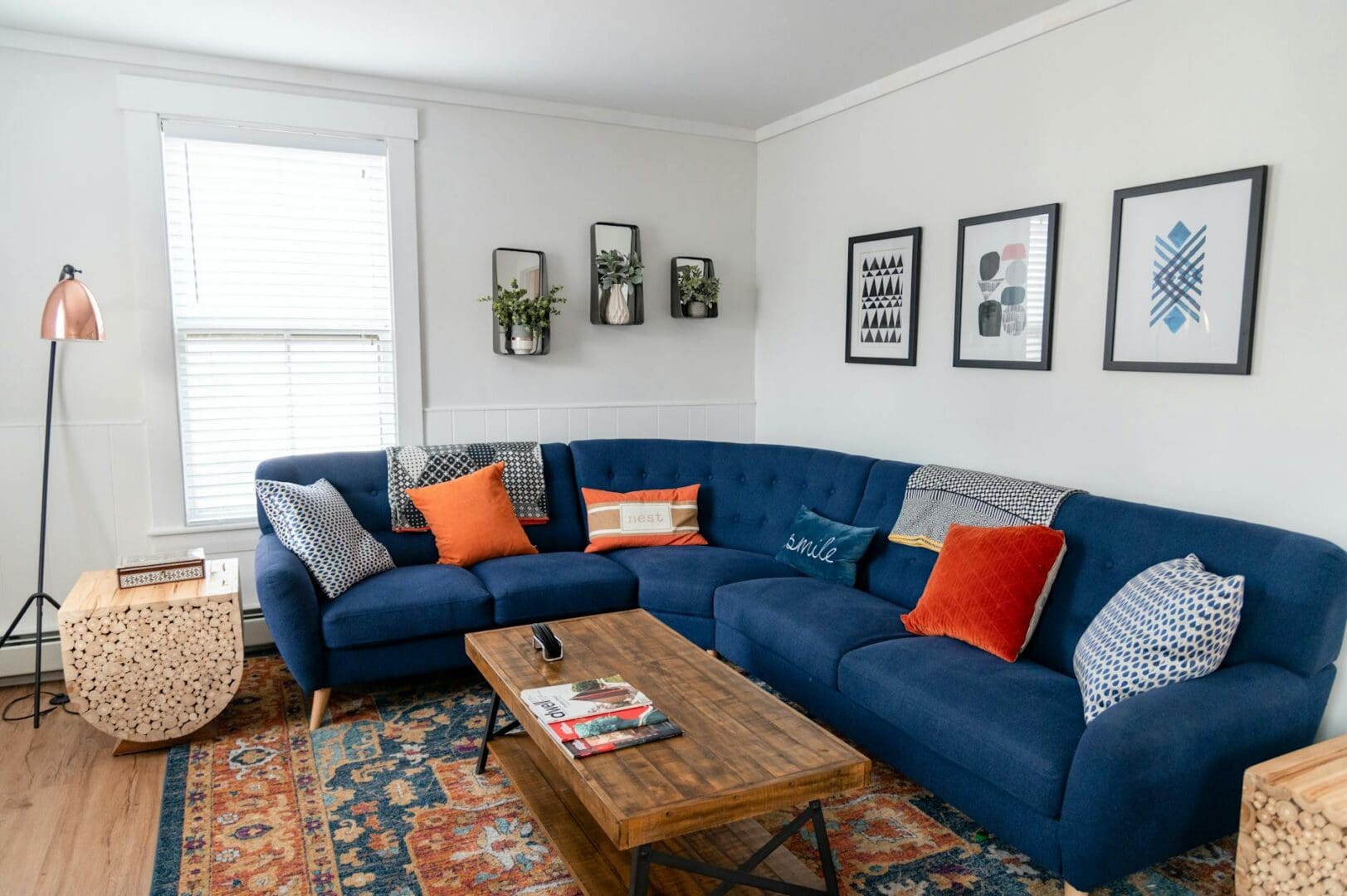
You’ve decided a sectional is the answer to your living room seating needs, but now you’re staring at configuration options wondering which shape actually makes sense for your space. An L-shape feels manageable, but will you have enough seats for movie night? A U-shape looks luxurious, but is it overkill for a medium-sized room? Let’s break down the real differences so you can choose confidently.
Understanding Your Room Size and Layout
The most important factor isn’t which configuration looks better in showroom photos—it’s what actually fits your room and traffic flow. L-shaped sectionals typically range from 95 to 120 inches on the long side and 75 to 95 inches on the short side. They work beautifully in small to medium living rooms (roughly 12×15 feet or larger) and fit neatly into corners without dominating the space.
U-shaped sectionals are substantially larger, often stretching 120 to 140 inches across with two extending arms. You’ll need a room that’s at least 15×18 feet to accommodate one comfortably without blocking doorways or creating awkward walkways. They work best in open-concept spaces or dedicated family rooms where the sectional can float in the middle of the room rather than hug walls.
Here’s a practical test: measure your room and use painter’s tape on the floor to outline your sectional options. Live with those outlines for a few days. Can you walk through comfortably? Does it block natural light? This simple exercise saves many people from expensive mistakes.
Seating Capacity and How You Actually Use Your Space
L-shaped sectionals typically seat 4 to 6 people comfortably—plenty for most families and regular entertaining. The chaise end gives you that coveted stretch-out spot, while the other side provides traditional seating. Budget options start around $800-$1,200, mid-range pieces land between $1,500-$3,000, and high-quality constructions with performance fabrics run $3,500 and up.
U-shaped sectionals accommodate 6 to 9 people, making them ideal if you regularly host gatherings or have a larger family. The extra seating comes with extra cost—expect to start around $1,800 for budget-friendly options, $3,000-$5,000 for solid mid-range quality, and $6,000+ for premium materials and construction.
Think honestly about your lifestyle. If you host monthly game nights or have teens who bring friends over constantly, that U-shape might be worth the investment. But if it’s usually just you and a partner most evenings, an L-shape prevents your room from feeling like empty stadium seating.
Configuration Flexibility and Future-Proofing
Life changes, and so do living spaces. L-shaped sectionals offer more flexibility when you move or rearrange. Most come as two or three separate pieces that you can reconfigure—swap the chaise from right to left, or even separate the pieces into a sofa and ottoman setup in a pinch.
U-shaped sectionals are less forgiving. That center section commits you to the configuration, and moving this beast to a new home or different room is considerably more challenging. Many U-shapes come in four to six pieces, which sounds modular but really only works in that U formation.
Consider modular sectionals if you value flexibility. These systems let you start with an L-shape and add sections later if you move to a bigger space, or remove pieces if you downsize. Brands offering true modularity typically fall in the mid-range to splurge categories, but the adaptability can justify the investment.
Style Impact and Room Balance
L-shaped sectionals create a defined seating area while leaving visual breathing room. They anchor a corner without overwhelming, making them excellent for rooms where you want to incorporate other furniture pieces like accent chairs, bookshelves, or a piano. The asymmetrical footprint actually helps balance rectangular rooms.
U-shaped sectionals make a bold statement and become the room’s undeniable focal point. Everything else in the space plays a supporting role. This works wonderfully in large, open areas where you want to create an intimate conversation zone within a bigger space. In smaller rooms, though, a U-shape can feel cramped and leave you with awkward leftover spaces that are too small for functional furniture.
Your choice here should align with your overall design vision. Want a cozy, wrapped-in feeling for family movie nights? U-shape delivers. Prefer a more open, flexible layout where furniture doesn’t dominate? The L-shape is your friend.
Both configurations have their place, and the “right” answer depends entirely on your specific space and how you live in it. Measure carefully, think about your typical evening at home rather than that twice-a-year party, and trust your instincts about what feels proportional to your room. The best sectional is the one that fits your life, not just your floor plan.
You need more storage in your living room, but a bulky bookcase feels too heavy and floating shelves aren’t cutting it. A credenza might be exactly what you’re looking for—it’s that low-profile cabinet that gives you tons of hidden storage while creating a beautiful surface for lamps, plants, and the things you actually want to […]
If you’ve been hitting snooze repeatedly or dragging yourself out of bed feeling groggy, you’re not alone. Waking up to a jarring alarm in a dark room works against your body’s natural rhythms, especially during winter months. A sunrise alarm clock mimics natural dawn, gradually filling your room with light to ease you awake. But […]
Waking up at 3 a.m. with a sweaty neck and flipping your pillow to the cool side for the fourth time isn’t just annoying—it’s robbing you of quality sleep. If you’re a hot sleeper, your pillow might be trapping heat against your head and neck all night long. The good news? The right cooling pillow […]