If you’ve ever walked into your home and felt overwhelmed by the clutter, you’re not alone. The trick to lasting organization isn’t just about tidying up—it’s about having the right furniture and storage pieces that actually work for how you live. Let’s walk through each room and talk about what really makes a difference.
Living Room: Creating Zones That Work
Your living room probably does double (or triple) duty, so smart storage furniture is essential. Start with a coffee table that has built-in storage—drawers or a lift-top design can hide remotes, magazines, and throw blankets without making the room feel cluttered. Budget-friendly options start around $150, while solid wood pieces with more sophisticated storage run $400-800.
Media consoles are your next priority. Look for units with a mix of open shelving and closed cabinets so you can display what you love and hide what you don’t. Most people need at least 60 inches of width for modern TVs, but measure your space and TV first. The key features to look for:
Cable management cutouts in the back panel
Adjustable shelving for components of different heights
Soft-close drawers that won’t slam or stick
A finish that matches your other wood furniture
Don’t overlook storage ottomans and benches. They provide extra seating when guests arrive and swallow up everything from kids’ toys to extra throw pillows. Look for hinged tops that stay open while you’re digging around inside.
Kitchen and Dining: Maximizing Every Inch
Kitchen organization goes beyond cabinets—the right furniture pieces can add serious storage capacity. A kitchen island with shelving or drawers (even a portable one) gives you prep space plus a home for cookbooks, small appliances, or table linens. Expect to spend $300-600 for a quality mobile island, or $1,000+ for a substantial stationary piece.
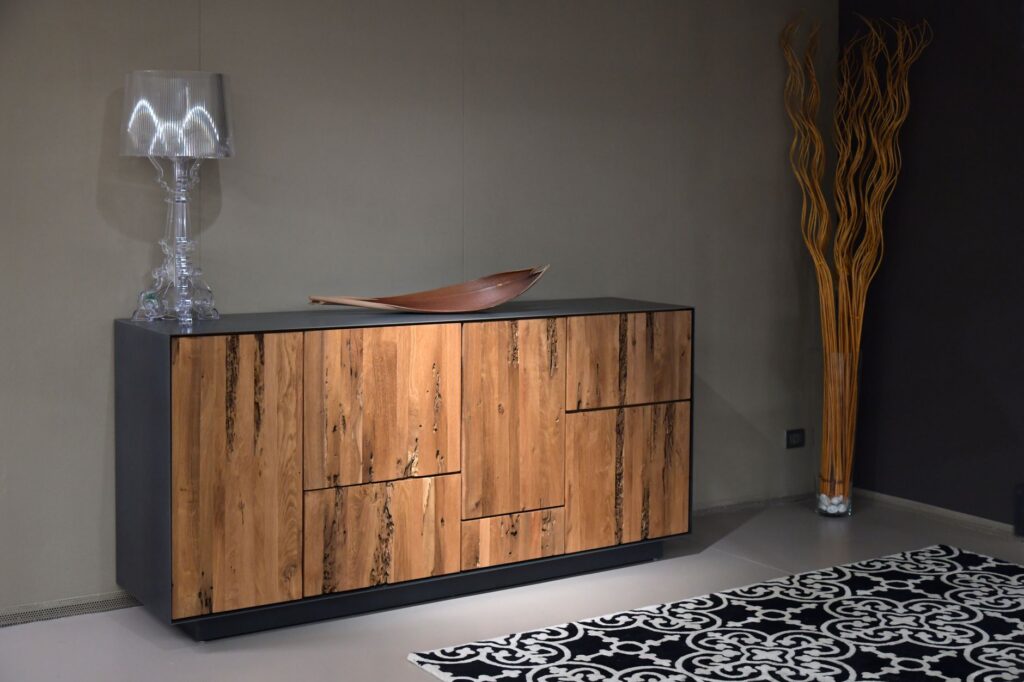
In the dining area, buffets and sideboards are workhorses. They hold serving pieces, extra dishes, and table linens while giving you a surface for serving food during gatherings. A good buffet measures 48-72 inches wide and stands about counter height. Look for felt-lined drawers to protect silverware and stemware racks if you’re a wine glass collector.
Baker’s racks work beautifully in eat-in kitchens or dining rooms where you need vertical storage without the bulk of a hutch. They typically run $150-400 and provide open shelving that keeps frequently-used items accessible.
Bedroom: Storage That Promotes Calm
Your bedroom should feel like a retreat, which means visible clutter needs to go. Platform beds with built-in drawers underneath are game-changers for storing off-season clothing, extra bedding, or shoes. These typically add $200-400 to the cost of a standard bed frame, but they eliminate the need for plastic bins shoved under the bed.
Dressers deserve careful consideration. Measure your folded clothes honestly—most people need at least six drawers, and deeper bottom drawers (14+ inches) work best for bulky sweaters or jeans. Dovetail drawer construction and full-extension glides are worth paying extra for in the $500-1,200 range. Cheaply made drawers that stick or fall off their tracks make it harder to stay organized.
Nightstands with drawers keep bedside essentials contained. Even one drawer makes a difference for corralling phone chargers, reading glasses, and hand lotion. Two-drawer models offer even better organization if you have the space.
Entryway and Mudroom: Containing the Chaos
The entryway sets the tone for your entire home. Hall trees combine hooks, a bench, and often a mirror in one vertical piece—perfect for narrow spaces. They run $150-500 depending on materials and finish quality.
If you have more space, a storage bench with cubbies above creates a dropping zone for shoes, bags, and coats. Look for benches with a cushioned top for putting on shoes and individual compartments to assign each family member their own space. Solid wood versions with durable finishes hold up best to daily wear and typically cost $300-700.
Console tables with baskets or bins underneath work in tighter entryways. Choose a narrow depth (12-14 inches) so you’re not bumping into it constantly, and use the baskets for sorting mail, dog leashes, or seasonal accessories like scarves and gloves.
Getting your home organized room by room isn’t about perfection—it’s about having furniture that helps you maintain order without constant effort. Focus on one room at a time, choose pieces with the specific storage features you actually need, and invest in quality construction for the areas you use most. Your future self will thank you every time you walk through the door.
You need more storage in your living room, but a bulky bookcase feels too heavy and floating shelves aren’t cutting it. A credenza might be exactly what you’re looking for—it’s that low-profile cabinet that gives you tons of hidden storage while creating a beautiful surface for lamps, plants, and the things you actually want to […]
If you’ve been hitting snooze repeatedly or dragging yourself out of bed feeling groggy, you’re not alone. Waking up to a jarring alarm in a dark room works against your body’s natural rhythms, especially during winter months. A sunrise alarm clock mimics natural dawn, gradually filling your room with light to ease you awake. But […]
Waking up at 3 a.m. with a sweaty neck and flipping your pillow to the cool side for the fourth time isn’t just annoying—it’s robbing you of quality sleep. If you’re a hot sleeper, your pillow might be trapping heat against your head and neck all night long. The good news? The right cooling pillow […]