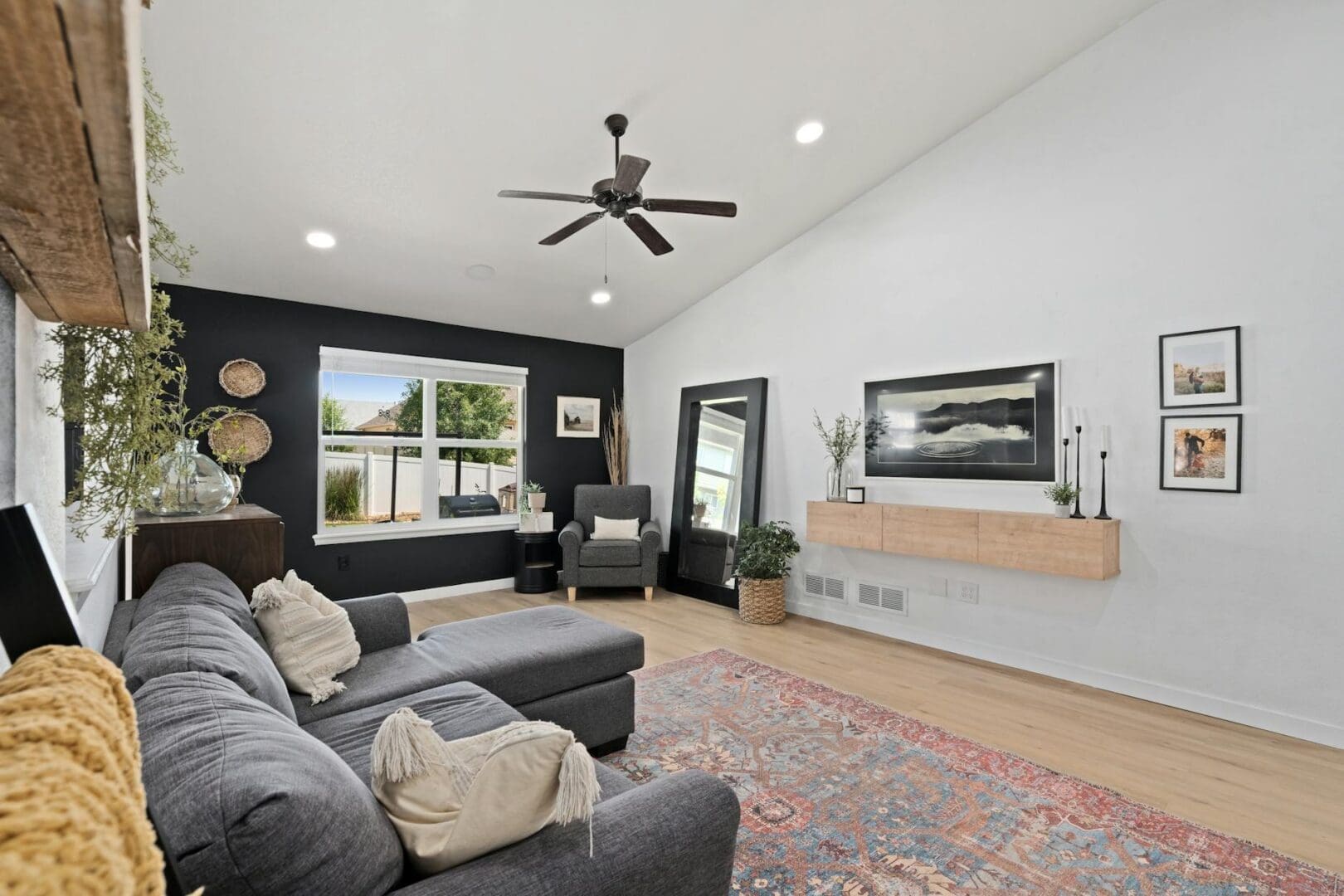
There’s nothing worse than falling in love with a sectional online, waiting weeks for delivery, and then discovering it completely overwhelms your living room—or worse, doesn’t fit through the door. Measuring for a sectional isn’t quite as straightforward as measuring for a standard sofa, but with the right approach, you can avoid that sinking feeling and find a piece that fits your space perfectly.
Start With Your Room Dimensions
Before you even think about specific sectionals, grab a tape measure and map out your living room. Measure the length and width of the entire space, then note the locations of windows, doors, radiators, outlets, and any architectural features like fireplaces or built-ins. Sketch a simple floor plan—it doesn’t need to be fancy, just accurate.
Pay special attention to doorways, hallways, and stairwells the sectional will need to pass through during delivery. Measure the width of each doorway and the height of any tight turns. Most sectionals come in separate pieces, but some L-shaped designs are single units that need more clearance. A good rule of thumb: you’ll need at least 30 inches of clearance, though 36 inches is more comfortable for delivery.
Calculate the Sectional Footprint
Once you know your room dimensions, figure out how much space you can actually dedicate to a sectional. Here’s where many people go wrong—they measure wall to wall and assume that’s their maximum size. In reality, you need breathing room.
Leave at least 30-36 inches between your sectional and the TV or entertainment center for comfortable viewing and traffic flow. If your sectional will float in the room rather than sit against walls, allow 24-30 inches behind it for walking space. Between the sectional and a coffee table, aim for 14-18 inches—enough to set down a drink comfortably without doing lunges to reach the remote.
For corner sectionals, measure both the length along one wall and the perpendicular length along the other. A typical small sectional might be 78 inches x 78 inches, while larger configurations can stretch to 120 inches x 90 inches or more. Mid-range options usually fall between 90-110 inches on the longest side, which works well in most average-sized living rooms (around 12 x 18 feet).
Understand Sectional Configurations and Depth
Not all sectionals are created equal. An L-shaped sectional has two perpendicular sections, while a U-shaped design adds a middle section for more seating. There are also curved sectionals, bumper chaise sectionals (one long side with a chaise extension), and modular pieces you can rearrange.
Depth matters more than most people realize. Standard sectionals run 36-40 inches deep, which works for formal sitting. Deeper sectionals (40-45 inches) offer that sink-in comfort but eat up more floor space—they can make a smaller room feel cramped. If you’re working with limited square footage, look for apartment-sized sectionals with a 32-35 inch depth.
Don’t forget about arm styles, either. Track arms and low-profile arms take up less visual and physical space than rolled or English arms, which can add 6-8 inches to your overall width.
Test Your Layout Before You Buy
Here’s a trick that saves countless returns: use painter’s tape to outline the exact footprint of your prospective sectional on the floor. Live with it for a few days. Walk around it. Place your coffee table. Sit in different spots. Does it block natural traffic patterns? Can you still open doors fully? Does it feel proportional to the room?
You can also use large cardboard boxes arranged to approximate the height and see how the scale feels. A sectional that looks perfect in a showroom with 12-foot ceilings might feel hulking in a room with standard 8-foot ceilings.
Once you’ve got your measurements locked down and you’ve visualized the layout, you’re ready to shop with confidence. You’ll know exactly what size range works for your space, which configurations make sense, and which features matter most. That perfect sectional is out there—and now you know it’ll actually fit when it arrives.
You need more storage in your living room, but a bulky bookcase feels too heavy and floating shelves aren’t cutting it. A credenza might be exactly what you’re looking for—it’s that low-profile cabinet that gives you tons of hidden storage while creating a beautiful surface for lamps, plants, and the things you actually want to […]
If you’ve been hitting snooze repeatedly or dragging yourself out of bed feeling groggy, you’re not alone. Waking up to a jarring alarm in a dark room works against your body’s natural rhythms, especially during winter months. A sunrise alarm clock mimics natural dawn, gradually filling your room with light to ease you awake. But […]
Waking up at 3 a.m. with a sweaty neck and flipping your pillow to the cool side for the fourth time isn’t just annoying—it’s robbing you of quality sleep. If you’re a hot sleeper, your pillow might be trapping heat against your head and neck all night long. The good news? The right cooling pillow […]