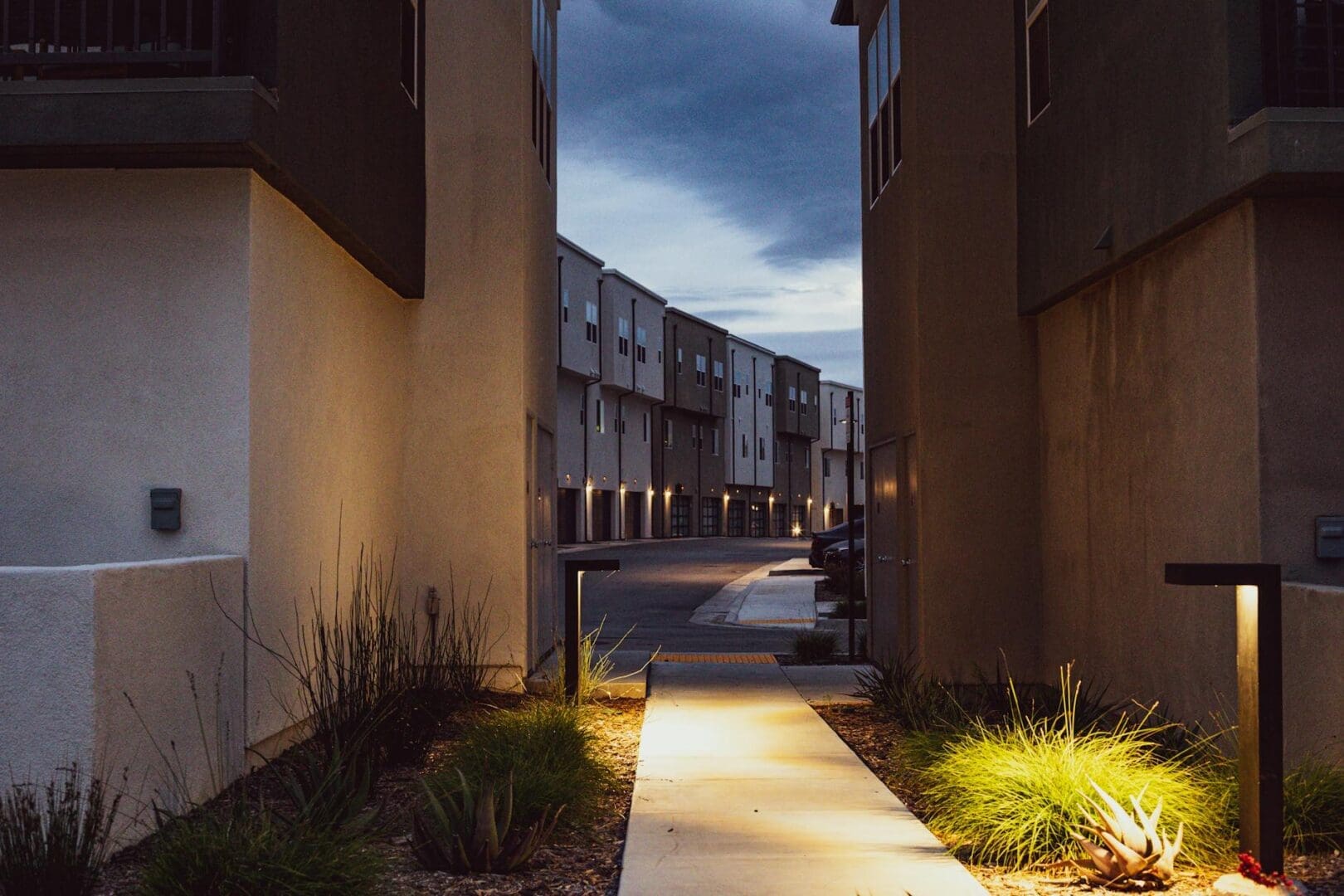
A dark pathway isn’t just uninviting—it’s a safety hazard. But when you’re trying to stick to a budget, lighting your walkway can feel like it’ll cost more than you want to spend. The good news? You can create a well-lit, welcoming path without breaking the bank. The trick is knowing which options give you the most bang for your buck and where you can cut costs without sacrificing quality or safety.
Solar Stakes: The Ultimate Budget-Friendly Option
Solar pathway lights are the heroes of budget landscape lighting, and for good reason. You’ll find basic solar stakes starting around $15-25 for a set of six to eight lights, with no electrical work required and zero ongoing energy costs. Just push them into the ground along your path and let the sun do the rest.
When shopping for solar lights, pay attention to the lumen output. Budget options typically range from 5-15 lumens per light, which sounds low but works fine for marking a path. Look for lights with at least 6-8 hours of runtime after a full charge. The biggest quality indicator? Check if the solar panel is separate or integrated—separate panels can be positioned for better sun exposure, which means more reliable lighting.
Expect to spend $20-40 for decent quality solar stakes that’ll last 2-3 years, or $60-100 for premium sets with brighter LEDs and sturdier construction that can go 4-5 years. The mid-range sweet spot around $40-60 usually gets you good brightness, automatic on/off sensors, and weather-resistant housing.
Rope and Strip Lighting for Continuous Coverage
If you want continuous lighting rather than individual spotlights, LED rope lights or strip lights are your budget-conscious answer. A 25-foot LED rope light typically costs $15-30 and can line an entire pathway edge with soft, ambient illumination.
Here’s what matters when choosing this option: make sure you’re buying outdoor-rated lighting with at least an IP65 waterproof rating. Low-voltage LED strips (12V) are safer and easier to install than line-voltage options, and you can cut most strips to your exact length. You’ll need to factor in a power source, but a simple outdoor outlet with a timer adds maybe $10-20 to your total if you already have exterior power access.
Mount rope lights along fence lines, deck edges, or use landscape staples to secure them along pathway borders. The installation takes about an hour for most walkways, and you’re looking at roughly $30-50 total for a 20-30 foot pathway when you include mounting supplies.
DIY and Repurposed Lighting Solutions
Getting creative can slash your costs even further. Mason jar lanterns with battery-operated LED tea lights run about $2-3 per fixture when you buy supplies in bulk. String them along your path, and you’ve got charming lighting for a fraction of commercial options. The tea lights need replacing every few weeks, but LED versions last 50+ hours per set of batteries.
Upcycled tin can luminarias are nearly free—just clean cans, punch decorative holes, add sand for weight, and drop in solar or battery candles. Mount them on stakes or line them along pathway edges. This approach works especially well for curved or informal garden paths where symmetry isn’t critical.
Another smart move: buy clearance holiday string lights after seasonal sales. White or warm white LED string lights work year-round when draped low along pathway edges or wrapped around nearby posts. You can often score sets for 50-75% off, bringing costs down to $5-15 for lighting that’ll last years.
Making Your Budget Lighting Last
The cheapest pathway lighting isn’t a deal if it fails in six months. Protect your investment by cleaning solar panels monthly—dirty panels mean dim lights. If you’re in a region with harsh winters, bring in solar lights before the first freeze and store them indoors. Battery-operated options need fresh batteries at the start of each season for reliable performance.
Position lights strategically rather than over-lighting. You need illumination at pathway entrance points, curves, steps, and the endpoint—not necessarily every three feet. Spacing budget lights 6-8 feet apart instead of 3-4 feet can cut your costs in half while still providing adequate safety lighting.
Good pathway lighting transforms your home’s curb appeal and keeps everyone safe after sunset. With solar stakes, LED strips, or creative DIY solutions, you can illuminate your walkway for anywhere from $20 to $100 depending on length and style preferences. Start with the basics, see what works for your space, and you can always add more lights later as your budget allows.
You need more storage in your living room, but a bulky bookcase feels too heavy and floating shelves aren’t cutting it. A credenza might be exactly what you’re looking for—it’s that low-profile cabinet that gives you tons of hidden storage while creating a beautiful surface for lamps, plants, and the things you actually want to […]
If you’ve been hitting snooze repeatedly or dragging yourself out of bed feeling groggy, you’re not alone. Waking up to a jarring alarm in a dark room works against your body’s natural rhythms, especially during winter months. A sunrise alarm clock mimics natural dawn, gradually filling your room with light to ease you awake. But […]
Waking up at 3 a.m. with a sweaty neck and flipping your pillow to the cool side for the fourth time isn’t just annoying—it’s robbing you of quality sleep. If you’re a hot sleeper, your pillow might be trapping heat against your head and neck all night long. The good news? The right cooling pillow […]