Staring at a dark bedroom with no ceiling fixture can feel limiting, especially when you’re trying to create a space that’s both functional and inviting. Whether you’re renting an older apartment or dealing with a home that skipped overhead lighting in the bedrooms, you’re not stuck with a cave-like space. The good news? A bedroom without overhead lighting often ends up feeling warmer and more intentional than one with a single harsh ceiling fixture.
Think in Layers: The Foundation of Good Bedroom Lighting
The secret to lighting any room well—especially one without a ceiling fixture—is layering three types of light: ambient (general lighting), task (reading, getting dressed), and accent (mood and atmosphere). Without an overhead light doing all the work, you’ll actually create these layers more thoughtfully.
Start with ambient lighting as your base. Floor lamps with torchiere or multi-bulb designs work beautifully here, casting light upward to bounce off the ceiling and spread throughout the room. Look for lamps with 100-150 watt equivalent LED bulbs or three-way switches that let you adjust brightness. Expect to spend $60-$150 for a quality floor lamp that’ll provide substantial ambient light, or $200-$400 for designer options with better construction and style.
Position at least one substantial floor lamp in a corner opposite your bed. This creates diagonal light flow across the room and prevents that “spotlight” effect you’d get from a single source.
Bedside Lighting That Actually Works
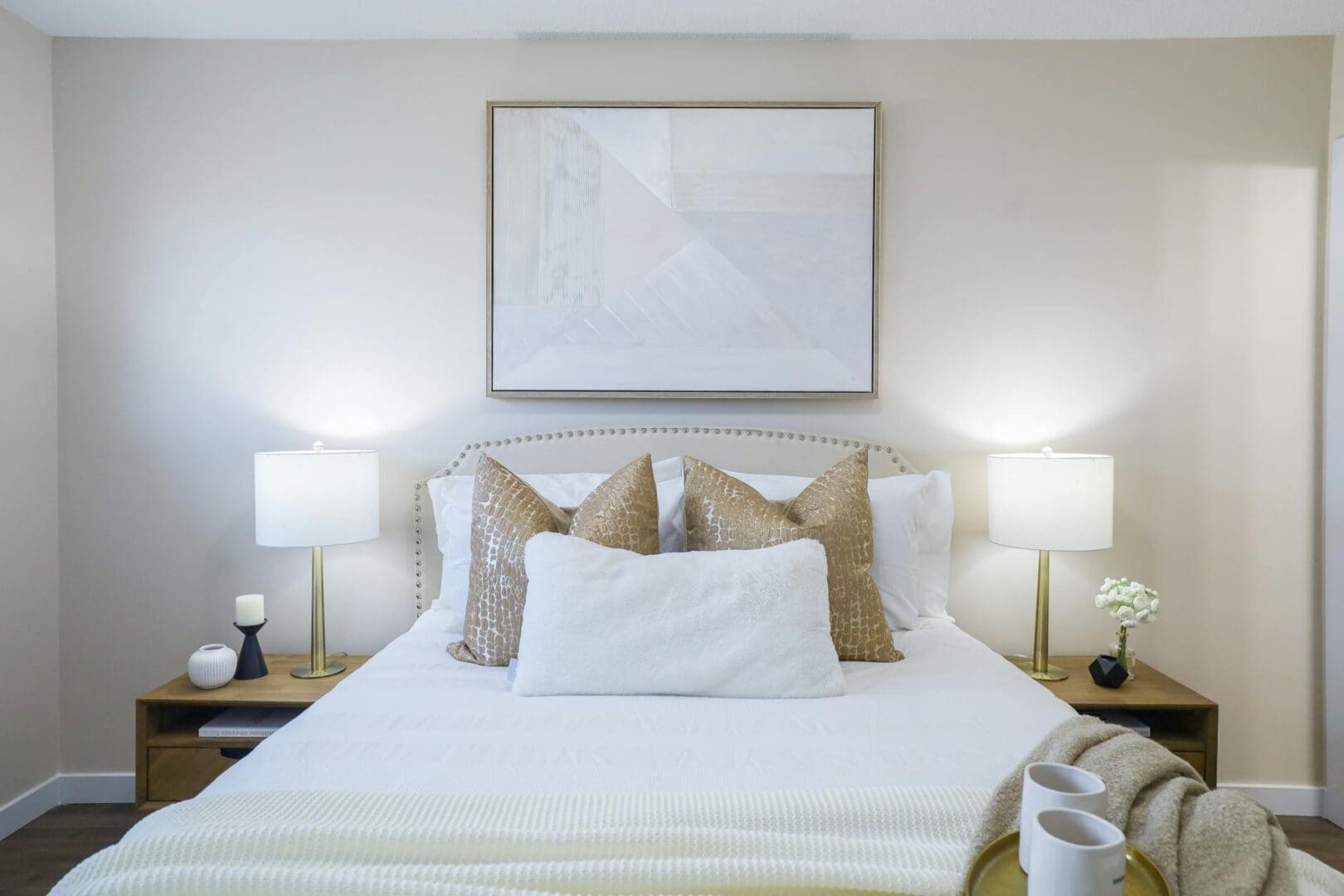
Table lamps on nightstands are non-negotiable in a bedroom without overhead lighting. You need two—one on each side of the bed if possible—for both symmetry and practicality. These handle your task lighting needs for reading and also contribute to ambient light when you need the whole room illuminated.
Choose lamps that are 24-30 inches tall (measured to the top of the shade) so the bottom of the shade sits near eye level when you’re sitting up in bed. The shade should be wide enough to direct light downward for reading but not so opaque that it can’t contribute to general room lighting. Budget options start around $40-$80 each, while quality ceramic or brass lamps run $100-$250.
If your nightstands are small or non-existent, swing-arm wall sconces mounted on either side of the bed are a game-changer. They provide task lighting without eating up surface space, and hardwired options (installed by an electrician) look built-in and polished. Plugin versions offer a renter-friendly alternative. Sconces typically range from $75-$300 per fixture.
Don’t Forget Strategic Accent Lighting
Once you’ve covered your ambient and task lighting bases, accent lighting adds depth and flexibility. String lights or LED strip lighting behind a headboard or along a bookshelf creates a soft glow perfect for evenings when you don’t need full brightness. Small accent lamps on dressers or desks add pockets of light that make the room feel balanced rather than having all light sources at bed-level.
Consider adding a statement pendant light or chandelier if you own your home—even without existing wiring. Swag hooks let you hang a hardwired fixture that plugs into an outlet, with the cord draped decoratively or hidden along the ceiling and down a corner. This gives you that overhead light look with more design impact than a basic ceiling fixture would provide anyway. Plug-in pendants run $80-$300 depending on style.
Practical Tips for Pulling It All Together
Use dimmers wherever possible—many floor and table lamps now come with built-in dimming, or you can use smart bulbs to control brightness from your phone. This flexibility is actually superior to a standard ceiling fixture with a basic on-off switch.
Stick to bulbs in the 2700-3000K range for bedroom spaces. This warm white light feels cozy and relaxing, unlike the harsh cool white that can make a bedroom feel clinical.
Plan for at least three separate light sources in a bedroom, and ideally four or five. This sounds like a lot, but it ensures you can light the room adequately while having options for different moods and activities.
A bedroom without overhead lighting pushes you to design something better than builder-grade fixture ever could. With a thoughtful mix of floor lamps, bedside lighting, and accent pieces, you’ll end up with a space that’s not just well-lit but genuinely comfortable—the kind of room where lighting adapts to your needs rather than forcing you to make do with whatever’s on the ceiling.
Shopping for a dresser for your child’s room feels different than buying one for yourself. You’re not just thinking about today—you’re wondering if it’ll survive the toddler years, hold up through elementary school, and maybe even make it to the teenage bedroom. The good news? With the right approach, you can find a dresser that […]
You’ve found the perfect bed frame, but now your old dresser looks completely out of place. Or maybe you’re starting fresh and wondering whether you need to buy a matching bedroom set. The truth is, coordinating your dresser and bed frame isn’t about finding exact matches—it’s about creating visual harmony through smart choices about style, […]
Adding a dresser to your walk-in closet can transform it from a simple hanging space into a fully functional dressing room. But unlike choosing a dresser for your bedroom, closet dressers have different requirements—they need to fit within existing dimensions, complement built-in systems, and maximize storage without creating obstacles. Whether you’re designing a new closet […]