Your coffee table shouldn’t be a dumping ground for mail, remotes, and half-empty water glasses—but somehow, that’s exactly what happens. The good news? With a few simple strategies, you can keep your coffee table looking magazine-worthy while still making it work for everyday life. Here’s how to strike that perfect balance between organized and stylish.
Use Trays to Create Zones
The single most effective tool for coffee table organization is a good tray. It instantly corrects visual chaos by creating a defined boundary for your items. Think of it as a picture frame for your tabletop essentials.
A decorative tray gives you a designated spot for things you actually use—the TV remote, coasters, a candle—while making them look intentional rather than scattered. Metal trays work beautifully in modern spaces, while woven or wooden trays suit casual or farmhouse styles. Look for trays between 12-18 inches wide for standard coffee tables, or go larger for oversized tables.
Budget-friendly rattan trays start around $20-30, while statement pieces in marble, brass, or lacquer can run $75-150. Either way, it’s one purchase that instantly elevates your whole setup.
Follow the Rule of Three (or Five)
Interior designers swear by odd-numbered groupings because they’re naturally pleasing to the eye. When styling your coffee table, aim for three to five objects maximum. More than that, and you’re veering into clutter territory.
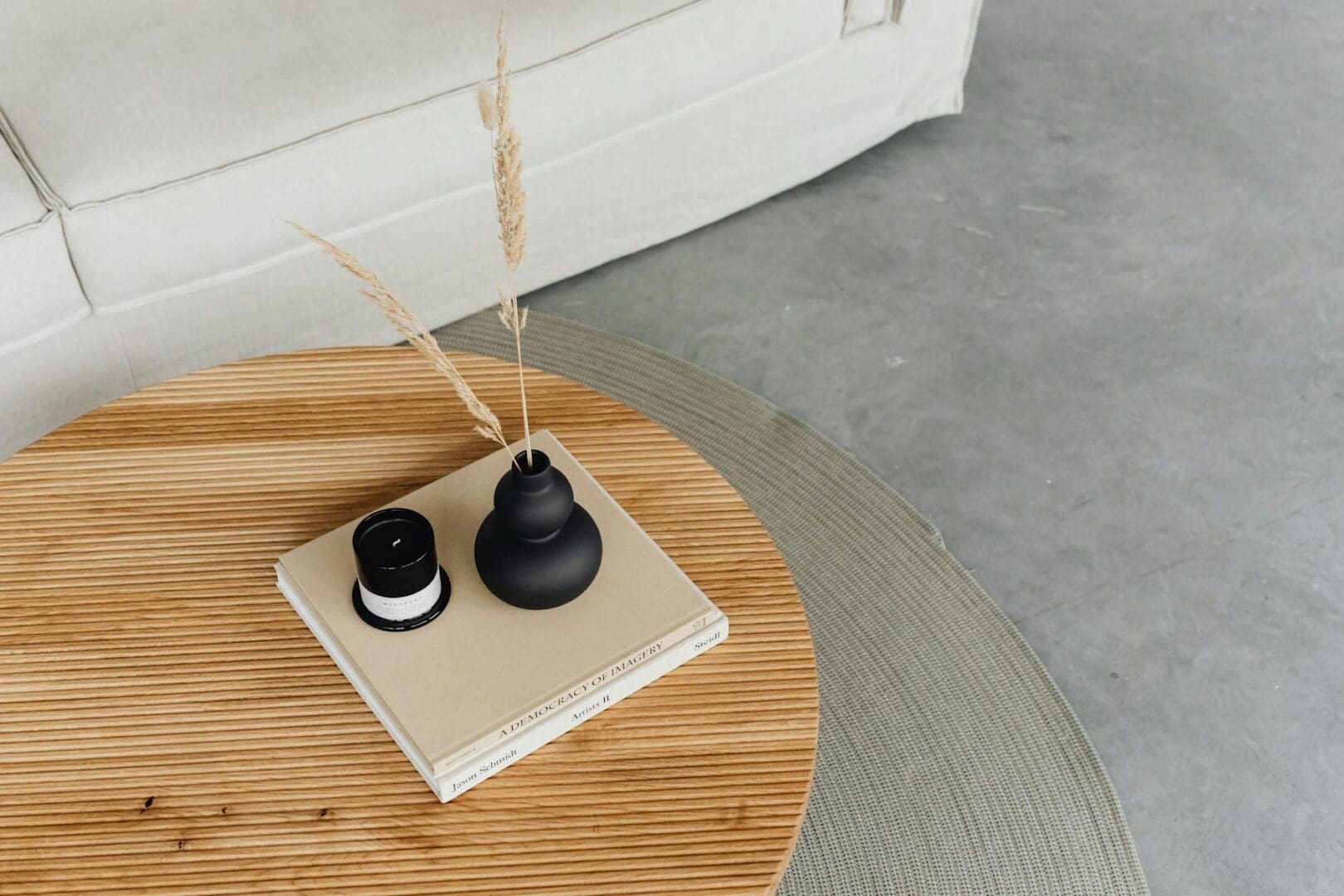
A classic formula: one tray with small essentials, one coffee table book or stack of two, and one decorative object like a small vase or sculptural piece. If your table is large or has multiple tiers, you can add a plant and a candle.
The key is varying heights. Stack books to create elevation, use a tall vase or candlestick for vertical interest, and keep smaller items lower. This creates visual rhythm without overcrowding. And here’s the thing—leave some empty space. A coffee table that’s 100% covered looks cluttered no matter how carefully you arrange things.
Hide the Everyday Stuff
Real talk: you need a place for remotes, charging cables, magazines you’re actually reading, and whatever else your household uses daily. The trick is keeping these functional items accessible without letting them take over.
Coffee tables with built-in storage are game-changers here. Lift-top coffee tables (typically $250-600) hide clutter in seconds while doubling as a work or dining surface. Tables with drawers or lower shelves give you dedicated storage that’s out of sight but within reach.
If your current table doesn’t have storage, add a decorative box or basket on a lower shelf. Woven baskets are perfect for corralling remotes and coasters while adding texture. Small lidded boxes—ceramic, leather, or lacquered wood—can sit on top of your table and hold smaller items like lip balm or reading glasses without broadcasting their contents.
Choose Your Display Items Carefully
Not everything deserves coffee table real estate. The items you display should either be beautiful, useful, or both.
Coffee table books are a classic for good reason—they add personality and color while serving as conversation starters. Choose books you’d actually flip through, whether that’s architecture, travel, art, or cooking. Stack two or three max, and vary the sizes.
Fresh flowers or a small plant bring life to the space, but skip anything that requires constant maintenance or drops leaves everywhere. A simple succulent arrangement or a single stem in a bud vase is often more elegant than an elaborate bouquet.
Candles add warmth and can actually get used, especially unscented ones for daytime ambiance. Group two or three in varying heights, or choose one substantial pillar candle as a focal point.
What to skip: anything too personal (family photos belong elsewhere), collections of small tchotchkes, or purely seasonal decor that you’ll need to change out constantly.
Make It Work for Your Life
The most styled coffee table in the world isn’t worth much if it doesn’t function for how you actually live. If you eat dinner on the couch regularly, you need space to set down plates. If you have young kids, breakable objects and heavy books aren’t practical right now.
Consider your coffee table a flexible space. Keep your core styling simple enough that you can quickly clear it when you need the surface, then put things back just as easily. That tray full of essentials? It lifts off in one motion. Those stacked books? They can move to the side temporarily.
The goal isn’t perfection—it’s creating a system that looks good and actually works with your routine. When organization feels effortless, you’ll maintain it. When it feels fussy, you won’t.
Start with one good tray and edit down to your favorite objects. Your coffee table will look more intentional, your living room will feel calmer, and you’ll finally have a spot to set down your actual coffee.
If you’ve been hitting snooze repeatedly or dragging yourself out of bed feeling groggy, you’re not alone. Waking up to a jarring alarm in a dark room works against your body’s natural rhythms, especially during winter months. A sunrise alarm clock mimics natural dawn, gradually filling your room with light to ease you awake. But […]
Waking up at 3 a.m. with a sweaty neck and flipping your pillow to the cool side for the fourth time isn’t just annoying—it’s robbing you of quality sleep. If you’re a hot sleeper, your pillow might be trapping heat against your head and neck all night long. The good news? The right cooling pillow […]
If you’re working from home or spending hours at your desk, you’ve probably noticed that not all chairs are created equal. That bargain office chair seemed fine at first, but now your back aches by mid-afternoon. You’ve been eyeing ergonomic chairs, but with price tags that can run three to ten times higher than regular […]