There’s nothing quite like walking into a bedroom that feels like a warm hug at the end of a long day. But if your bedroom feels more like a dentist’s office than a cozy retreat, your lighting is probably the culprit. The good news? Creating that soft, inviting glow isn’t complicated—it just takes the right combination of light sources and a few smart choices about bulbs and fixtures.
Start With the Right Light Bulbs
Before you shop for a single lamp or fixture, let’s talk about what actually creates that warm feeling: the light bulbs themselves. Color temperature is measured in Kelvins, and this number matters more than you might think. For a genuinely warm bedroom atmosphere, look for bulbs in the 2700K to 3000K range. Anything higher starts to feel cool and clinical.
You’ll see these labeled as “soft white” or “warm white” on the package. LED bulbs have come a long way in recent years—they now produce the same warm glow as incandescent bulbs while using a fraction of the energy. Budget around $3-8 per bulb for quality LEDs that’ll last for years. If you want even more control, smart bulbs ($15-50 each) let you adjust both brightness and color temperature from your phone, which is especially nice for winding down before bed.
Layer Your Light Sources
Here’s where most bedrooms go wrong: relying on a single overhead fixture. That’s task lighting at best, and it creates harsh shadows that feel anything but relaxing. Instead, think in layers.
Start with ambient lighting—this is your base layer. A ceiling fixture with a dimmer switch works well here, but make sure it has a fabric shade or frosted glass to diffuse the light. Skip exposed bulbs in overhead fixtures; they’re too harsh for a bedroom. Budget options start around $80-150, while statement pieces with fabric drums or woven materials run $200-400.
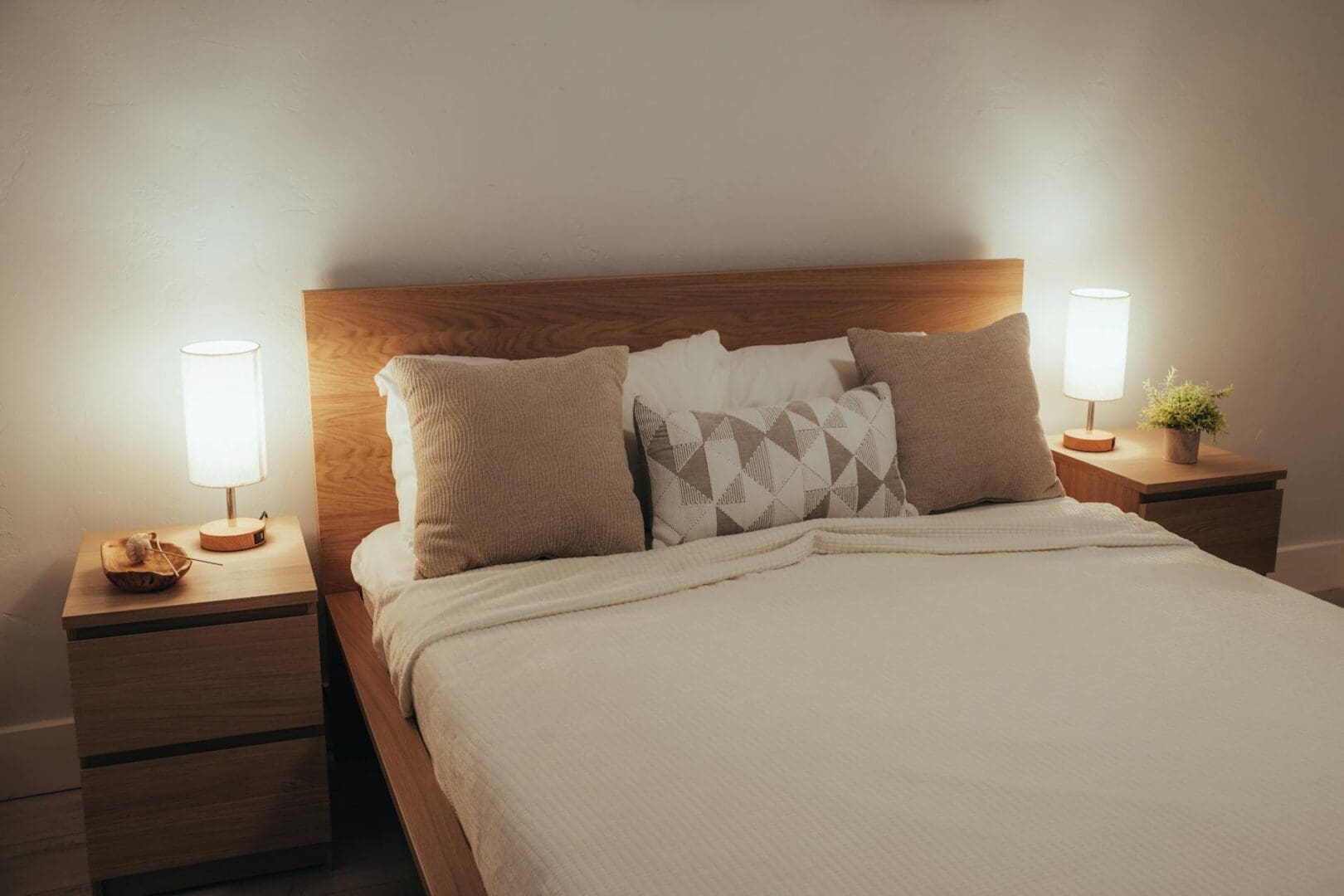
Next, add task lighting where you actually need it. Table lamps on nightstands are the obvious choice here, and they do double duty by adding warm pools of light at eye level when you’re in bed. Look for lamps with fabric or paper shades that glow softly when lit—metal or solid wood shades direct light up and down but don’t create that diffused warmth you’re after. You’ll find solid options from $60-120 per lamp, with designer pieces reaching $200-400.
Finally, consider accent lighting to add depth. A floor lamp in a corner, a small lamp on a dresser, or even LED strip lights behind a headboard can create subtle layers that make the room feel more spacious and inviting.
Choose Fixtures That Diffuse and Warm
The fixture itself plays a huge role in how warm the light feels. Materials matter here. Linen and cotton shades create a soft, diffused glow. Paper lanterns and rice paper shades have a similar effect and work particularly well in modern or minimalist spaces. Woven materials like rattan or bamboo add texture while filtering light beautifully.
Pay attention to the shade color too. White or cream shades keep light neutral, while warmer tones like beige, tan, or even blush pink can actually add warmth to the light passing through them. Metallic interiors in gold or brass (often called “gold-lined” shades) reflect light in a particularly flattering way.
For bedside lamps, look for something in the 18-26 inch height range—tall enough to read by, but not so tall that you’re staring directly into the bulb when lying down. The shade should sit roughly at your eye level when you’re propped up in bed.
Don’t Forget Dimmer Switches
If you take away just one thing from this guide, make it this: install dimmer switches. They’re the single most affordable upgrade you can make (around $15-40 per switch), and they transform how your bedroom feels. Being able to adjust your lighting from “getting ready in the morning” brightness to “winding down with a book” softness is genuinely life-changing.
Make sure your bulbs are dimmable—most LEDs are, but always check the package. And if you’re using multiple lamps, look for models with built-in three-way switches or invest in smart plugs ($10-25 each) so you can control them easily.
Creating warm bedroom lighting really comes down to this: multiple light sources, bulbs in the 2700-3000K range, fixtures that diffuse rather than expose, and the ability to adjust brightness. Start with good bedside lamps and proper bulbs, then build from there. Your bedroom should be the most comfortable room in your home—and the right lighting makes all the difference.
Shopping for a dresser for your child’s room feels different than buying one for yourself. You’re not just thinking about today—you’re wondering if it’ll survive the toddler years, hold up through elementary school, and maybe even make it to the teenage bedroom. The good news? With the right approach, you can find a dresser that […]
You’ve found the perfect bed frame, but now your old dresser looks completely out of place. Or maybe you’re starting fresh and wondering whether you need to buy a matching bedroom set. The truth is, coordinating your dresser and bed frame isn’t about finding exact matches—it’s about creating visual harmony through smart choices about style, […]
Adding a dresser to your walk-in closet can transform it from a simple hanging space into a fully functional dressing room. But unlike choosing a dresser for your bedroom, closet dressers have different requirements—they need to fit within existing dimensions, complement built-in systems, and maximize storage without creating obstacles. Whether you’re designing a new closet […]