Remember that feeling when you sink into a plush hotel bed after a long day of travel? The crisp white sheets, the perfect pillows, the uncluttered surfaces—it all adds up to pure relaxation. The good news is you don’t need a hospitality degree to recreate that five-star experience in your own bedroom. With some strategic choices in bedding, furniture, and finishing touches, you can turn your sleep space into a restful retreat you’ll actually look forward to coming home to.
Start with Statement-Making Bedding
Hotels invest heavily in their bedding because they know it makes or breaks the guest experience. Your best starting point is a high-quality mattress pad or topper—even if your mattress is relatively new, that extra layer of cushioning creates the signature hotel bed feel. Look for one with at least 2 inches of memory foam or down alternative fill.
For sheets, thread count matters less than you’d think. Hotels typically use crisp percale cotton in the 300-400 thread count range rather than ultra-high counts that can feel stuffy. White or ivory sheets are the classic choice, but soft grays and creams work beautifully too. The real secret is having multiples so you can always have fresh sheets ready—hotels change linens daily, and while you won’t do that at home, having backup sets makes weekly changes effortless.
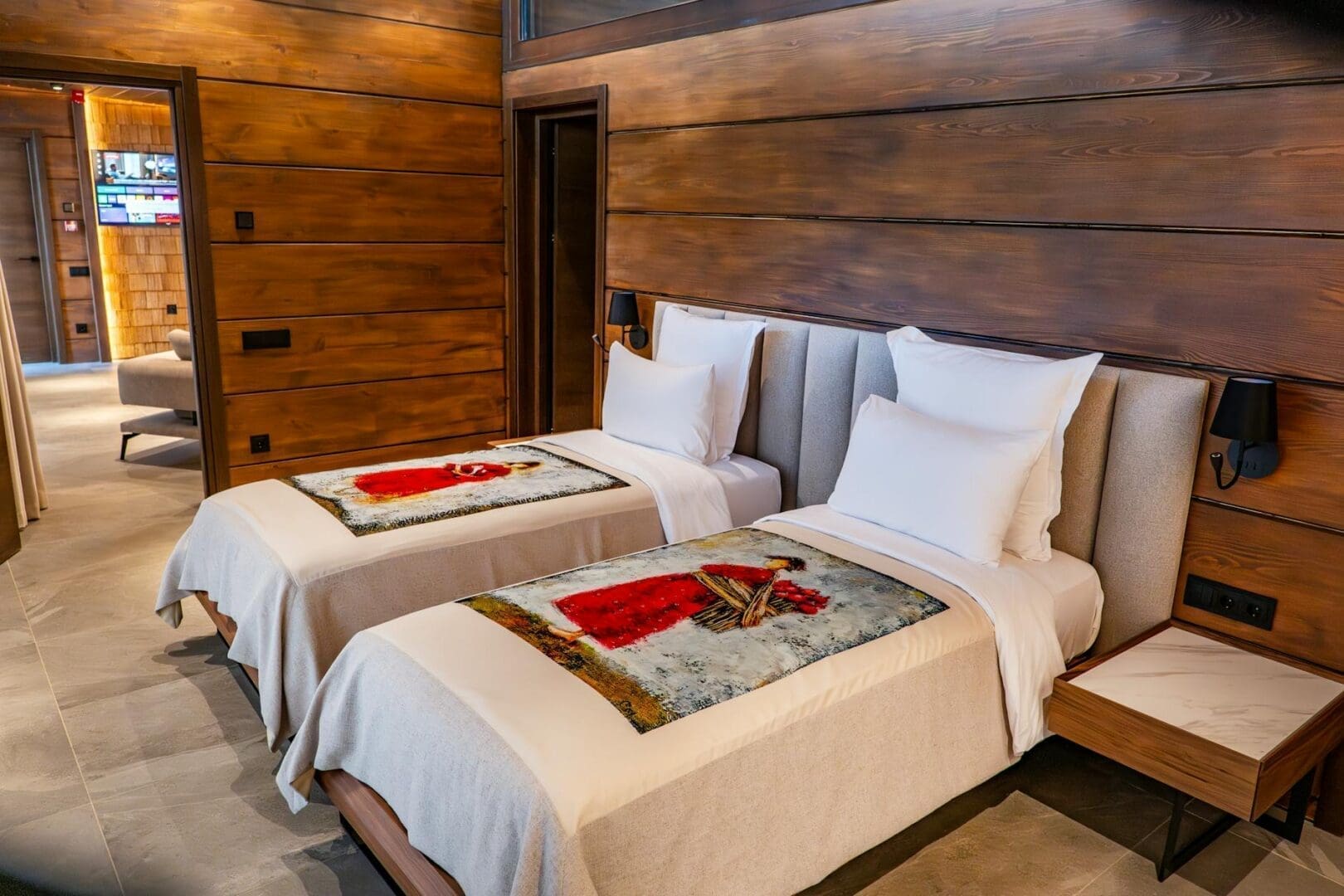
Layer on a duvet with a removable cover rather than a traditional comforter. This gives you the plush hotel look while making washing much easier. Add a folded throw blanket at the foot of the bed for both visual interest and practical warmth. Budget options start around $150 for a complete bedding refresh, while luxury hotel-quality sets can run $400-800.
Get the Lighting Right
Hotels excel at creating ambient lighting that’s functional without being harsh. Overhead lighting should be on a dimmer switch—if you can’t install one, use lower-wattage bulbs in your existing fixture and rely on layered lighting instead.
Matching bedside lamps are essential, and they should provide enough light for reading without flooding the entire room. Look for lamps with fabric or linen shades that diffuse light softly, positioned so the bottom of the shade sits roughly at eye level when you’re sitting up in bed. Three-way bulbs give you flexibility for different moods.
Consider adding a reading light or wall-mounted sconces if you have the wall space. These free up nightstand real estate and create that upscale hotel vibe. Expect to spend $80-150 per lamp for quality pieces that will last, or $200-400 for designer options.
Choose Streamlined Furniture and Minimal Decor
Hotel rooms feel spacious because they’re not cluttered. Take a hard look at your bedroom furniture and remove anything that doesn’t serve a clear purpose. You need a bed, nightstands, and likely a dresser—but that extra chair piled with clothes or the treadmill-turned-clothing-rack isn’t doing you any favors.
Nightstands should be simple and functional with at least one drawer for hiding remotes, chargers, and other visual clutter. Matching isn’t required, but they should be similar in height and scale. Keep surfaces minimal—a lamp, maybe a small plant or single decorative object, and nothing else.
For the walls, one or two large pieces of art make more impact than a gallery wall. Hotels often use oversized photography or abstract prints in neutral tones. A large mirror also works beautifully and helps reflect light around the room. Frame quality matters more than you’d expect—a $30 print in a $100 frame looks more expensive than the reverse.
Add the Luxe Finishing Touches
The final layer is all about those small details that make hotels feel special. A bench or upholstered ottoman at the foot of the bed provides a landing spot for your bag and adds visual weight to the room. These range from $150 for simple styles to $500+ for upholstered pieces.
Blackout curtains or cellular shades give you control over light and help with temperature regulation—both things hotels prioritize. Layer these with sheer panels if you want flexibility for natural light during the day. A thick, plush rug anchors the space and feels amazing on bare feet in the morning.
Finally, think about scent and sound. Hotels often have subtle signature scents; you can achieve this with a high-quality reed diffuser or candle in fresh, clean fragrances like linen, eucalyptus, or white tea. A small sound machine or fan provides white noise that masks outside sounds and signals to your brain that it’s time to rest.
Creating a hotel-style bedroom isn’t about buying everything at once—it’s about being intentional with each choice. Start with bedding since that’s where you’ll notice the biggest difference, then work on lighting and decluttering. The pieces you choose should make your bedroom feel like a space designed for rest and restoration, not just a place where you happen to sleep. When you get it right, checking out each morning becomes the hardest part.
Shopping for a dresser for your child’s room feels different than buying one for yourself. You’re not just thinking about today—you’re wondering if it’ll survive the toddler years, hold up through elementary school, and maybe even make it to the teenage bedroom. The good news? With the right approach, you can find a dresser that […]
You’ve found the perfect bed frame, but now your old dresser looks completely out of place. Or maybe you’re starting fresh and wondering whether you need to buy a matching bedroom set. The truth is, coordinating your dresser and bed frame isn’t about finding exact matches—it’s about creating visual harmony through smart choices about style, […]
Adding a dresser to your walk-in closet can transform it from a simple hanging space into a fully functional dressing room. But unlike choosing a dresser for your bedroom, closet dressers have different requirements—they need to fit within existing dimensions, complement built-in systems, and maximize storage without creating obstacles. Whether you’re designing a new closet […]