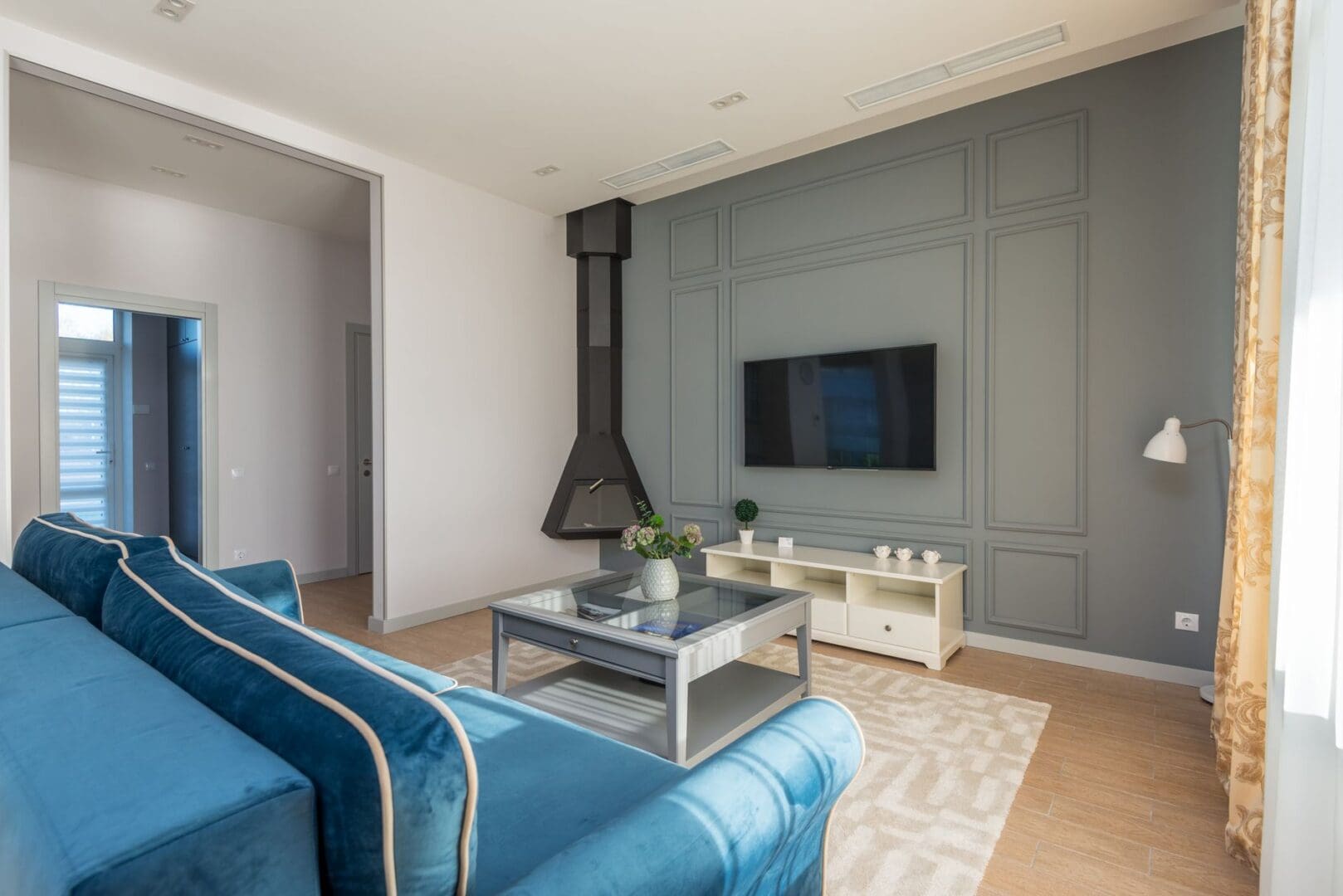
A TV stand with a fireplace insert solves two problems at once: where to put your television and how to add warmth and ambiance to your living space. But with options ranging from compact units to wall-spanning entertainment centers, choosing the right one means thinking beyond just “it looks nice.” You need to consider your room size, TV dimensions, heating needs, and how the piece fits into your daily life.
Getting the Size and Proportions Right
Start with your TV dimensions. The stand should be at least as wide as your television, but ideally 6-12 inches wider for visual balance. A 65-inch TV looks best on a stand that’s 70-75 inches wide, while a 55-inch TV pairs well with a 60-65 inch stand. Check the weight capacity too—most stands handle 100-250 pounds, but verify your specific TV’s weight.
Height matters more than you might think. Your eye level when seated should hit roughly the middle of the screen. Most fireplace TV stands sit 24-30 inches high, which works well for standard sofas, but measure your seating height to be sure. Storage depth typically runs 15-18 inches, enough for cable boxes and gaming consoles without overwhelming the room.
Consider the fireplace viewing area itself. Inserts range from 18 to 40 inches wide. A larger firebox creates more visual impact, but in smaller rooms, an oversized flame display can feel out of proportion. The flame should complement your setup, not dominate it.
Understanding Heat Output and Functionality
Electric fireplace inserts typically produce 4,000-5,000 BTUs, sufficient to warm 400-500 square feet. If you have a large, open-concept space, manage your expectations—these units work best as supplemental heat for cozy evenings rather than primary heating sources. That said, they’re surprisingly effective in average-sized living rooms.
Look for units with independent flame and heat controls. You’ll want to enjoy the fireplace ambiance even in summer without heating your space. Many models offer adjustable flame brightness, multiple color settings (traditional orange, blue, or multi-color), and programmable thermostats. Remote controls are nearly standard now, but app connectivity is appearing on higher-end models if that appeals to you.
Check the power requirements. Most plug into standard 120V outlets, but verify your space has accessible electrical access. Some homeowners are surprised to find their ideal TV placement doesn’t have a nearby outlet, requiring either extension cords (not ideal) or electrician visits.
Style, Material, and Build Quality
Fireplace TV stands come in three main style categories. Traditional units feature ornate details, carved legs, and rich wood finishes like cherry or mahogany, typically in the $400-$800 range. Modern designs emphasize clean lines, metal accents, and glossy or matte finishes, running $350-$900. Farmhouse styles with distressed wood, barn door details, and rustic hardware have surged in popularity, priced between $500-$1,000.
Material quality directly impacts longevity. Solid wood construction costs more ($700+) but handles daily wear better than particleboard alternatives ($250-$400). Mid-range options ($400-$700) often use wood veneers over engineered wood—a reasonable compromise offering decent durability with better aesthetics than all-particleboard construction.
Examine the insert quality separately from the stand. Better units feature LED flame technology that looks remarkably realistic, while budget options can appear obviously fake with jerky, repetitive flame patterns. Glass quality matters too—tempered glass fronts stay clearer and safer than cheaper alternatives.
Storage and Cable Management Features
Think about what you’re storing. Gaming consoles need open shelving for ventilation, while cable boxes work fine in closed cabinets. Most stands include 2-4 storage areas—some open, some behind doors. Adjustable shelving adds flexibility as your components change over time.
Cable management separates decent stands from great ones. Look for built-in wire channels, rear cutouts, and cord bundling systems. Nothing ruins the elegant look of a fireplace feature faster than a tangled mess of visible cables. Some higher-end models ($800+) include integrated power strips, eliminating the outlet cluster behind your stand.
Door styles affect daily convenience. Soft-close hinges prevent slamming, while glass doors let remote signals through. If you’re constantly accessing components, open shelving beats doors you’ll leave hanging open anyway.
Choosing a TV stand with a fireplace insert means balancing practical requirements with aesthetic goals. Measure your space and TV carefully, decide whether heating capability matters for your room size, and pick a style that’ll still feel right in five years. The right piece becomes a focal point that delivers both function and atmosphere—exactly what your living room needs.
You need more storage in your living room, but a bulky bookcase feels too heavy and floating shelves aren’t cutting it. A credenza might be exactly what you’re looking for—it’s that low-profile cabinet that gives you tons of hidden storage while creating a beautiful surface for lamps, plants, and the things you actually want to […]
If you’ve been hitting snooze repeatedly or dragging yourself out of bed feeling groggy, you’re not alone. Waking up to a jarring alarm in a dark room works against your body’s natural rhythms, especially during winter months. A sunrise alarm clock mimics natural dawn, gradually filling your room with light to ease you awake. But […]
Waking up at 3 a.m. with a sweaty neck and flipping your pillow to the cool side for the fourth time isn’t just annoying—it’s robbing you of quality sleep. If you’re a hot sleeper, your pillow might be trapping heat against your head and neck all night long. The good news? The right cooling pillow […]