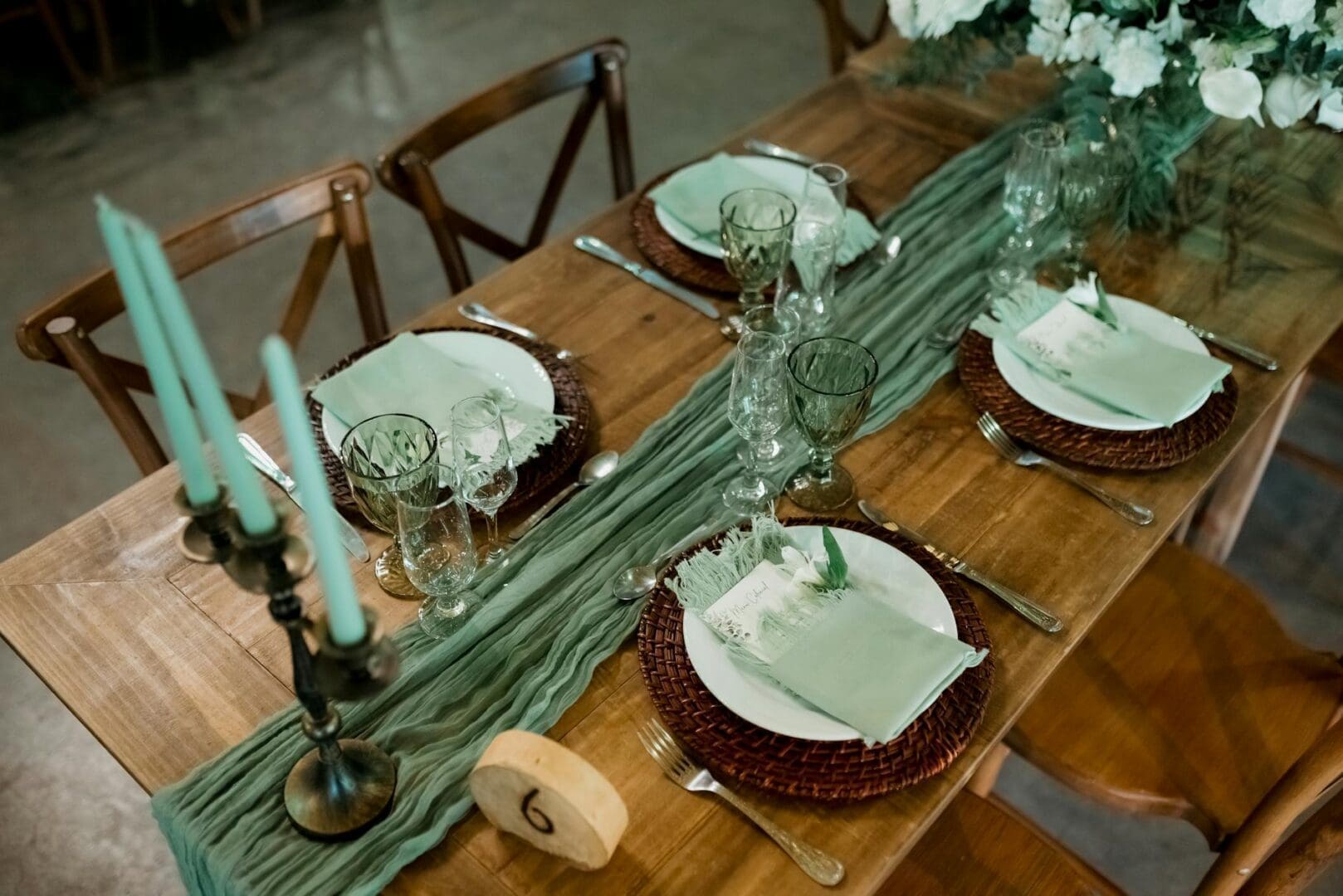
You’ve set the table for dinner, and something feels off. The dishes look plain, the table feels bare, or worse—your beautiful wood table is collecting water rings and scratches. Placemats and table runners are those quiet workhorses of table decor that protect your surfaces while making every meal feel just a bit more pulled together. But walk into any home store, and you’ll face dozens of options in every material, pattern, and price point imaginable. Here’s how to choose ones that actually work for your lifestyle and table.
Getting the Size Right
Nothing looks more awkward than a placemat hanging off the edge of your table or a runner that’s too short to make an impact. For placemats, standard sizes run 12×18 inches or 14×20 inches, with the larger size working better for dinner plates and full place settings. You’ll want at least 2-3 inches of space between each placemat, so measure your table width and divide by the number of seats to see what fits comfortably.
Table runners typically come in lengths from 36 to 108 inches. The classic look lets the runner hang 6-10 inches over each end of the table, though you can go shorter for a more modern vibe or longer for formal settings. Width matters too—most runners are 12-16 inches wide, which should cover about one-third of your table’s width. A 36-inch wide table looks balanced with a 12-inch runner, while wider farmhouse tables can handle 16-18 inches.
Material Matters: Match Your Lifestyle
The material you choose determines how much maintenance you’re signing up for. Cotton and linen placemats bring that casual, lived-in feel and can handle the washing machine, making them perfect for families with kids. Expect to pay $6-15 per placemat for quality cotton, or $15-30 for linen that gets softer with every wash.
Vinyl and wipeable materials are your friends for daily use—just wipe with a damp cloth and you’re done. These run $4-12 per mat and come in surprisingly stylish patterns now, not just the dated florals from your grandmother’s house. Woven materials like jute, seagrass, or bamboo add great texture and work beautifully for casual dining, though they’re trickier to clean and best saved for tables that don’t see heavy spill action.
For something more elevated, consider leather or faux leather placemats ($20-50 each) that wipe clean and age beautifully, or beaded and embroidered options ($15-40) for special occasions. Table runners follow similar pricing—cotton runs $15-35, while embroidered or jacquard runners can reach $40-80 for quality pieces.
Style and Color: Coordinating Without Matching
The days of everything matching perfectly are over, and that’s good news for your table. You can absolutely mix placemats with a table runner, but keep one element simple if the other is patterned. A bold geometric runner looks great with solid neutral placemats, while patterned placemats shine best on a bare table or with a subtle runner underneath.
Think about your dishes too. White dinnerware gives you freedom to go bold with colors and patterns, while colorful or patterned plates need more neutral linens to avoid visual chaos. Seasonal swaps are easy and affordable with table linens—keep a casual everyday set, then add holiday runners or special occasion placemats as accent pieces rather than complete overhauls.
Practical Features Worth Considering
Look for placemats with finished edges that won’t fray after a few washes. Reversible designs give you two looks for the price of one and extend time between washes. Non-slip backing on wipeable mats keeps them in place, especially important if you have wiggly kids or enthusiastic eaters.
For table runners, hemmed edges look more polished than raw edges, though raw linen can work for a relaxed farmhouse aesthetic. Machine-washable is non-negotiable for anything you’ll use regularly—dry-clean-only table linens will end up shoved in a drawer after the first spill.
Your table tells a story at every meal, and the right placemats and runners help tell it well. Measure your space first, choose materials that match your real life (not your aspirational life), and don’t be afraid to start with one good set of everyday linens. You can always add more as you figure out what works for your table and how you actually live around it.
You need more storage in your living room, but a bulky bookcase feels too heavy and floating shelves aren’t cutting it. A credenza might be exactly what you’re looking for—it’s that low-profile cabinet that gives you tons of hidden storage while creating a beautiful surface for lamps, plants, and the things you actually want to […]
If you’ve been hitting snooze repeatedly or dragging yourself out of bed feeling groggy, you’re not alone. Waking up to a jarring alarm in a dark room works against your body’s natural rhythms, especially during winter months. A sunrise alarm clock mimics natural dawn, gradually filling your room with light to ease you awake. But […]
Waking up at 3 a.m. with a sweaty neck and flipping your pillow to the cool side for the fourth time isn’t just annoying—it’s robbing you of quality sleep. If you’re a hot sleeper, your pillow might be trapping heat against your head and neck all night long. The good news? The right cooling pillow […]