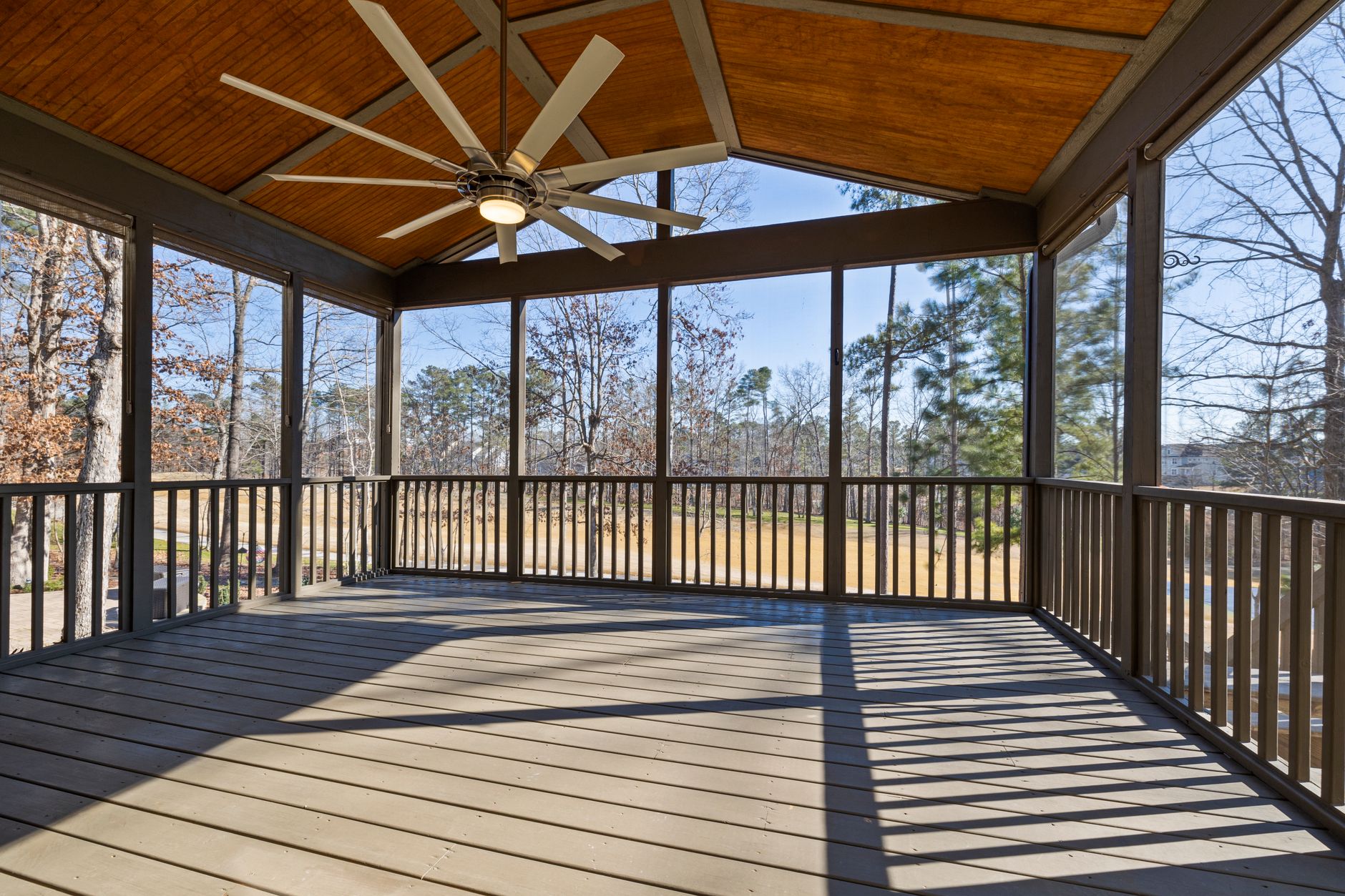
A screened porch is one of the best spots in the house, but it can be a tricky place to decorate. It’s protected from the worst weather, yet it still deals with humidity, pollen, damp breezes, and the occasional sideways rainstorm. A rug can make the space feel like a real living room, but only if it’s built for those conditions. Here’s how to pick one that looks good and holds up season after season.
Start With the Right Size
Size is where most people go wrong, and it’s usually a case of buying too small. A tiny rug floating in the middle of the porch makes the whole space feel unfinished. Measure your seating area first, not the whole porch, then choose a rug that anchors it.
Small porches (under 10×10 feet): A 5×8 or 6×9 rug works well, ideally with the front legs of your seating on it.
Medium porches: An 8×10 gives you room for a sofa, two chairs, and a coffee table to sit comfortably on the rug.
Dining areas: Choose a rug that extends at least 24 inches beyond the table edge so chairs stay on it when pulled out.
Leave 8 to 12 inches of exposed floor around the rug. Also check door swing and threshold clearance so the rug doesn’t catch. If you’re still unsure how large to go, our guide to [choosing an outdoor rug size](how-to-choose-outdoor-rug-size-patio) walks through layouts and measurements in more detail.
Choose a Material Built for Humidity
Because screened porches trap moisture, material matters more than almost anything else. Skip natural fibers like cotton, wool, and jute. They look lovely but tend to absorb dampness and invite mildew, even under a roof.
Polypropylene: The workhorse of outdoor rugs. It’s mold-resistant, fade-resistant, and easy to hose off. Expect to pay roughly $50 to $200 for most sizes.
Recycled PET (plastic bottle) fibers: Softer than standard polypropylene and nicely durable, usually in the $100 to $400 range.
Polyester: Soft and good with color, though it can hold onto oil and stains a little more. Budget to mid-range pricing.
Flatweave or hand-hooked synthetics: A more polished, higher-end look, often $300 to $800 or more for larger sizes.
Look for a low pile or flatweave construction. Thick, shaggy rugs hold water, trap debris, and take much longer to dry. Rugs with an open weave let water drain through, which is a real advantage on a porch.
Think About Your Floor and the Pad Underneath
What’s under the rug counts too. Wood and painted porch floors can be damaged by trapped moisture, and some rubber-backed rugs can discolor surfaces over time. Choose a rug without a solid vinyl or latex backing, and pair it with a breathable, outdoor-rated pad. The pad keeps the rug from creeping and allows air to circulate so the floor can dry.
If your porch floor is concrete or tile, you have a little more flexibility, but a pad still helps with comfort and slip resistance. Pads typically run $20 to $60 depending on size.
Match Your Style, but Be Practical About Pattern
A screened porch is the perfect place to be a little playful. Stripes, geometric prints, and classic trellis patterns are popular for good reason, and they also hide pollen, crumbs, and footprints better than solid colors. Lighter neutrals look fresh and airy, but they show dirt more readily, especially if you have pets or a porch that opens onto the yard.
Consider the rest of your porch as you choose. Wicker and rattan furniture pairs well with natural-looking tones and subtle texture, while painted or metal pieces can carry bolder color. If your cushions already have a strong pattern, a simple stripe or tonal weave keeps things from feeling busy.
The Bottom Line
The best screened porch rug is large enough to anchor your seating, made from a mildew-resistant synthetic, and low-profile enough to dry quickly. Set a realistic budget: under $100 gets you a serviceable rug for smaller spaces, $100 to $400 covers most durable mid-range options, and anything above that buys more refined construction and softer feel. Measure your seating area, decide how much color and pattern you want, and you’ll be ready to compare options with confidence. Your porch is waiting for that finishing touch.
If you’re still unsure how large to go, our guide to choosing an outdoor rug size(how-to-choose-outdoor-rug-size-patio) walks through layouts and measurements in more detail.
Frequently Asked Questions
Can you use an indoor rug on a screened porch?
It’s not a great idea. Even though a screened porch is covered, humidity, wind-blown rain, and pollen can lead to mildew and staining on indoor rugs, especially wool or cotton. An outdoor-rated rug made from polypropylene or polyester will hold up far better.
What size rug should go on a screened porch?
Aim for a rug large enough that at least the front legs of your sofa and chairs rest on it. Leave 8 to 12 inches of bare floor around the edges so the rug looks intentional and doesn’t bump into walls or door thresholds.
What is the best material for a screened porch rug?
Polypropylene is the most popular choice because it resists moisture, mildew, and fading while staying affordable. Polyester feels softer underfoot, and recycled PET rugs offer a good balance of softness and durability.
Do screened porch rugs need a rug pad?
Yes, in most cases. A breathable, outdoor-safe pad keeps the rug from slipping and allows air and moisture to escape. Avoid solid rubber or vinyl-backed pads, which can trap water and stain wood or painted floors.
How do you keep a rug from getting moldy on a screened porch?
Choose a quick-drying synthetic rug and a breathable pad, and sweep or shake it out regularly. If it gets soaked, lift it and let it dry fully on both sides before laying it back down.
HomeFurnishings.com is reader-supported. As an Amazon Associate we earn from qualifying purchases, at no extra cost to you. A good fire pit should leave you with warmth and conversation, not a coat of smoke on your clothes. Smokeless designs aim to get there by pulling extra air into the fire so more of the smoke […]
You bring home a gorgeous cream outdoor rug, and by the end of the first weekend it’s covered in pollen, footprints, and a mysterious smudge from the barbecue. Sound familiar? The good news is that color is one of your best tools for keeping a patio rug looking fresh, and a smart choice can stretch […]
There’s nothing worse than stepping onto a soggy outdoor rug days after a rainstorm. If you live somewhere with frequent rain, morning dew, or poolside splashes, you need a rug that bounces back quickly—not one that turns into a swamp underfoot. The good news? Some outdoor rugs dry in hours, not days, and knowing what […]