There’s nothing quite like the sinking feeling of rolling out a beautiful new rug under your dining table, only to realize it’s too small. Suddenly your chairs are half-on, half-off, and the whole room feels cramped and awkward. Getting the size right matters more in a dining room than almost anywhere else in your home, because you need to account for chairs pulling out, people walking around, and the visual balance of the entire space.
The good news? There’s actually a pretty straightforward formula for this. Let me walk you through exactly how to measure for a dining room rug that looks intentional and functions beautifully.
The Golden Rule: Add 24 to 30 Inches on All Sides
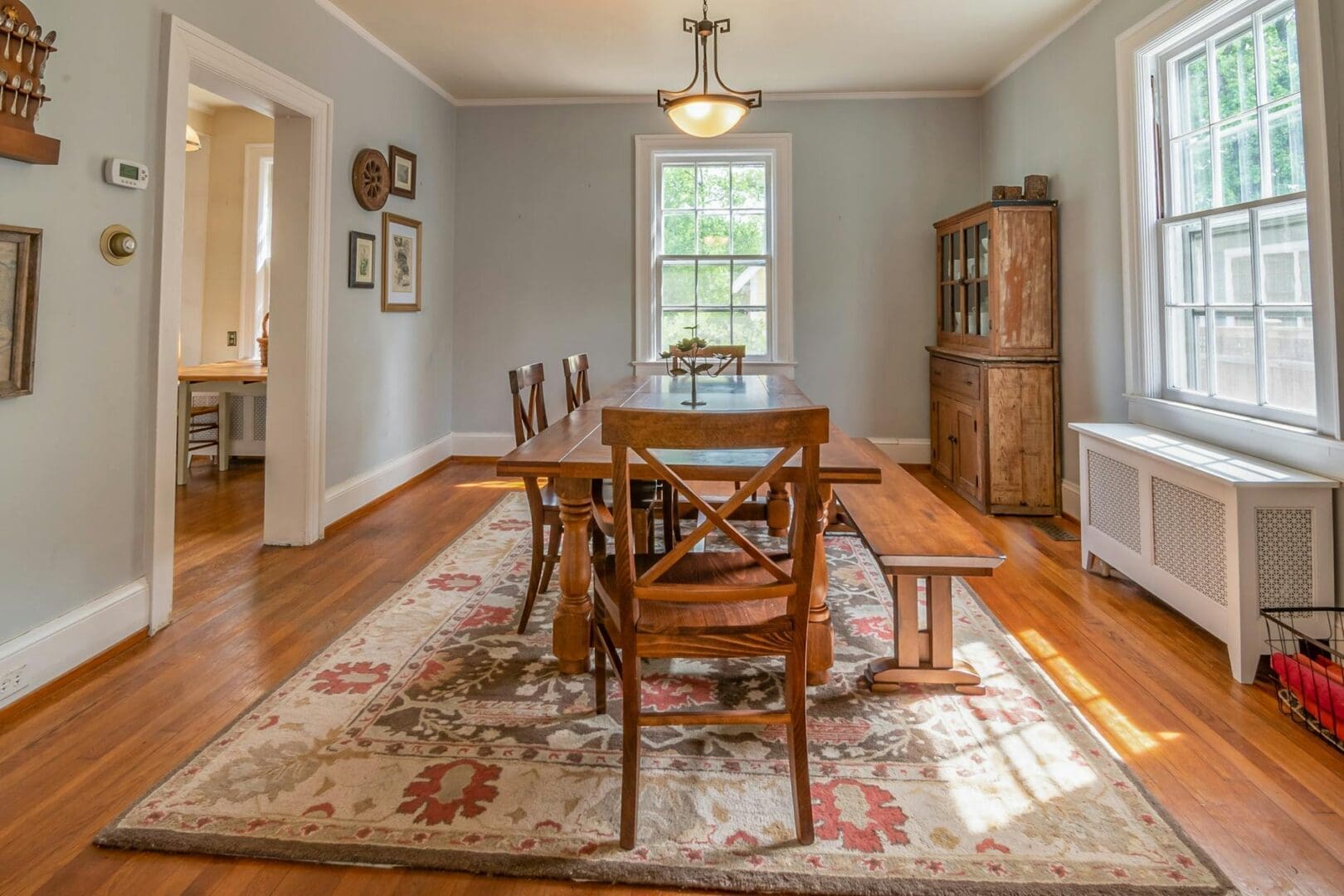
Here’s the most important measurement to remember: your rug should extend at least 24 inches beyond the edge of your table on all sides. This gives you enough room to pull out a chair and sit down comfortably without the chair legs sliding off the rug onto the hard floor. If you want a more generous look—or if you tend to push your chairs way back—go for 30 inches.
To calculate your minimum rug size, measure your table’s length and width, then add 48 to 60 inches to each dimension. So if you have a 40×70 inch table, you’re looking at a rug that’s at least 88×118 inches (that’s about 7.5×10 feet). For that same table, an 8×10 or 9×12 rug would work beautifully.
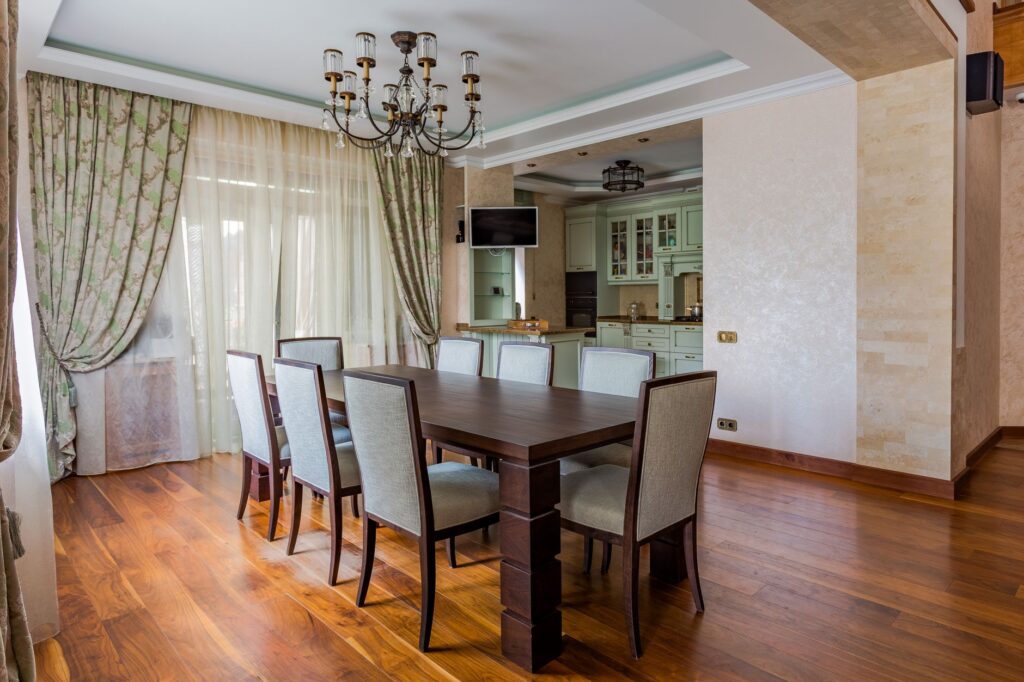
Keep in mind that rectangular tables pair best with rectangular rugs, while round or square tables look most balanced with round or square rugs. You can break this rule if you’re confident in your design eye, but matching shapes is the safe bet.
Consider Your Room Size and Layout
Your rug needs to work with your entire dining room, not just your table. Ideally, leave 18 to 24 inches of bare floor between the edge of your rug and the walls or other furniture. This creates a frame effect and prevents the room from feeling cramped.
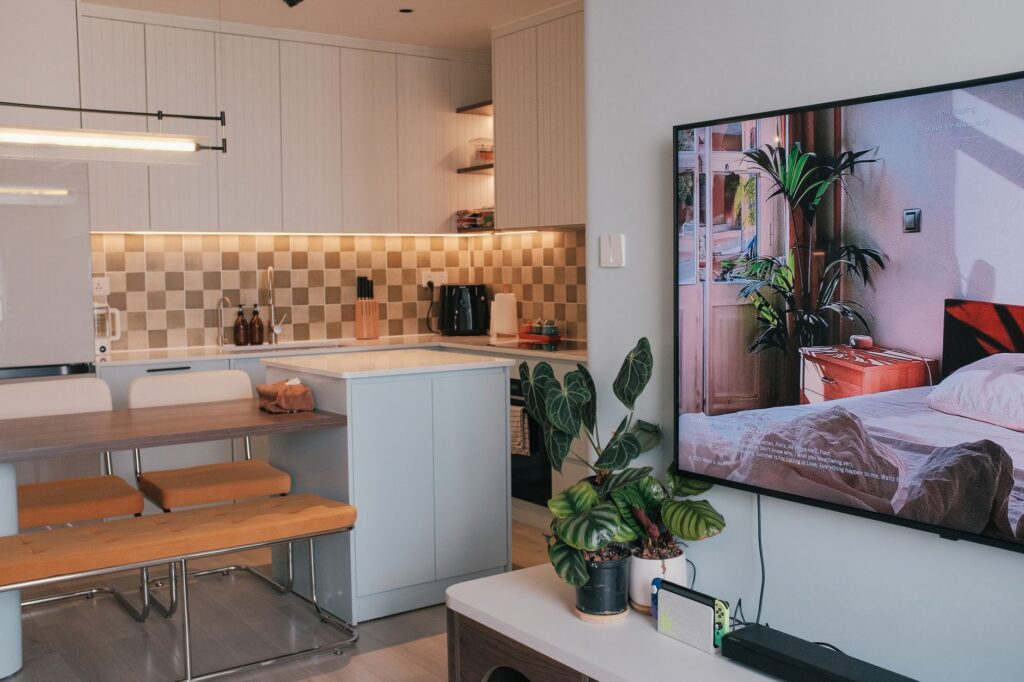
If your dining area is part of an open floor plan, your rug becomes even more important—it defines the dining zone and separates it visually from the living or kitchen areas. In this case, you might actually want to go larger to really anchor the space. A 9×12 or 10×14 rug can help a dining area hold its own in a big, open room.
For smaller dining rooms or breakfast nooks, you might be working with tighter constraints. If you can’t hit that 24-inch clearance on all sides, prioritize the sides where chairs pull out most frequently. It’s better to have a slightly asymmetrical setup than chairs constantly catching on the rug edge.
Common Rug Sizes and What They Fit
Standard rug sizes don’t always align perfectly with table dimensions, so here’s a practical guide to help you match them up:
6×9 feet: Works for small round tables (36-48 inches) or compact rectangular tables seating 4 people in tight spaces
8×10 feet: The most popular dining room size, fits rectangular tables seating 6-8 people (up to 72 inches long)
9×12 feet: Ideal for larger tables seating 8-10 people or when you want more generous spacing
10×14 feet: Perfect for formal dining rooms with large tables or open-concept spaces where you want to define the zone
Round rugs (6-8 feet diameter): Best for round or square tables in square-shaped rooms
When you’re between sizes, size up. A rug that’s too large rarely looks wrong in a dining room, but a rug that’s too small always does.
Material and Pile Height Matter for Function
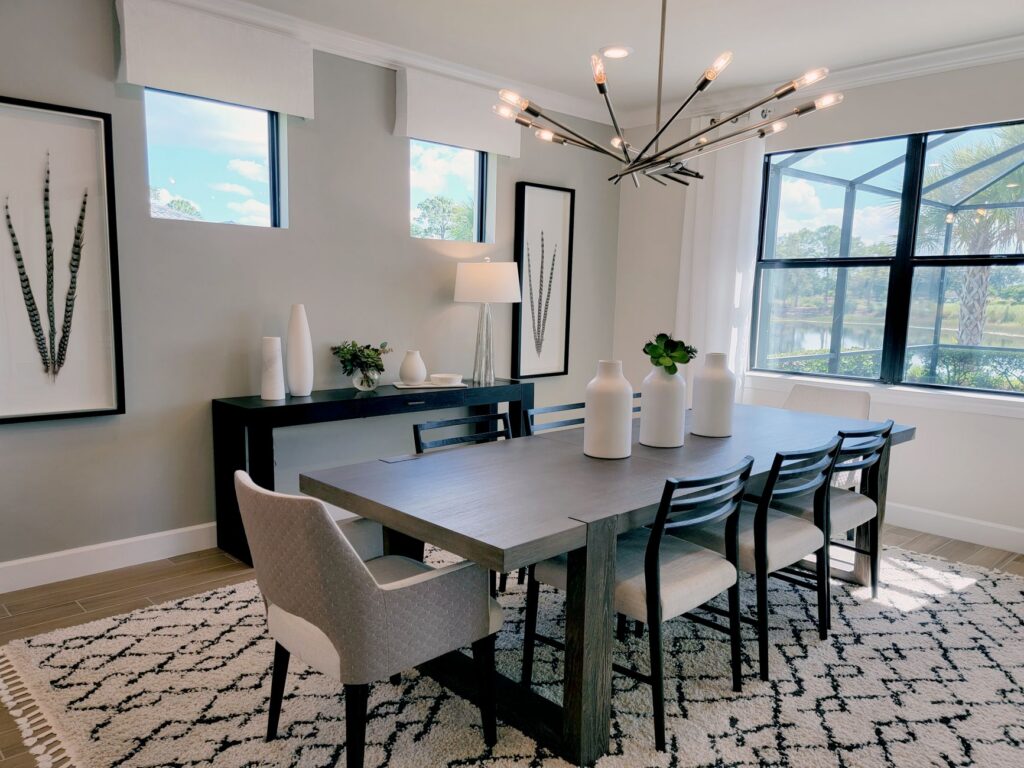
While we’re talking about size, don’t overlook how the rug’s construction affects its performance under a dining table. Low-pile rugs (under half an inch) make it much easier to pull chairs in and out, while high-pile or shag rugs can catch on chair legs and collect crumbs like nobody’s business.
Flatweave rugs, low-pile wool, and indoor-outdoor materials tend to work best in dining rooms. They’re easier to clean, more durable under constant chair traffic, and won’t fight you every time someone sits down. Budget-friendly options start around $200 for an 8×10, while high-quality wool rugs range from $800 to $2,000+.
Getting your dining room rug size right transforms the entire space from awkward to anchored. Measure your table, add those crucial extra inches, and cross-check against your room dimensions. When you nail the proportions, everything else—the lighting, the artwork, even the food—just looks better.
There’s something about farmhouse chandeliers that just works in a dining room—they bring warmth without being fussy, character without feeling overdone. But with so many styles calling themselves “farmhouse,” from sleek metal cages to chunky wood beam fixtures, figuring out which one belongs above your table can feel surprisingly tricky. The right chandelier should anchor […]
A sputnik chandelier makes a serious statement in a dining room—all those radiating arms and exposed bulbs create instant drama and mid-century appeal. But with so many variations in size, arm count, and finish, choosing the right one for your space can feel overwhelming. Get it right, though, and you’ve got a showstopper that pulls […]
When every square foot counts, bringing furniture into a small apartment feels like a high-stakes game of Tetris. You need storage desperately, but you’re terrified of making your space feel even more cramped. A sideboard can be the perfect solution—if you choose the right one. Let’s walk through exactly what to look for so you […]