Round dining tables are wonderfully social pieces that encourage conversation and create an intimate dining experience. But here’s the challenge: choosing chairs that complement that circular shape while fitting comfortably around it isn’t quite as straightforward as furnishing a rectangular table. The wrong chairs can make your round table feel cramped or oddly proportioned, while the right ones will enhance both its function and beauty.
Getting the Size and Scale Right
The most important consideration is ensuring your chairs actually fit around your table without creating a bumper-car situation. For a round table, you’ll want to leave 24 to 30 inches from the edge of the table to the back of each chair when it’s pulled out. This gives people enough room to sit comfortably and move in and out without squeezing past others.
Round tables typically seat people based on diameter: a 36-inch table seats four, a 48-inch seats four to six, and a 60-inch table can accommodate six to eight. Here’s the thing though—armchairs take up more perimeter space than armless chairs. If you’re working with a smaller round table (under 48 inches), consider armless chairs or chairs with low, tapered arms that can tuck under the table edge. For larger tables, you have more flexibility to mix in a couple of armchairs at key positions.
Seat height matters too. Aim for 10 to 12 inches of clearance between the chair seat and the table apron. Standard dining chairs sit at 18 to 20 inches high, which works for most tables, but always measure if your table has an unusually thick top or decorative apron.
Matching Style and Visual Weight
Round tables have a softer, more organic presence than rectangular ones, and your chairs should complement that aesthetic. If your table has a pedestal base, you’re in luck—you won’t need to worry about chair legs competing with table legs for floor space. Pedestal tables pair beautifully with almost any chair style, from sleek mid-century designs to upholstered parsons chairs.
For tables with three or four legs, consider how the chair legs will interact visually. Delicate chairs with slim legs keep the look airy and prevent the dining area from feeling cluttered. If your round table has substantial turned legs or a farmhouse style, you can balance that heft with more robust chairs.
The table’s material should guide your chair selection too. A glass-top round table benefits from chairs with interesting backs or sculptural details since you’ll see right through to them. Wood tables pair naturally with wood chairs, but don’t feel obligated to match exactly—a wood table with upholstered chairs creates beautiful contrast. Budget-friendly options start around $100-150 per chair for solid wood or metal designs, while mid-range upholstered chairs run $200-400 each, and designer pieces can easily exceed $500.
Considering Chair Backs and Sightlines
One advantage of round tables is that everyone faces each other naturally, but tall chair backs can create visual barriers that interrupt the flow. For smaller round tables, stick with low-back or open-back chairs that maintain sightlines across the table. Ladder-back, Windsor, or cross-back styles work particularly well because they’re present without being obtrusive.
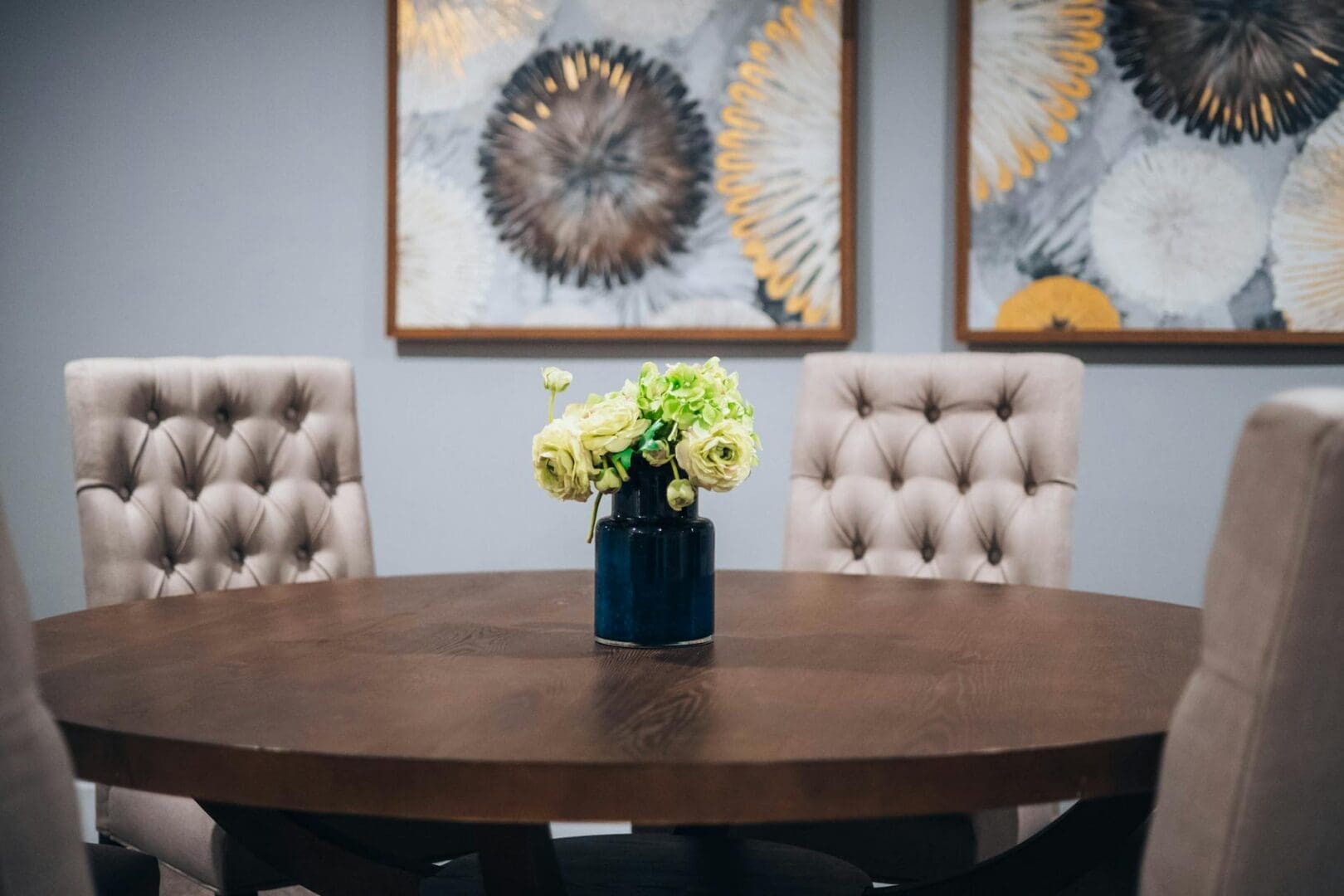
If you love the look of high-backed upholstered chairs, reserve them for larger round tables (54 inches and up) where the proportions can handle that added height. Another approach is to use higher-backed chairs on just two sides and lower profiles elsewhere, though this works better with oval tables than true circles.
Thinking About Layout Flexibility
Round tables don’t push against walls easily, so they typically live in the center of a space. This means your chairs need to look good from all angles—no unfinished backs. It also means you might want chairs that are light enough to move around when you’re not using them, especially in a multipurpose space.
If you sometimes need extra seating, consider buying four to six matching chairs and keeping a couple of folding or stackable chairs in storage. Alternatively, some people choose to mix chair styles intentionally, using two different designs that share a common element like wood tone or seat height.
Choosing chairs for a round table is really about respecting the table’s natural flow while ensuring everyone has a comfortable seat. Focus on proper spacing first, then let the table’s style and your room’s aesthetic guide your choice of chair design. When you get the proportions right, a round table with well-chosen chairs becomes the warm, gathering-focused centerpiece you’re hoping for.
Hallways are the overlooked workhorses of our homes—they connect every room, but rarely get the storage love they deserve. A well-chosen sideboard transforms that narrow stretch of wall into genuinely useful space without making your hallway feel like an obstacle course. The trick is finding one that fits the proportions of the room while actually […]
Dark kitchens—whether they feature rich espresso cabinets, moody charcoal walls, or black granite countertops—create incredible drama and sophistication. But they also present a unique challenge when it comes to choosing bar stools. Pick the wrong ones, and your beautiful space can feel cave-like or visually heavy. Choose wisely, and your stools become the bright spot […]
Your kitchen peninsula is prime real estate—it’s where morning coffee happens, where kids do homework while you’re prepping dinner, and where guests naturally gather during parties. Getting the right bar stools makes all the difference between a peninsula that feels welcoming and one that sits empty. But with so many options for height, style, and […]