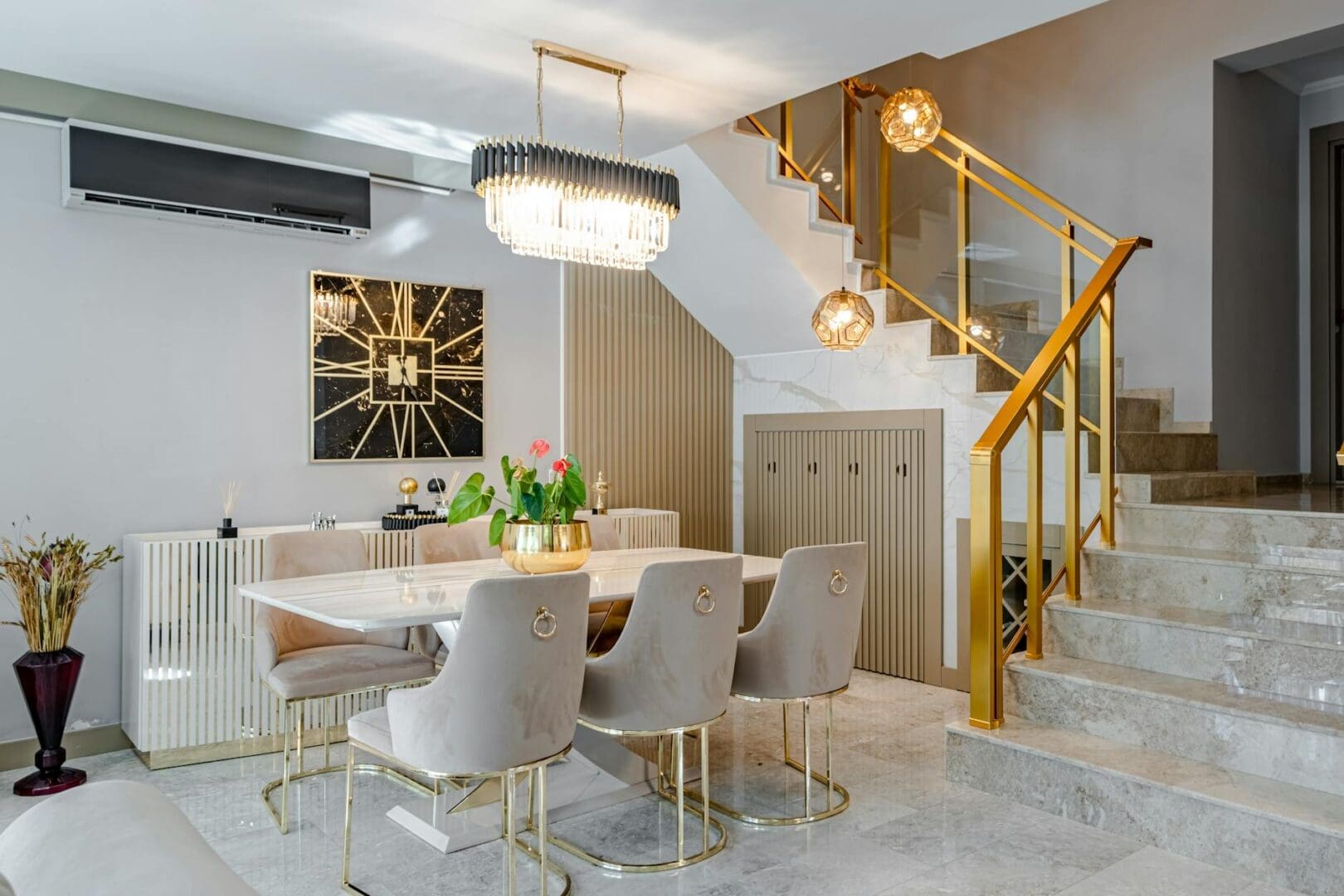
Nothing ruins a dining room quite like a chandelier that’s too small or hangs awkwardly over your table. Too tiny, and it looks lost in the space. Too large, and guests are dodging crystal pendants with every movement. Getting the proportions right makes all the difference between a room that feels polished and one that feels off—even if you can’t quite put your finger on why.
The good news? Choosing the right chandelier size isn’t guesswork. There are straightforward formulas that work for nearly every dining room, regardless of your style preferences.
The Formula for Chandelier Width
Start with your room dimensions, not your table size. Add the length and width of your dining room in feet, then convert that number to inches—that’s your ideal chandelier diameter. For example, a 12-foot by 14-foot dining room would work well with a 26-inch wide chandelier (12 + 14 = 26).
This formula gives you a fixture that’s proportional to the entire space. However, you’ll also want to consider your table. A good rule of thumb is to choose a chandelier that’s one-half to three-quarters the width of your dining table. For a 48-inch wide table, look for chandeliers between 24 and 36 inches in diameter.
If these two calculations give you different results, favor the table measurement—it’s what people will see and experience up close. Linear chandeliers and rectangular fixtures should be about one-third the length of your table, leaving plenty of visual breathing room on either end.
Getting the Height and Hanging Distance Right
Chandelier height matters just as much as width. The bottom of your fixture should hang 30 to 36 inches above the table surface. This range provides adequate light without blocking sightlines across the table—nobody wants to peer around a chandelier to have a conversation.
For rooms with higher ceilings (above 8 feet), add 3 inches of chain or rod length for every additional foot of ceiling height. A 10-foot ceiling would put your chandelier 36 to 42 inches above the table. Tiered chandeliers and dramatic styles with vertical presence work beautifully in these taller spaces, while flush-mount or semi-flush fixtures feel cramped.
The chandelier itself should be between 20 and 24 inches tall for standard 8-foot ceilings, though this varies by style. Sputnik and starburst designs can go slightly smaller, while traditional crystal chandeliers with multiple tiers need that full height to make their statement.
Style Considerations That Affect Sizing
Not all chandeliers wear their measurements the same way. A 30-inch drum chandelier with a solid shade feels much larger and heavier than a 30-inch open-frame or candelabra-style fixture. When you’re browsing, consider the visual weight alongside the actual dimensions.
Candelabra and ring chandeliers have an airy, open structure that allows you to size up slightly without overwhelming the space. Globe and drum chandeliers with opaque or solid materials need more careful sizing—go too large and they dominate the room. Branching styles like those mid-century inspired fixtures fall somewhere in between, with their reach mattering as much as their diameter.
Budget-friendly options typically start around $150 to $300 for simple designs in smaller sizes. Mid-range chandeliers from $400 to $800 offer better materials, more intricate designs, and sizes that work for most dining rooms. Splurge-worthy statement pieces run $1,000 and up, featuring premium finishes, designer silhouettes, and the kind of craftsmanship that becomes a family heirloom.
Common Sizing Mistakes to Avoid
The biggest mistake is choosing a chandelier based on photos without checking dimensions. That gorgeous fixture in a magazine might be 45 inches wide in a dining room twice the size of yours. Always measure first, then shop.
Another common pitfall is forgetting about door clearance and traffic flow. If your chandelier will hang near a doorway or in a path where people walk, make sure there’s adequate clearance on all sides—at least 48 inches from walls or doorframes to the edge of the fixture.
Finally, don’t feel locked into a single chandelier. Two smaller matching fixtures can work beautifully over extra-long tables (96 inches or more), giving you better light distribution and visual interest. Just treat them as a single unit when applying the sizing formulas, keeping the combined width within the recommended range.
The right chandelier transforms your dining room from simply functional to genuinely inviting. Take the time to measure carefully, consider both your room and table dimensions, and trust the formulas. When the proportions are right, everything else falls into place—and you’ll wonder why you ever second-guessed yourself.
Hallways are the overlooked workhorses of our homes—they connect every room, but rarely get the storage love they deserve. A well-chosen sideboard transforms that narrow stretch of wall into genuinely useful space without making your hallway feel like an obstacle course. The trick is finding one that fits the proportions of the room while actually […]
Dark kitchens—whether they feature rich espresso cabinets, moody charcoal walls, or black granite countertops—create incredible drama and sophistication. But they also present a unique challenge when it comes to choosing bar stools. Pick the wrong ones, and your beautiful space can feel cave-like or visually heavy. Choose wisely, and your stools become the bright spot […]
Your kitchen peninsula is prime real estate—it’s where morning coffee happens, where kids do homework while you’re prepping dinner, and where guests naturally gather during parties. Getting the right bar stools makes all the difference between a peninsula that feels welcoming and one that sits empty. But with so many options for height, style, and […]