You’ve finally gotten your bedroom just right—the perfect paint color, beautiful bedding, maybe even that headboard you spent weeks deciding on. But then you place a lamp on your nightstand and something feels… off. The proportions are wrong, the style clashes, or the light is too harsh for late-night reading. Bedside lamps do more than just illuminate your space; they’re functional sculptures that can either pull your whole bedroom together or throw it completely out of balance.
Getting the Size and Scale Right
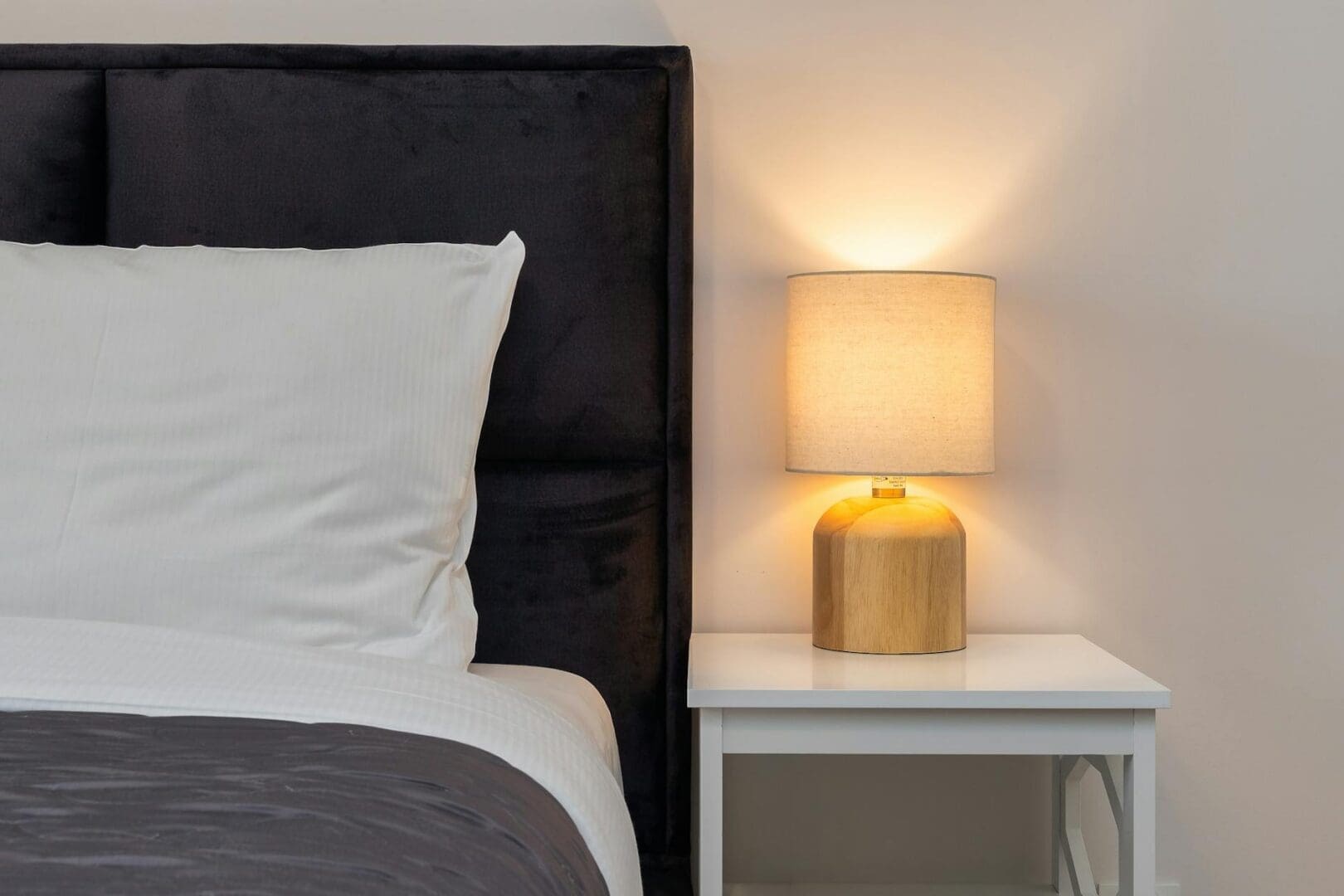
The most common mistake people make is choosing lamps that are too small or too large for their nightstands and beds. A good rule of thumb: your lamp should be roughly one-third the width of your nightstand. If your nightstand is 24 inches wide, look for a lamp with a base around 8 inches across.
Height matters just as much. When you’re sitting up in bed, the bottom of the lampshade should be at eye level—usually 24 to 27 inches from the top of your nightstand to the bottom of the shade. This prevents glare while giving you enough light to read comfortably. If you have a tall headboard or higher nightstands, you might need lamps in the 28 to 32-inch range.
Don’t forget to consider the shade itself. Wider shades cast more ambient light across the room, while narrower shades create focused task lighting. If your bedroom doubles as a reading retreat, you’ll want that wider spread of light.
Matching Your Bedroom’s Design Style
Your lamps should feel like they belong in your space, not like they wandered in from someone else’s home. For modern bedrooms with clean lines and minimal ornamentation, look for lamps with geometric bases—think cylinders, spheres, or rectangular columns in materials like brushed metal, concrete, or ceramic with a matte finish. Budget options start around $50, while designer pieces can run $200-400.
Traditional bedrooms call for lamps with more classic proportions: urn-shaped bases, ceramic or crystal details, and fabric shades. Brass, bronze, or painted porcelain bases work beautifully here. Expect to spend $80-150 for quality traditional lamps, with high-end options reaching $300 or more.
If you’re working with a farmhouse or rustic style, consider lamps with wood bases, distressed metal finishes, or pottery-inspired ceramics. Burlap or linen shades add to the relaxed vibe. These typically range from $60-180.
For bohemian or eclectic bedrooms, this is your chance to have fun—rattan bases, colorful ceramics, or sculptural designs all work. Mix metals, play with texture, and don’t worry about matching your lamps exactly to each other. Prices vary wildly here, from $40 thrift store finds to $250 artisan pieces.
Choosing the Right Light Quality and Functionality
Not all bedside lamps are created equal when it comes to actual lighting. If you read in bed, you need at least 400 lumens (about a 40-watt equivalent LED bulb) per lamp. For ambient lighting only, 200-300 lumens works fine.
Think about the shade material carefully. White or cream fabric shades diffuse light softly and work in most settings. Darker shades create mood lighting but won’t help you read. Metal or opaque shades direct all light up and down, which looks dramatic but isn’t practical if you need task lighting.
Consider lamps with built-in features that make life easier: USB charging ports, three-way switches for adjustable brightness, or touch controls. These additions typically add $20-40 to the price but pay for themselves in convenience. Swing-arm models are brilliant for serious readers, letting you direct light exactly where you need it.
Material and Finish Coordination
Your lamp materials should speak the same design language as the rest of your bedroom. Take inventory of what’s already there—are your drawer pulls brass or nickel? Is your bed frame wood or metal? Do you have other metal accents in the room?
You don’t need to match everything exactly (that can look too coordinated), but you should stay within the same metal family. Warm metals like brass, bronze, and gold go together. Cool metals like chrome, nickel, and silver form another group. Mixing a warm metal lamp with cool metal hardware rarely looks intentional.
Wood-based lamps should complement your existing wood tones. You don’t need a perfect match, but a dark walnut lamp might look out of place if everything else in your room is light oak.
Your bedside lamps are one of the few decor pieces you interact with daily—turning them on before bed, off in the morning, using them for reading or late-night phone scrolling. When they’re the right size, style, and function for your space, they disappear into your routine while quietly making your bedroom feel complete. Take the time to get them right, and you’ll wonder how you ever settled for anything less.
Shopping for a dresser for your child’s room feels different than buying one for yourself. You’re not just thinking about today—you’re wondering if it’ll survive the toddler years, hold up through elementary school, and maybe even make it to the teenage bedroom. The good news? With the right approach, you can find a dresser that […]
You’ve found the perfect bed frame, but now your old dresser looks completely out of place. Or maybe you’re starting fresh and wondering whether you need to buy a matching bedroom set. The truth is, coordinating your dresser and bed frame isn’t about finding exact matches—it’s about creating visual harmony through smart choices about style, […]
Adding a dresser to your walk-in closet can transform it from a simple hanging space into a fully functional dressing room. But unlike choosing a dresser for your bedroom, closet dressers have different requirements—they need to fit within existing dimensions, complement built-in systems, and maximize storage without creating obstacles. Whether you’re designing a new closet […]