There’s nothing worse than finally finding the perfect bedroom rug, only to realize it looks like a postage stamp next to your bed—or so oversized it’s climbing the walls. Getting the size and placement right makes the difference between a pulled-together bedroom and one that feels oddly proportioned. Let’s figure out exactly what size you need and where it should go.
Standard Bedroom Rug Sizes: What Actually Works
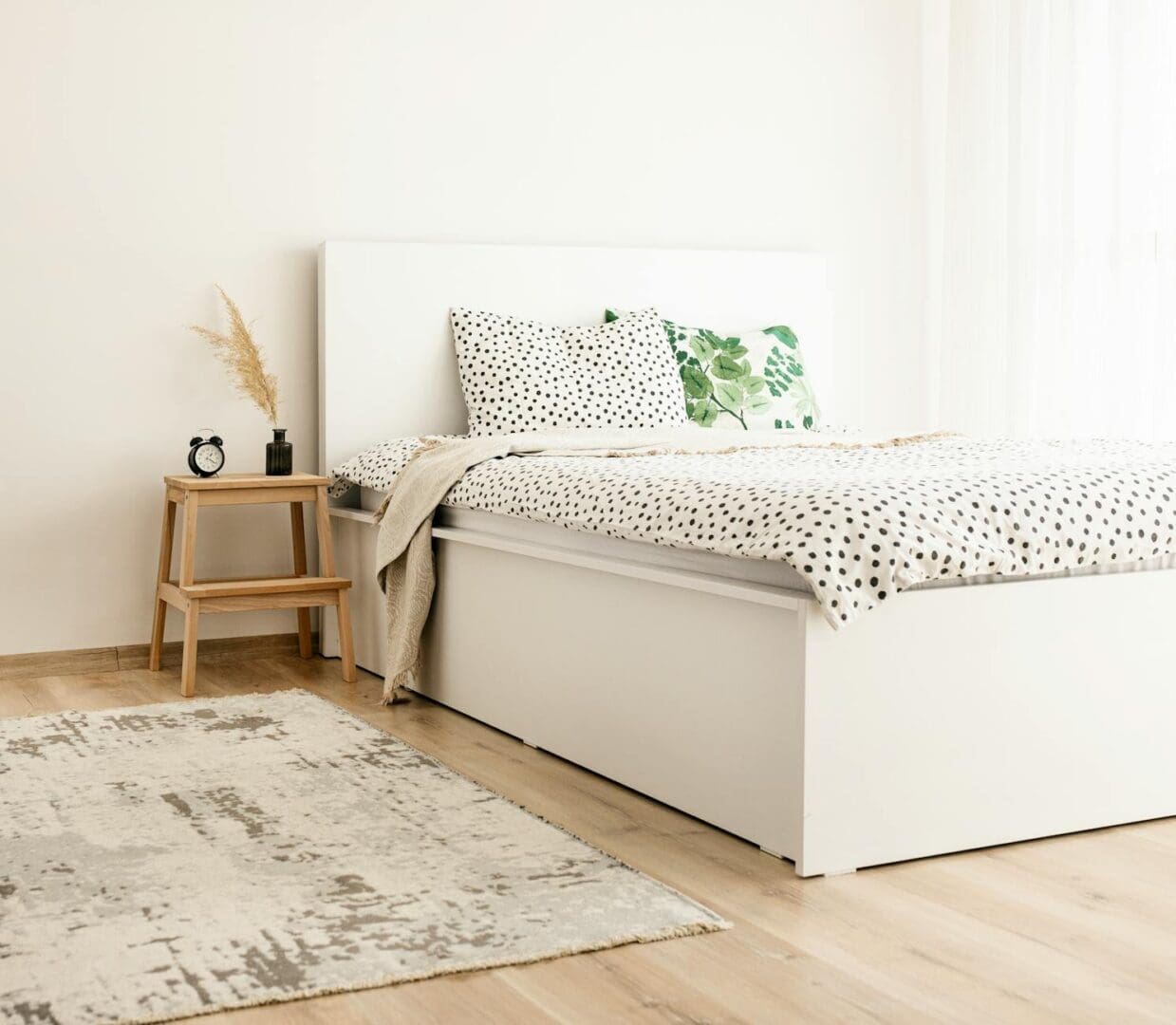
Bedroom rugs typically come in three placement styles, and each requires different dimensions. For a rug that sits under the bottom two-thirds of your bed (the most popular option), you’ll want it to extend 18-24 inches beyond each side of the bed. That means an 8×10 rug works beautifully for queen beds, while king beds usually need a 9×12 to achieve that same balanced look.
If you’re going for a runner-style setup—two matching rugs flanking the bed—look for 3×8 or 2.5×9 runners. These work especially well in smaller bedrooms where a large rug would overwhelm the space. For the bold move of placing your entire bed on the rug, you’ll need something substantially larger: think 9×12 minimum for queens and 10×14 for kings. This approach creates a true island effect but requires a bigger bedroom and budget to pull off.
Placement Tips That Make or Break the Look
The most common mistake? Pushing the rug too far under the bed. You want roughly two-thirds of the rug visible in front of and beside the bed—this creates visual weight and makes the rug feel intentional rather than like it’s hiding. Position the top edge of the rug about where your mattress begins, not up near the headboard.
Your nightstands should either sit completely on the rug or completely off it. Half-on, half-off creates an awkward, unfinished look. If your rug is large enough to accommodate the nightstands, fantastic. If not, let the rug extend beyond the bed sides while nightstands rest on bare floor—this actually works better in many layouts.
Don’t forget the “getting out of bed” test. Stand where you typically step out each morning. You want at least 18 inches of rug under your feet—enough to feel luxurious but not so much that you’re walking on rug to reach the door or closet.
Choosing Materials for Bedroom Use
Bedrooms are low-traffic zones, which opens up material options you wouldn’t consider for living areas. Plush wool rugs ($300-800 for an 8×10) feel incredible underfoot and regulate temperature beautifully, though they require regular vacuuming to maintain that luxe texture. Natural fiber rugs like jute or sisal ($200-500) bring wonderful texture and work well in casual, organic-modern spaces, but they’re scratchy on bare feet—fine if you’re a slippers person, less ideal otherwise.
Synthetic options have come a long way. High-quality polyester and polypropylene rugs ($150-400) now mimic wool convincingly while being easier to clean and gentler on budgets. They’re smart choices for allergy sufferers too. Cotton rugs are budget-friendly ($100-250) and machine-washable, making them perfect for kids’ bedrooms, though they lack the substantial feel of wool or the visual interest of natural fibers.
When to Size Up or Down
Small bedrooms (under 10×12 feet) often look better with runners or a smaller 5×8 rug positioned at the foot of the bed. Fighting for floor space with an oversized rug actually makes rooms feel more cramped. In large master suites, don’t be timid—a too-small rug looks like a mistake, not a design choice. You’re better off with a 10×14 that grounds the entire sleeping zone than an 8×10 that creates an awkward gap between the rug edge and the walls.
Consider furniture beyond the bed too. If you have a reading chair or bench at the foot of the bed, factor those into your size calculations. These pieces should relate to the rug in some way—either partially on it or clearly defined as separate zones.
Getting your bedroom rug size right isn’t about following rigid rules—it’s about proportion and how you use your space. Measure your bed, decide on your placement style, and add those buffer inches. When you can step out of bed onto something soft that also makes your room look thoughtfully designed, you’ve nailed it.
Shopping for a dresser for your child’s room feels different than buying one for yourself. You’re not just thinking about today—you’re wondering if it’ll survive the toddler years, hold up through elementary school, and maybe even make it to the teenage bedroom. The good news? With the right approach, you can find a dresser that […]
You’ve found the perfect bed frame, but now your old dresser looks completely out of place. Or maybe you’re starting fresh and wondering whether you need to buy a matching bedroom set. The truth is, coordinating your dresser and bed frame isn’t about finding exact matches—it’s about creating visual harmony through smart choices about style, […]
Adding a dresser to your walk-in closet can transform it from a simple hanging space into a fully functional dressing room. But unlike choosing a dresser for your bedroom, closet dressers have different requirements—they need to fit within existing dimensions, complement built-in systems, and maximize storage without creating obstacles. Whether you’re designing a new closet […]