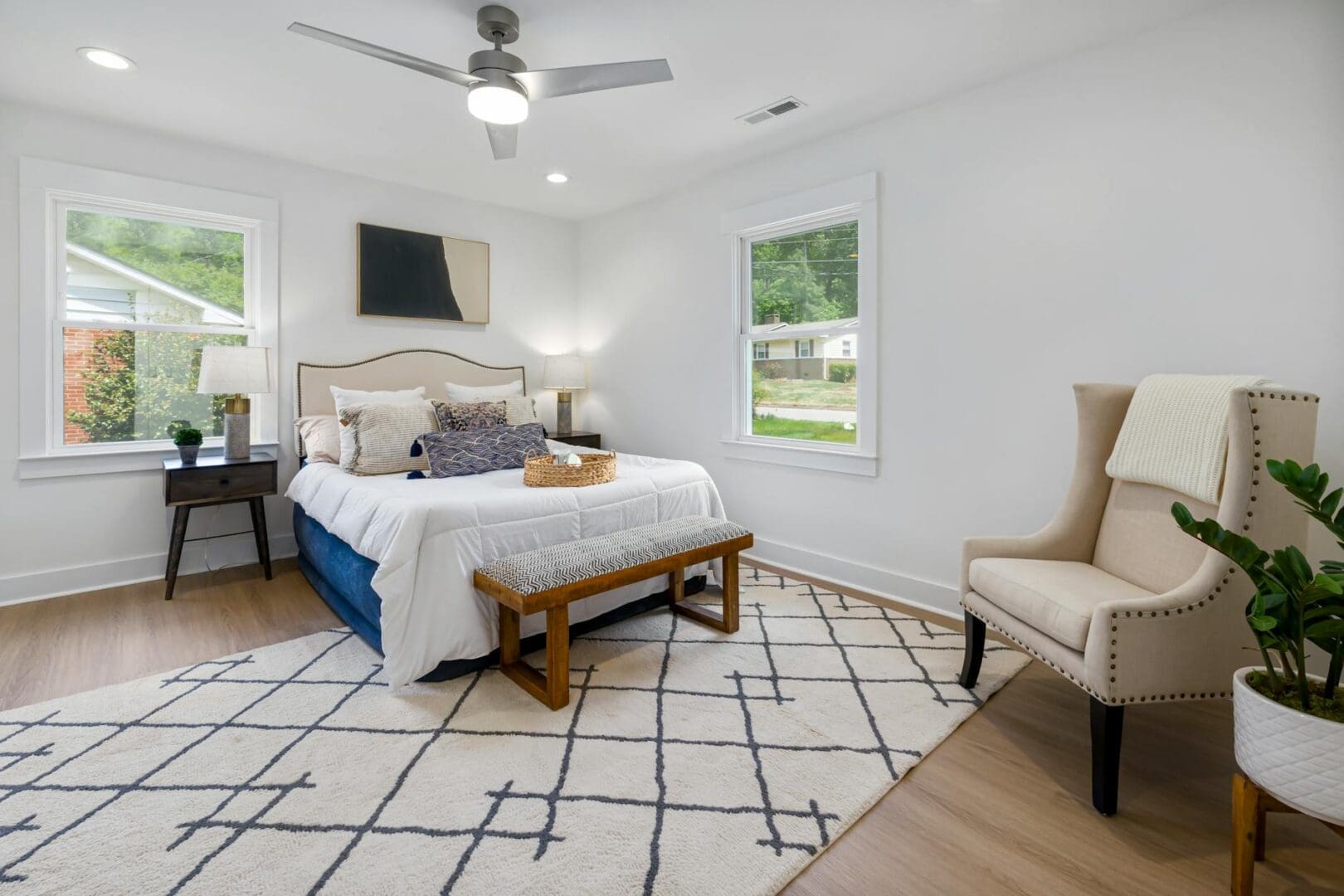
A ceiling fan with an integrated light does double duty in your bedroom—keeping you comfortable while providing ambient illumination. But walk into any showroom or scroll through options online, and you’ll quickly realize there’s a lot more to consider than you might have expected. The right fan should match your room’s size, complement your decor, operate quietly enough not to disturb your sleep, and provide the lighting you actually need. Here’s how to sort through the options and find one that checks all your boxes.
Getting the Size Right
A fan that’s too small won’t move enough air to make a difference, while one that’s too large can overwhelm your space visually and create uncomfortably strong airflow. For bedrooms up to 75 square feet, look for fans with blades spanning 29 to 36 inches. Rooms between 76 and 144 square feet work best with 36 to 42-inch fans, while larger bedrooms (up to 225 square feet) need 44 to 50-inch models. If you have a master suite larger than that, consider a fan with 52-inch blades or even multiple fans.
Ceiling height matters too. Standard 8-foot ceilings call for flush-mount or low-profile fans that hug the ceiling. If you have 9-foot ceilings or higher, you can use a downrod to position the fan at the optimal height—typically 8 to 9 feet from the floor and at least 18 inches from the walls. This positioning maximizes air circulation without anyone bumping their head.
Style and Finish Considerations
Your ceiling fan shouldn’t be an afterthought—it’s a prominent fixture that affects your bedroom’s entire aesthetic. Modern and contemporary fans feature clean lines, minimal blade designs, and finishes like brushed nickel, matte black, or chrome. They pair beautifully with streamlined furniture and minimalist decor. Traditional bedrooms benefit from fans with decorative blade irons, wood finishes, or antique brass that echo classic furniture styles.
Farmhouse and rustic bedrooms look great with fans featuring wood blades in weathered oak or walnut finishes, often with Edison-style bulbs or seeded glass shades. For transitional spaces that blend styles, look for fans with simple shapes in versatile finishes like aged bronze or brushed steel—they’ll work with almost anything.
Blade count affects appearance more than performance. Three-blade fans look sleek and modern, while four or five blades create a more traditional, balanced look. The finish on the motor housing should coordinate with your light fixtures, drawer pulls, and curtain rods for a cohesive feel.
Light Output and Control Features
The integrated light fixture needs to provide enough illumination for your needs. Look for fans that accommodate multiple bulbs or high-wattage LED arrays if you want the fan to serve as your primary bedroom light source. Dimmable LED lights offer the most flexibility, letting you adjust from bright task lighting when you’re getting ready to soft ambient light for reading in bed.
Control options make a significant difference in daily use. Pull chains are budget-friendly but require you to reach up every time you want to adjust settings. Wall controls (around $30-80 to install) provide convenient access near your door. Remote controls offer the ultimate convenience—you can adjust fan speed and light brightness from bed. Many newer models (typically $200 and up) include smart home integration, letting you control everything via smartphone apps or voice commands through Alexa or Google Home.
Noise level is critical in a bedroom. Look for fans with DC motors rather than AC motors—they run virtually silent and use less energy. Read reviews specifically mentioning noise, especially at lower speeds when you’re most likely to notice any humming or wobbling.
Budget and Quality Expectations
Budget ceiling fans with lights start around $60-120 and work fine for guest rooms or rental properties, though they may have louder motors and fewer control options. Mid-range fans ($150-300) offer better motors, more attractive designs, and useful features like remote controls and dimmable lights—this is the sweet spot for most bedrooms. Premium fans ($350-800 and up) deliver whisper-quiet DC motors, designer aesthetics, smart home features, and often include both uplight and downlight options for layered illumination.
Whatever your budget, prioritize a quality motor over decorative extras. A fan that wobbles or hums will bother you nightly, while a smooth, quiet fan becomes something you barely notice but constantly appreciate. Look for models with solid warranties—at least one year on the motor, preferably longer.
Choose based on your room’s dimensions first, then narrow down by style and features that matter to you. A ceiling fan with light should fade into the background functionally while enhancing your bedroom’s design—getting both right means you’ll enjoy better sleep and a more comfortable space for years to come.
Shopping for a dresser for your child’s room feels different than buying one for yourself. You’re not just thinking about today—you’re wondering if it’ll survive the toddler years, hold up through elementary school, and maybe even make it to the teenage bedroom. The good news? With the right approach, you can find a dresser that […]
You’ve found the perfect bed frame, but now your old dresser looks completely out of place. Or maybe you’re starting fresh and wondering whether you need to buy a matching bedroom set. The truth is, coordinating your dresser and bed frame isn’t about finding exact matches—it’s about creating visual harmony through smart choices about style, […]
Adding a dresser to your walk-in closet can transform it from a simple hanging space into a fully functional dressing room. But unlike choosing a dresser for your bedroom, closet dressers have different requirements—they need to fit within existing dimensions, complement built-in systems, and maximize storage without creating obstacles. Whether you’re designing a new closet […]