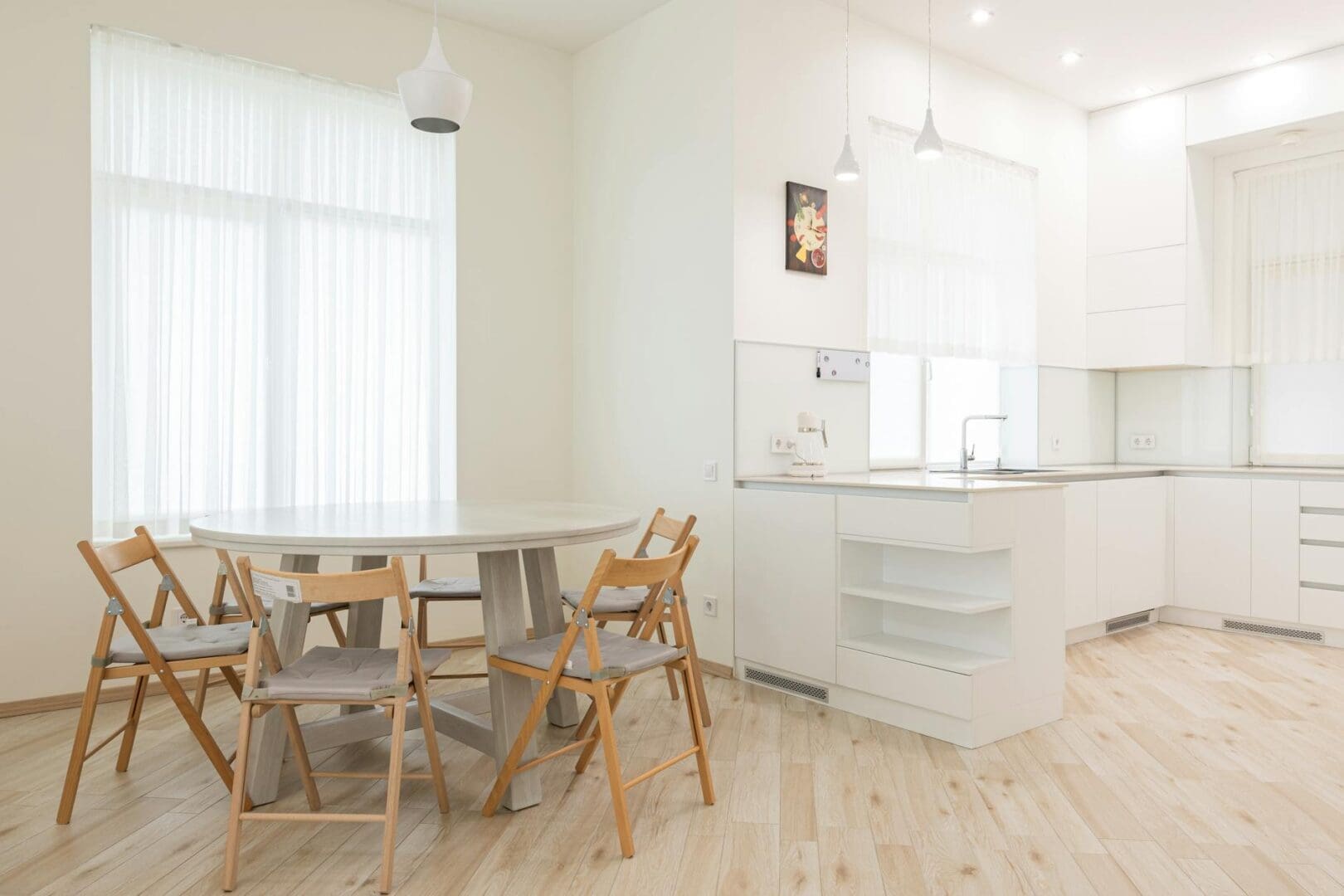
Living in a small space doesn’t mean giving up sit-down dinners or hosting friends for brunch. The right folding dining furniture can transform your compact kitchen or studio apartment into a surprisingly functional dining area that disappears when you need the floor space back. The trick is knowing which features actually matter and which ones will leave you wrestling with wobbly hardware.
Size and Shape: Getting the Proportions Right
Start by measuring your space twice—once for the table when it’s open and once for where you’ll store it when folded. A common mistake is buying a table that fits perfectly when expanded but becomes an awkward obstacle when folded against the wall.
Round drop-leaf tables work beautifully in square rooms and tight corners, typically seating 2-4 people when fully extended. Rectangular folding tables offer more flexibility for narrow spaces like galley kitchens, with most models ranging from 24 to 36 inches wide when open. Wall-mounted drop-leaf tables are your best friend in truly tiny spaces—they fold completely flat and can be as slim as 6 inches when not in use.
Budget-friendly options start around $100-200 for basic rectangular folding tables. Mid-range pieces ($300-600) typically offer better stability and finishes. Splurge-worthy wall-mounted systems ($700+) often include integrated storage and professional-grade hinges that’ll last years.
Folding Mechanisms: What Actually Works Daily
The folding mechanism makes or breaks your experience. You’ll encounter three main types: drop-leaf tables with hinged sides, gate-leg tables with swing-out supports, and fully collapsible tables that fold in half.
Drop-leaf tables are the easiest to operate solo—just lift the leaf and swing out the support bracket. Gate-leg designs offer excellent stability when open but require slightly more floor clearance for the leg mechanism. Fully collapsible tables are lighter and more portable but often sacrifice sturdiness.
Test the mechanism before buying if possible. It should operate smoothly with one hand and lock securely without pinching fingers. Avoid anything that feels sticky, requires force, or has visible gaps when locked in place. Quality hinges and brackets typically add weight to the piece, which isn’t necessarily a bad thing—that heft often means better stability when you’re actually using it.
Materials and Durability for Regular Use
Folding furniture has a reputation for feeling flimsy, but material choice makes a huge difference. Solid wood tables offer the best stability and longevity, though they’re heavier to move around. Look for rubberwood, oak, or birch if you want something durable without the premium hardwood price tag.
Engineered wood with a laminate or veneer finish hits a sweet spot for most small-space dwellers—lighter than solid wood but more substantial than particle board. The finish should be sealed properly since folding tables often end up stored in higher-humidity areas like near kitchens.
For chairs, folding wood chairs with contoured seats are far more comfortable than flat metal options if you’re actually eating meals, not just creating occasional extra seating. Metal folding chairs work fine for outdoor overflow or true emergency seating, but most people find them uncomfortable for dinners lasting more than twenty minutes.
Storage and Aesthetic Considerations
Think about where this furniture lives when not in use. Some folding tables are attractive enough to keep visible—a half-moon console against the wall or a drop-leaf table that functions as a desk. Others need to hide in a closet or slide behind a door.
Chairs that hang on wall hooks or stack flat take up surprisingly little space. Look for designs that stack at least four chairs in a footprint under 24 inches wide. Some tables include built-in chair storage, which sounds convenient but often limits your chair options to whatever matches that specific system.
Style-wise, folding furniture has come a long way from card tables and metal chairs. You’ll find Scandinavian-inspired designs, industrial looks with metal frames, and traditional wood finishes that blend seamlessly with existing decor. Choose something that matches your everyday furniture since it’ll likely spend at least some time visible in your space.
The best folding dining setup is one you’ll actually use regularly rather than avoiding because it’s too much hassle. Prioritize smooth operation and appropriate size for your space over extra features you don’t need. When you find furniture that folds and unfolds easily, stores compactly, and feels sturdy enough for real meals, you’ve found the right fit for your small space.
There’s something about farmhouse chandeliers that just works in a dining room—they bring warmth without being fussy, character without feeling overdone. But with so many styles calling themselves “farmhouse,” from sleek metal cages to chunky wood beam fixtures, figuring out which one belongs above your table can feel surprisingly tricky. The right chandelier should anchor […]
A sputnik chandelier makes a serious statement in a dining room—all those radiating arms and exposed bulbs create instant drama and mid-century appeal. But with so many variations in size, arm count, and finish, choosing the right one for your space can feel overwhelming. Get it right, though, and you’ve got a showstopper that pulls […]
When every square foot counts, bringing furniture into a small apartment feels like a high-stakes game of Tetris. You need storage desperately, but you’re terrified of making your space feel even more cramped. A sideboard can be the perfect solution—if you choose the right one. Let’s walk through exactly what to look for so you […]