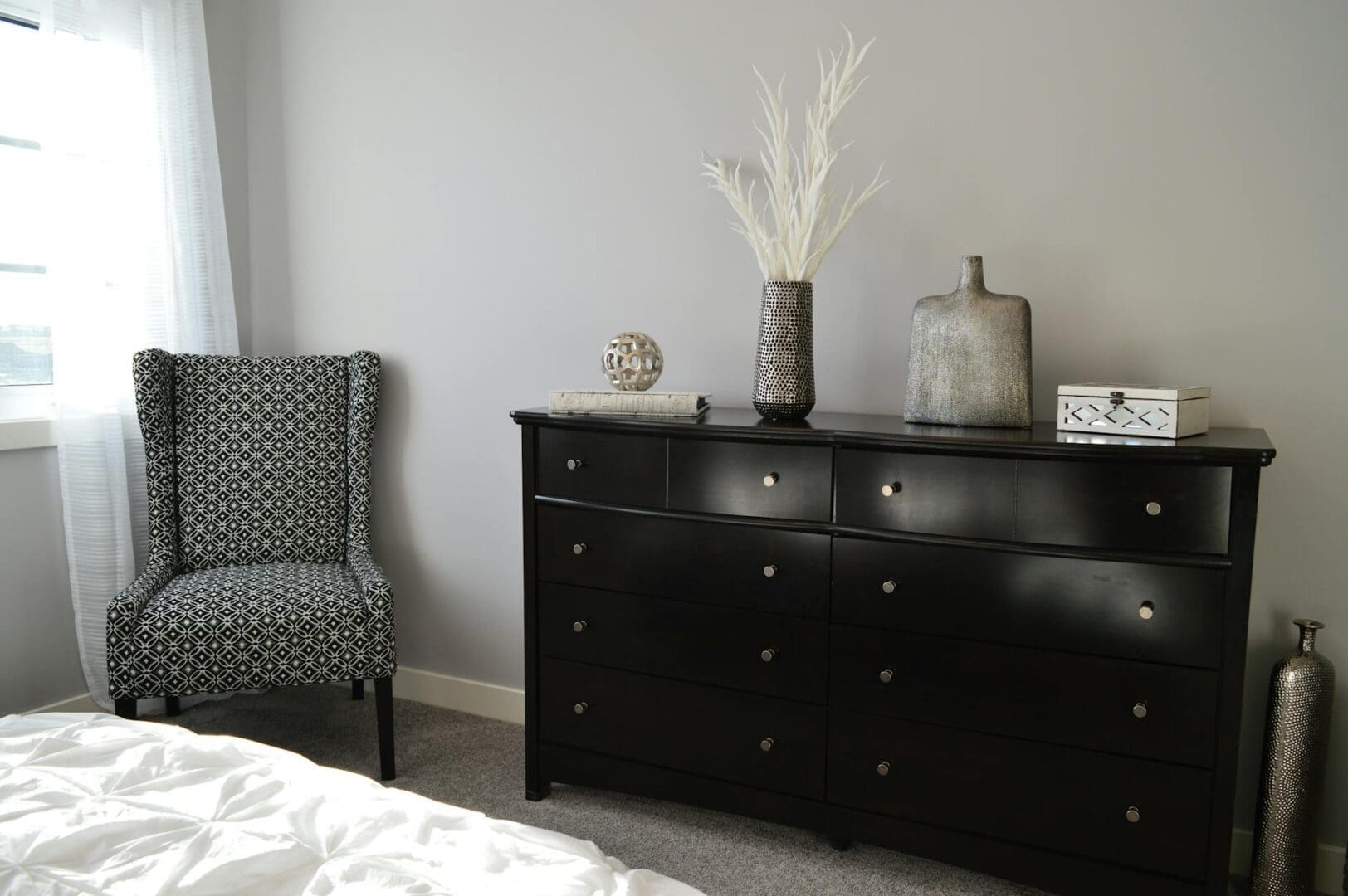
Let’s be honest—your dresser does a lot of heavy lifting. It stores everything from everyday basics to seasonal sweaters, while also anchoring your bedroom’s aesthetic. But finding one that handles both jobs well? That’s where things get tricky. A dresser that’s stunning but shallow leaves you with overflow piles on your chair (we’ve all been there). One that’s purely functional can make your room feel more like a storage unit than a sanctuary. The good news is you don’t have to choose between form and function.
Size and Configuration: Match Your Space and Stuff
Before you fall for a pretty finish, measure your space and take honest stock of what you need to store. Dressers typically come in three main configurations, each with different storage advantages.
Standard horizontal dressers (usually 50-70 inches wide) work beautifully along empty walls and offer 6-9 drawers. They’re ideal if you’re sharing a bedroom and need serious storage capacity. Tallboys or chest-style dressers (30-40 inches wide, 48+ inches tall) fit nicely in corners or smaller bedrooms while still providing 5-7 drawers of vertical storage. Then there’s the double dresser—the storage champion with 8-12 drawers, perfect for couples or anyone with an extensive wardrobe.
Pay attention to drawer depth too. Top drawers around 4-6 inches deep handle accessories and undergarments, while lower drawers should be 8-12 inches deep for bulkier items like jeans and sweaters. If you’re storing everything from workout clothes to formal wear, look for varied drawer depths rather than uniform sizing.
Construction and Materials: What Lasts vs. What Just Looks Good
You can find dressers anywhere from $200 to $2,000+, and construction quality explains most of that range. Budget dressers ($200-$500) often use particleboard or MDF with veneer finishes. They’ll serve you fine for a few years, but expect some sagging and wear. Mid-range options ($500-$1,200) typically feature solid wood frames with engineered wood components—a smart balance of durability and value.
If you’re planning to keep this dresser for a decade or more, splurge-worthy pieces ($1,200+) in solid hardwood like oak, walnut, or maple are worth considering. Look for dovetail joints in the drawers (those interlocking zigzag corners)—they’re exponentially stronger than stapled or glued joints.
Here’s what else separates a quality dresser from one that’ll frustrate you:
Drawer glides: Ball-bearing glides operate smoothly even when fully loaded, while cheaper euro glides stick and wobble
Drawer stops: Prevent drawers from pulling all the way out and dumping contents
Finished interiors: Sealed drawer boxes resist moisture and odors
Anti-tip hardware: Essential for safety, especially in homes with children
Style That Works With Your Bedroom
Your dresser should complement your bed and nightstands without demanding they all match exactly—that matchy-matchy look feels dated. Instead, coordinate by style, finish, or material.
Mid-century modern dressers with tapered legs and clean lines bring a classic, uncluttered feel that works across decades. Traditional dressers with ornate hardware and substantial crown molding add gravitas to formal bedrooms. For contemporary spaces, consider dressers with flat fronts, minimal hardware, and interesting textures like cerused oak or two-tone finishes.
Don’t overlook finish color in relation to your room’s light. Dark finishes like espresso and walnut add warmth but can overwhelm small or dimly lit bedrooms. Lighter woods and painted finishes in white, gray, or natural oak help smaller spaces feel more open.
Smart Features That Earn Their Keep
Today’s dressers offer more than just drawers. Felt-lined top drawers protect jewelry and sunglasses from scratches. Cedar-lined drawers naturally repel moths—a game-changer for storing woolens. Some dressers include built-in charging stations or outlets, keeping devices powered without tangled cords on your nightstand.
If you’re using your dresser as a TV stand too, look for models with cord management cutouts and reinforced tops rated for electronics weight. A dresser top at 32-36 inches high puts a television at comfortable viewing height from your bed.
The right dresser transforms bedroom chaos into calm, giving every item its place while elevating your room’s entire look. Start with your actual storage needs, invest in construction quality that matches how long you’ll keep it, and choose a style that makes you happy every time you walk into your bedroom. Your future self—the one not digging through piles of unfolded laundry—will thank you.
A four poster bed is one of those furniture pieces that can completely transform a bedroom—but only if you have the space to let it shine. If you’re working with a generous bedroom and want to create a dramatic focal point, a four poster bed might be exactly what you need. The trick is choosing […]
You’ve narrowed down your mattress choice, and now you’re staring at two beautiful bed frames wondering what the actual difference is. One’s called a panel bed, the other’s a platform bed, and honestly, they both look like… beds. The names don’t help much, but the distinctions actually matter quite a bit for your wallet, your […]
There’s something undeniably classic about a bed frame with both a headboard and footboard. It gives your bedroom that pulled-together, furniture-showroom look and can make even a basic mattress feel like a proper centerpiece. But with so many styles, materials, and price points out there, choosing the right one involves more than just picking something […]