If you’ve got a dining room with an eight-foot ceiling (or lower), you already know the struggle. You want a statement light fixture that makes the space feel special, but you’re worried about guests bumping their heads or the room feeling even more cramped. The good news? Low ceilings actually open up some really attractive lighting options that work better than traditional chandeliers anyway.
Understanding Clearance Requirements
Let’s start with the non-negotiables. You need at least 30 inches of clearance between your tabletop and the bottom of your light fixture—that’s the magic number that prevents head bumps and keeps conversations comfortable. With a standard 30-inch table height, this means your fixture can’t hang lower than 60 inches from the floor.
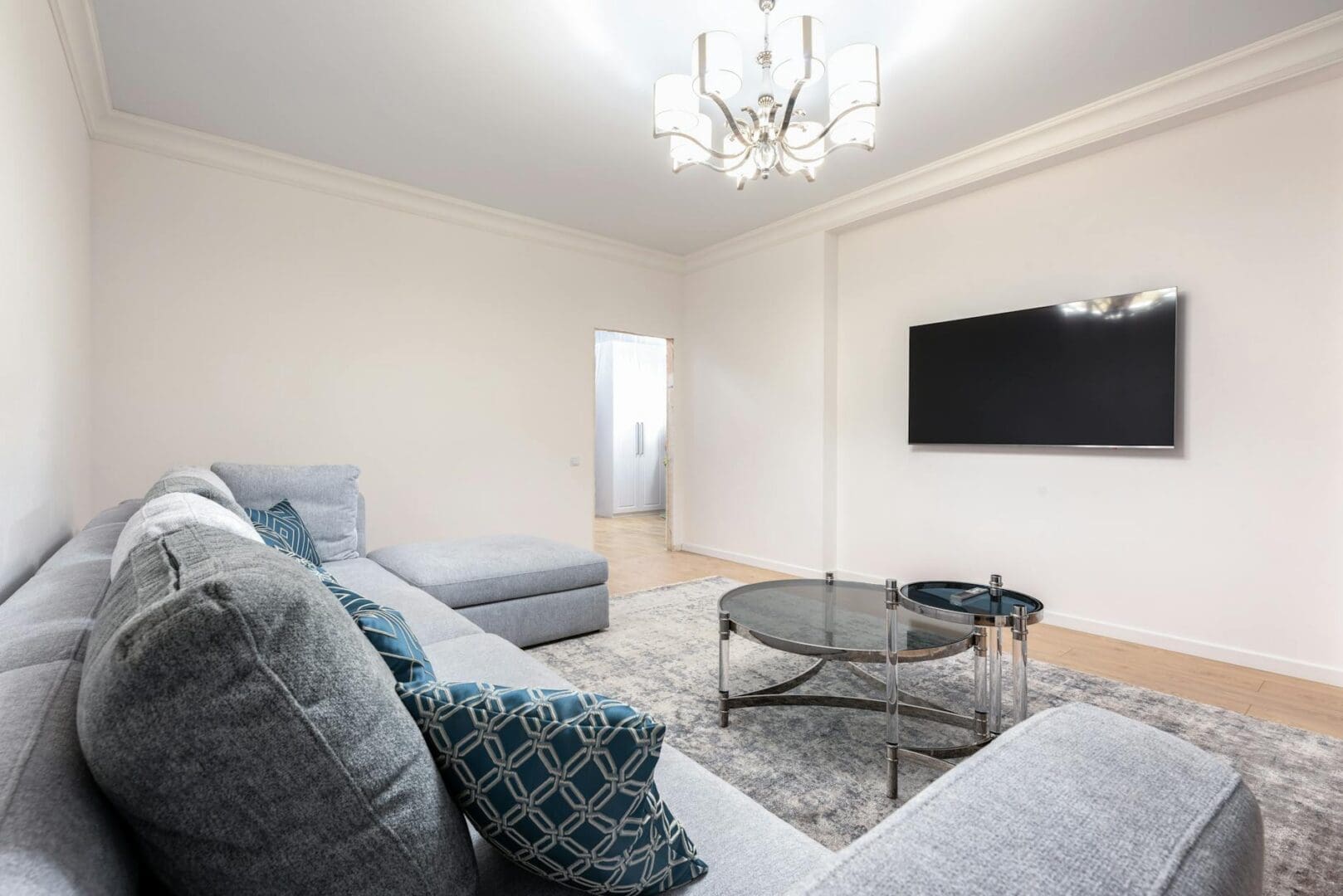
For an eight-foot ceiling, that gives you about 36 inches of vertical space to work with. Sounds tight, but here’s where it gets interesting: fixtures designed for low ceilings typically measure 6 to 12 inches in height, leaving you plenty of breathing room. Semi-flush and flush mount fixtures are your best friends here, sitting close to the ceiling while still providing enough visual interest to anchor your dining space.
Fixture Styles That Work With Low Ceilings
Forget what you’ve heard about low ceilings limiting your style options. You’ve actually got several compelling choices:
Flush mount fixtures sit directly against the ceiling with minimal gap. These work beautifully in contemporary and modern spaces, especially drum-style designs with fabric shades that diffuse light warmly. Expect to spend $80-$200 for quality options, or $300-$600 for designer pieces with interesting details.
Semi-flush mounts drop 4 to 8 inches from the ceiling, giving you a bit more presence without sacrificing headroom. They’re perfect for traditional or transitional dining rooms and often feature multiple bulbs for better light distribution. Budget $150-$400 for solid mid-range fixtures.
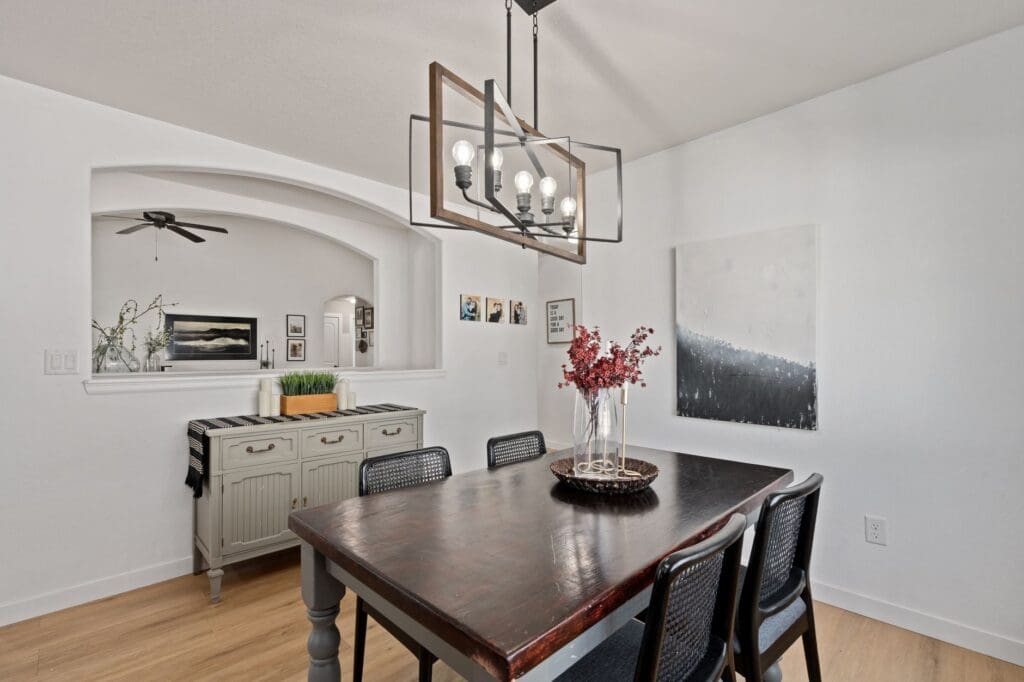
Wide, shallow chandeliers designed specifically for low ceilings spread horizontally rather than vertically. Look for fixtures labeled “low profile” or “compact”—these typically measure under 10 inches tall but can span 20 to 30 inches wide, creating drama through width instead of drop length. Prices range from $250-$800 depending on materials and finish quality.
Recessed lighting with a statement element isn’t technically a single fixture, but hear me out: a grid of recessed lights paired with a thin profile decorative medallion or a shallow architectural feature can give you excellent illumination plus visual interest. This approach runs $400-$1,200 installed but maximizes ceiling height perception.
Size and Scale Considerations
Just because your fixture can’t drop down doesn’t mean it should be tiny. A too-small light will make your dining room feel off-balance. The standard formula still applies: add your room’s length and width in feet, then convert to inches—that’s your ideal fixture diameter. For a 12×14 room, you’re looking at a 26-inch fixture.
With low ceilings, err on the side of going wider rather than smaller. A 24 to 30-inch flush mount makes a much better statement than a dinky 16-inch fixture that disappears. The key is finding fixtures with visual weight—think bold shapes, interesting textures, or multiple light sources clustered together—that command attention without hanging down into your space.
Light Quality and Brightness
Low ceiling fixtures often place bulbs closer to where you’re sitting, which means you need to be thoughtful about glare. Look for fixtures with diffusers, frosted glass, or shades that direct light upward and outward rather than straight down. This creates ambient lighting that bounces off the ceiling, actually making your room feel taller.
For brightness, aim for 3,000 to 6,000 lumens total in your dining room, depending on size. Dimmable fixtures are worth the extra $30-$50 because they let you adjust from bright family dinners to intimate evening meals. Choose bulbs in the 2700K to 3000K range for that warm, inviting glow that makes food and faces look their best.
Your low ceiling isn’t a limitation—it’s just a design parameter that points you toward specific solutions. The fixtures that work best in your space often provide better, more even lighting than dramatic chandeliers anyway, and they make your room feel larger by drawing the eye outward instead of downward. Focus on finding a fixture with the right diameter and visual presence, make sure it’s properly dimmable, and you’ll have a dining room that feels polished and intentional.
You’ve measured your dining room, you know you need more storage, and now you’re staring at dozens of sideboards wondering: doors or open shelves? It’s not just an aesthetic choice—it affects how you’ll actually use this piece every single day. Let’s walk through what really matters so you can pick the sideboard that works for […]
Did You Know? The Declaration of Independence Was Likely Written in a Windsor Chair As America celebrates 250 years of independence, it’s worth looking at one of the quieter witnesses to that history: the humble Windsor chair. Thomas Jefferson is said to have drafted the Declaration of Independence while seated in an unusual revolving Windsor […]
Shopping for a dining table when you have a family of six means you need something that works for Tuesday night homework sessions, weekend pancake breakfasts, and holiday dinners with grandparents—all without taking over your entire dining room. The right table makes family life easier. The wrong one? You’ll feel it every single day. Let’s […]