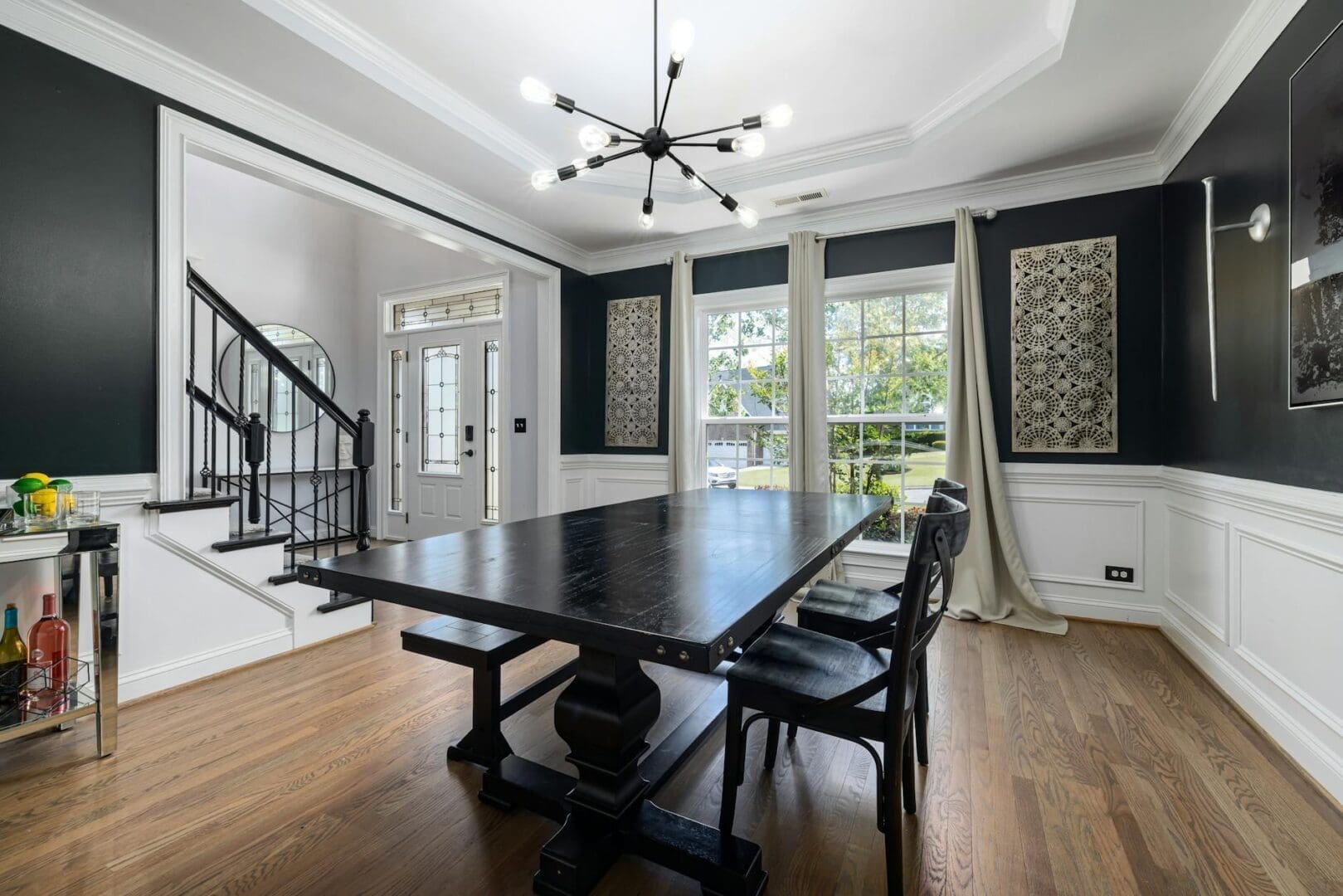
If your dining room feels a bit tired or you’re finally ready to move beyond that pandemic-era makeover, you’re in good company. The way we use dining spaces has evolved dramatically, and 2026’s trends reflect a shift toward rooms that work harder while looking more intentional. Whether you’re planning a full refresh or just want to add a few strategic updates, here’s what’s shaping dining room design this year.
Curved Silhouettes Are Taking Over
Sharp edges and rigid lines are giving way to softer, more organic shapes. Oval and round dining tables are having a major moment, particularly those with sculptural pedestal bases that create visual interest without the leg-bumping frustration of traditional four-legged designs. Look for tables with rounded corners or organic, asymmetric shapes that feel less formal and more inviting.
This curved trend extends beyond tables. Dining chairs with rounded backs, arched hutches, and even circular or oval mirrors are showing up in showrooms everywhere. If your current setup feels boxy, swapping in just one curved element—like a set of barrel-back dining chairs or a rounded buffet—can immediately soften the space. Expect to spend around $400-$800 for quality curved dining chairs in the mid-range, while statement pedestal tables typically start around $1,200 and climb to $3,000+ for solid wood or designer pieces.
Layered Lighting Replaces the Single Chandelier
The days of relying solely on one overhead fixture are behind us. In 2026, dining rooms are getting the layered lighting treatment with multiple sources at different heights. Yes, you’ll still want a statement piece over the table—but now it’s joined by wall sconces, picture lights on art, or even LED strips highlighting architectural details.
Linear pendant lights are particularly popular for rectangular tables, offering a fresh alternative to the traditional chandelier. They provide even illumination and work especially well in modern or transitional spaces. Consider installing dimmer switches on all your lighting layers so you can adjust the mood from bright family dinners to intimate gatherings. Budget-friendly pendant lights start around $150-$300, while designer fixtures can easily reach $1,000 or more.
Rich, Grounded Color Palettes
All-white dining rooms are fading fast. The 2026 palette leans into warmer, earthier tones that create cocooning, restaurant-worthy ambiance. Think deep terracotta, warm cognac, olive green, and various shades of clay and rust. These colors show up in upholstery, painted accent walls, and even stained wood finishes that embrace natural grain patterns rather than hiding them.
Contrast is key here. Pairing a dark walnut table with lighter upholstered chairs creates depth, while a sage green accent wall behind a natural oak buffet feels collected and intentional. If you’re not ready to commit to bold wall colors, try bringing in these tones through easier-to-swap elements like chair cushions, table linens, or a large area rug. Vintage-inspired Persian or Turkish rugs in rust and navy tones are especially popular and typically range from $300-$1,500 depending on size and quality.
Multi-Functional Storage That Actually Looks Good
With more people working from home and using dining spaces for activities beyond meals, smart storage has become essential. But the clunky china cabinets of the past won’t cut it. Today’s storage pieces are sleeker and more versatile—think low-profile credenzas, open shelving units with integrated cabinets, and bar carts that can double as serving stations.
Look for pieces with a mix of open and closed storage so you can display your attractive serveware while hiding the less photogenic stuff. Cane and rattan details add texture without visual weight, keeping the room from feeling too heavy. A quality sideboard or credenza typically runs $600-$2,000, but it’s one of those investment pieces that will serve you well for years while significantly upgrading your dining room’s functionality and style.
The dining rooms gaining traction in 2026 feel less staged and more lived-in, with a focus on comfort, adaptability, and personal expression. You don’t need to incorporate every trend to create a space that feels current—even one or two thoughtful updates can make your dining room feel fresh and intentional. Start with the element that solves your biggest pain point, whether that’s inadequate lighting, uncomfortable seating, or lack of storage, and build from there.
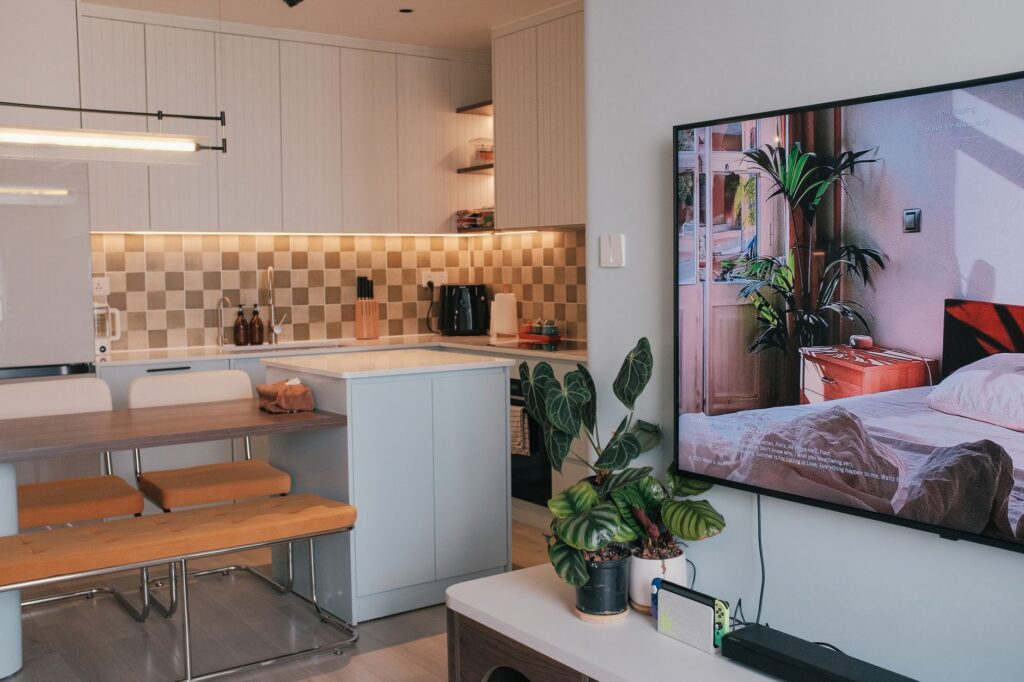
When every square foot counts, bringing furniture into a small apartment feels like a high-stakes game of Tetris. You need storage desperately, but you’re terrified of making your space feel even more cramped. A sideboard can be the perfect solution—if you choose the right one. Let’s walk through exactly what to look for so you […]
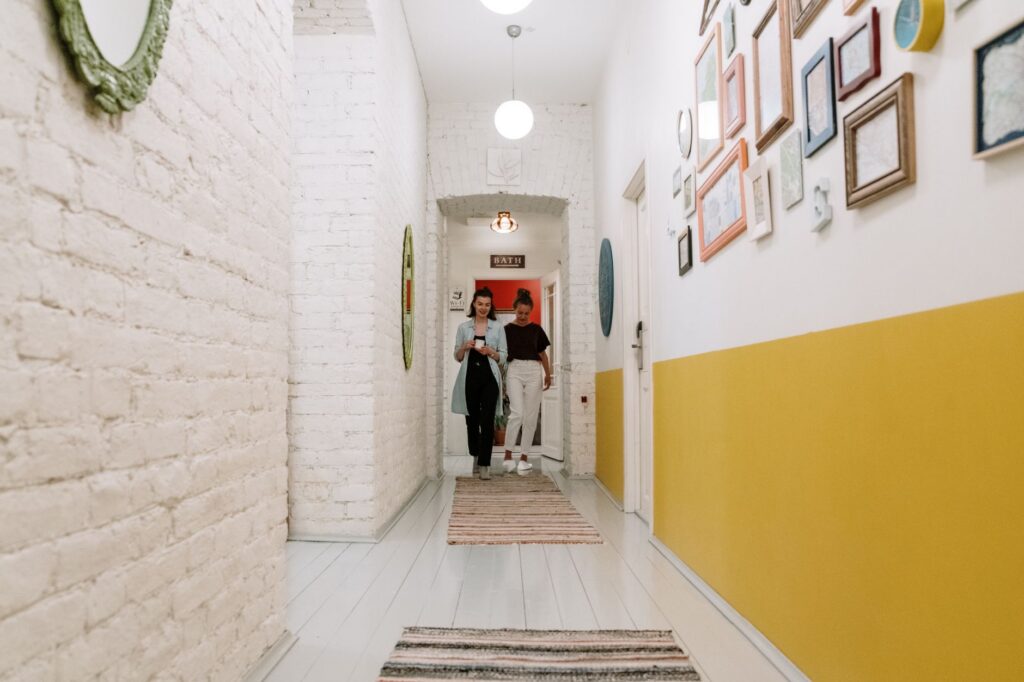
Hallways are the overlooked workhorses of our homes—they connect every room, but rarely get the storage love they deserve. A well-chosen sideboard transforms that narrow stretch of wall into genuinely useful space without making your hallway feel like an obstacle course. The trick is finding one that fits the proportions of the room while actually […]
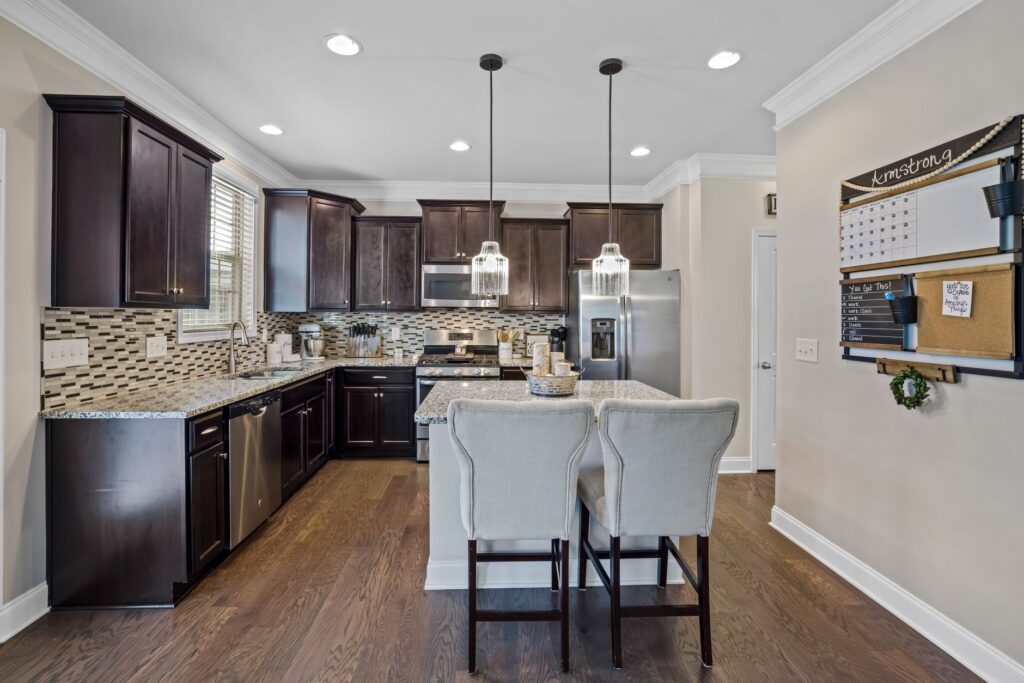
Dark kitchens—whether they feature rich espresso cabinets, moody charcoal walls, or black granite countertops—create incredible drama and sophistication. But they also present a unique challenge when it comes to choosing bar stools. Pick the wrong ones, and your beautiful space can feel cave-like or visually heavy. Choose wisely, and your stools become the bright spot […]