Standing in the curtain aisle, staring at seemingly endless options, wondering whether your bedroom needs total darkness or soft, filtered light? You’re not alone. The choice between blackout and sheer curtains shapes not just how your bedroom looks, but how well you sleep and how the space feels during waking hours.
Here’s how to figure out which type works best for your bedroom—or whether you might want both.
Light Control and Sleep Quality Come First
Your sleep habits should drive this decision. Blackout curtains block 95-100% of incoming light, creating a cave-like environment that’s ideal if you’re a light-sensitive sleeper, work night shifts, or live on a street with bright outdoor lighting. The thick, tightly-woven fabric literally blocks photons from entering your room.
Sheer curtains, on the other hand, filter light rather than block it. They soften harsh sunlight into a gentle, diffused glow that preserves your circadian rhythm if you prefer waking gradually with natural light. Most sheers block only 10-30% of light, so your room will still brighten considerably at sunrise.
Consider your location too. East-facing bedrooms get intense morning sun that might jolt you awake earlier than you’d like. West-facing rooms deal with hot afternoon glare. North-facing bedrooms receive gentler, indirect light that works beautifully with sheers. South-facing rooms get consistent sunlight that could go either way depending on your preferences.
Privacy Needs Throughout the Day and Night
Blackout curtains provide complete privacy 24/7. Once drawn, nobody’s seeing in—period. This matters if your bedroom windows face neighboring homes, busy sidewalks, or you simply want absolute seclusion.
Sheer curtains offer daytime privacy through obscurity. People outside see soft shapes and shadows rather than clear views into your room, but they’re not truly private after dark when interior lights are on. If you love the airy feel of sheers but need evening privacy, you’ll want to layer them with blinds, shades, or heavier curtain panels you can close at night.
Think about your window placement and proximity to neighbors. Ground-floor bedrooms typically need more privacy coverage than second-story rooms. Corner lot homes might have windows that face away from foot traffic, making sheers perfectly adequate.
Style, Light, and How Your Bedroom Should Feel
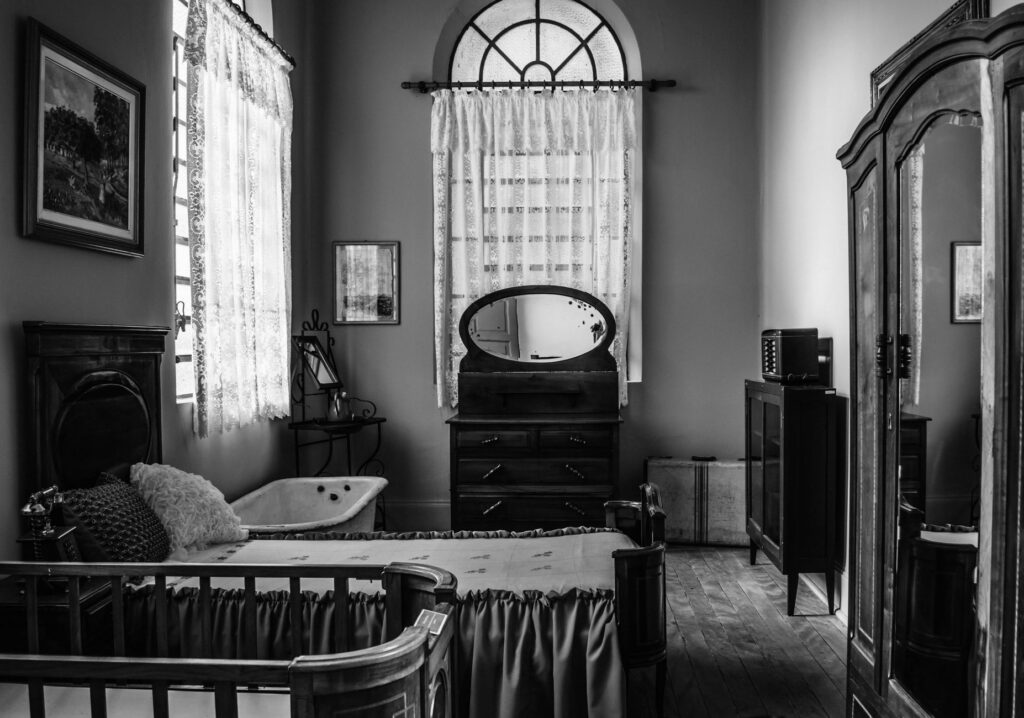
Sheer curtains create an ethereal, romantic atmosphere. They make rooms feel larger and more open by allowing natural light to bounce around. White, cream, and soft gray sheers work beautifully in minimalist, Scandinavian, coastal, and cottage-style bedrooms. They’re perfect for smaller bedrooms that need every bit of brightness they can get.
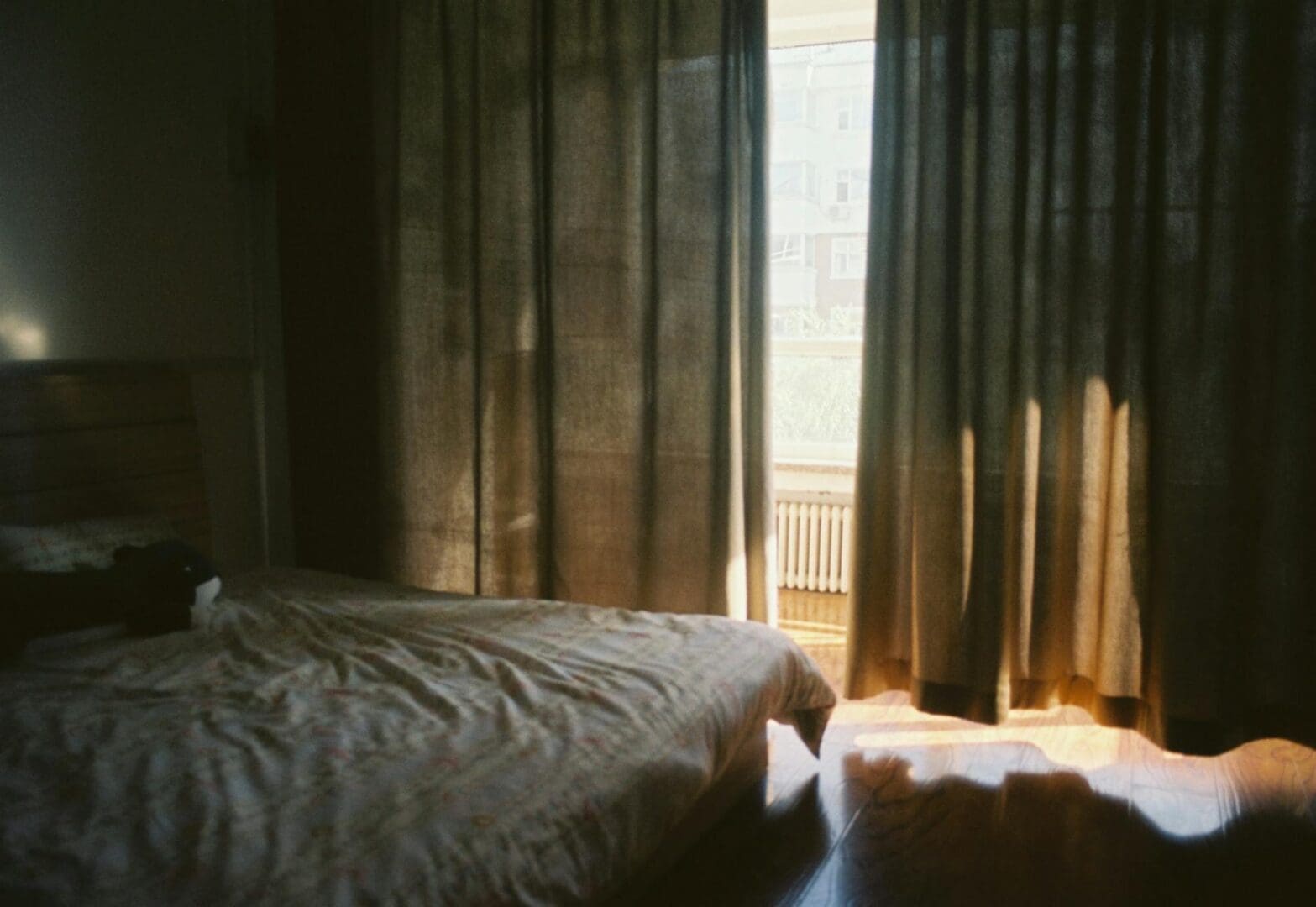
Blackout curtains bring drama and coziness. Available in every color and pattern imaginable, they anchor a room with solid visual weight. Darker colors (navy, charcoal, forest green) create a sophisticated, moody vibe, while lighter blackout curtains in white or beige keep things bright during the day without sacrificing nighttime darkness. They suit contemporary, traditional, and maximalist styles equally well.
Budget-wise, basic blackout panels start around $20-40 per panel, while quality options with proper lining run $50-100. Sheer curtains are generally less expensive at $15-60 per panel, though designer sheers with embroidery or patterns can reach $80-150.
The Layered Approach Gives You Both Benefits
Can’t choose? Don’t. Many homeowners layer sheers with blackout curtains using a double curtain rod. Hang sheers closest to the window for daytime softness and privacy, with blackout panels on the outer rod for nighttime use. This gives you complete flexibility—filter light during the day, block it completely at night.
Alternatively, pair sheer curtains with blackout roller shades or cellular shades. Keep sheers drawn for style and daytime privacy, then lower the shade when you need darkness. This combination costs more upfront ($100-300 per window for quality options) but solves the either-or dilemma permanently.
Your bedroom curtains affect your daily life more than almost any other decor choice. If you need darkness to sleep well, blackout curtains are worth prioritizing over aesthetics. If you’re blessed with good sleep regardless of light, sheers offer an elegance and airiness that blackout panels simply can’t match. And if you want the best of both, layering isn’t just acceptable—it’s smart design.
Shopping for a dresser for your child’s room feels different than buying one for yourself. You’re not just thinking about today—you’re wondering if it’ll survive the toddler years, hold up through elementary school, and maybe even make it to the teenage bedroom. The good news? With the right approach, you can find a dresser that […]
You’ve found the perfect bed frame, but now your old dresser looks completely out of place. Or maybe you’re starting fresh and wondering whether you need to buy a matching bedroom set. The truth is, coordinating your dresser and bed frame isn’t about finding exact matches—it’s about creating visual harmony through smart choices about style, […]
Adding a dresser to your walk-in closet can transform it from a simple hanging space into a fully functional dressing room. But unlike choosing a dresser for your bedroom, closet dressers have different requirements—they need to fit within existing dimensions, complement built-in systems, and maximize storage without creating obstacles. Whether you’re designing a new closet […]