If you’re waking up with the sunrise when you’d rather sleep in, or struggling to nap during the day, the problem might be as simple as too much light sneaking into your bedroom. Regular curtains just don’t cut it when you need true darkness, whether you’re a shift worker, a light-sensitive sleeper, or just trying to get your toddler to sleep past 5:30 AM. The good news? Quality blackout curtains can transform your bedroom into a sleep sanctuary, but not all blackout curtains are created equal.
Understanding Blackout Ratings and Fabric Quality
Here’s what most people don’t realize: “blackout” isn’t a regulated term, so manufacturers use it pretty loosely. True blackout curtains should block 99-100% of outside light, while “room darkening” curtains typically block 95-99%. That difference matters more than you’d think—even a sliver of morning sun can disrupt your sleep cycle.
The fabric construction is key. Look for curtains with multiple layers or a foam backing, which is usually white or beige on the reverse side. Triple-weave fabrics are your gold standard—they’re tightly woven without chemical coatings, making them more durable and better at temperature regulation. Foam-backed options are typically less expensive (starting around $25-40 per panel) but can deteriorate over time and may have an initial chemical smell. Triple-weave curtains run $50-120 per panel but last longer and hang beautifully.
Getting the Right Fit and Coverage
Even the highest-quality blackout fabric won’t help if light streams in around the edges. This is where most people go wrong. Your curtains need to be wider and longer than you think.
For width, multiply your window width by 1.5 to 2 times for proper fullness when closed. More importantly, extend your curtain rod 4-6 inches beyond each side of the window frame so the panels overlap the wall. For length, curtains should either touch the floor or puddle slightly—floating curtains create a gap that defeats the purpose.
Consider these installation tricks for maximum light blocking:
Mount your rod as close to the ceiling as possible to eliminate top gaps
Use wraparound or ceiling-mounted rods that curve the curtain edges back to the wall
Add velcro strips along the curtain edges to attach them directly to the wall (sounds extreme, but shift workers swear by this)
Layer blackout curtains behind decorative panels if aesthetics matter in your space
Balancing Style With Functionality
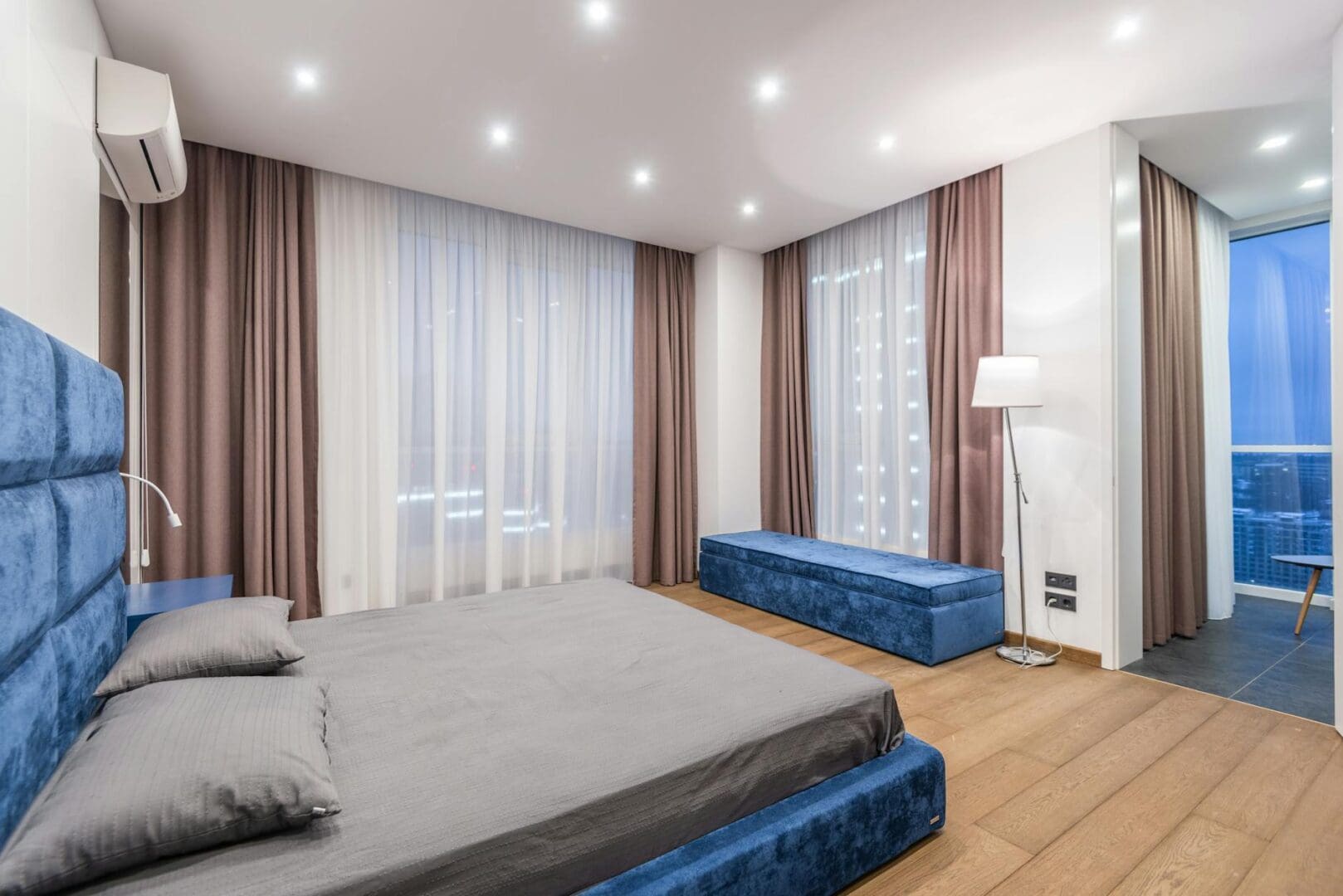
Blackout curtains have come a long way from the heavy, institutional-looking panels of the past. You can now find options in virtually any color, pattern, and texture, though darker colors naturally perform better at light blocking than pale ones.
Budget-friendly options ($20-50 per panel) usually come in basic solids with foam backing. Mid-range curtains ($50-100 per panel) offer better fabric quality, more color options, and often include thermal insulation properties that help with energy bills. Splurge-worthy choices ($100-200+ per panel) feature luxe fabrics like velvet or linen-look weaves that don’t sacrifice style for function.
Grommet-top curtains are easiest to open and close smoothly, while rod-pocket styles create a more traditional look but can be harder to slide. Back-tab or hidden-tab curtains offer a cleaner, modern aesthetic if that matches your bedroom style.
Additional Features Worth Considering
Modern blackout curtains often multitask. Thermal-insulated versions help regulate room temperature, which can also improve sleep quality and reduce energy costs—worth the extra $10-30 per panel in most climates. Noise-reducing curtains with extra-dense fabric can muffle street sounds, particularly helpful for urban dwellers.
If you’re sensitive to chemicals or have allergies, look for Oeko-Tex certified curtains, which are tested for harmful substances. These typically start around $60 per panel but provide peace of mind, especially in a bedroom.
The right blackout curtains are an investment in better sleep, and unlike sleeping pills or white noise machines, they’re a one-time purchase that works passively every single night. Measure carefully, choose quality fabric over the cheapest option, and pay attention to installation details. Your well-rested future self will thank you.
Shopping for a dresser for your child’s room feels different than buying one for yourself. You’re not just thinking about today—you’re wondering if it’ll survive the toddler years, hold up through elementary school, and maybe even make it to the teenage bedroom. The good news? With the right approach, you can find a dresser that […]
You’ve found the perfect bed frame, but now your old dresser looks completely out of place. Or maybe you’re starting fresh and wondering whether you need to buy a matching bedroom set. The truth is, coordinating your dresser and bed frame isn’t about finding exact matches—it’s about creating visual harmony through smart choices about style, […]
Adding a dresser to your walk-in closet can transform it from a simple hanging space into a fully functional dressing room. But unlike choosing a dresser for your bedroom, closet dressers have different requirements—they need to fit within existing dimensions, complement built-in systems, and maximize storage without creating obstacles. Whether you’re designing a new closet […]