Your dining room should work for everyday meals and special gatherings alike, but getting the layout right depends entirely on the space you’re working with. Whether you’re trying to squeeze a functional dining area into a compact apartment or wondering how to fill a sprawling formal dining room without making it feel empty, the key is understanding how room size dictates your furniture choices and arrangement.
Small Dining Rooms (Under 100 Square Feet)
In a small dining space, every inch counts. Start by measuring your room carefully—you’ll need at least 36 inches of clearance around your table for chairs to pull out comfortably, though 42-48 inches is ideal if you have servers or people walking behind diners.
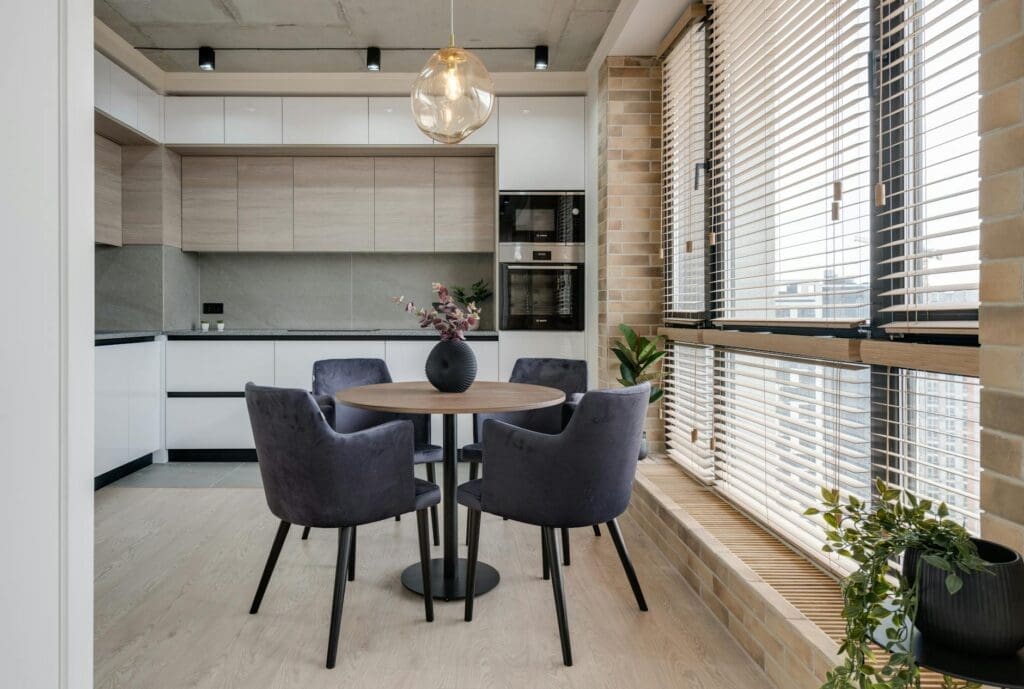
For compact rooms, a round or square table works beautifully. A 36-inch round table seats four people comfortably and creates better flow than a rectangular option in tight quarters. If you need flexibility, look for drop-leaf or expandable tables that can shrink down for daily use and expand when guests arrive. These typically run $200-$600 for budget-friendly options, while solid wood versions with quality mechanisms can reach $1,200-$2,000.
Consider these space-saving strategies:
Mount a narrow console or wall-mounted table that folds down when needed
Choose armless chairs or upholstered benches that tuck completely under the table
Skip the sideboard and use floating shelves for storage instead
Position your table near a corner to maximize open floor space
If your dining area shares space with your living room or kitchen, a 48-60 inch round table creates a natural room divider while maintaining sightlines. This setup works particularly well in open-plan apartments where you want definition without walls.
Medium Dining Rooms (100-200 Square Feet)
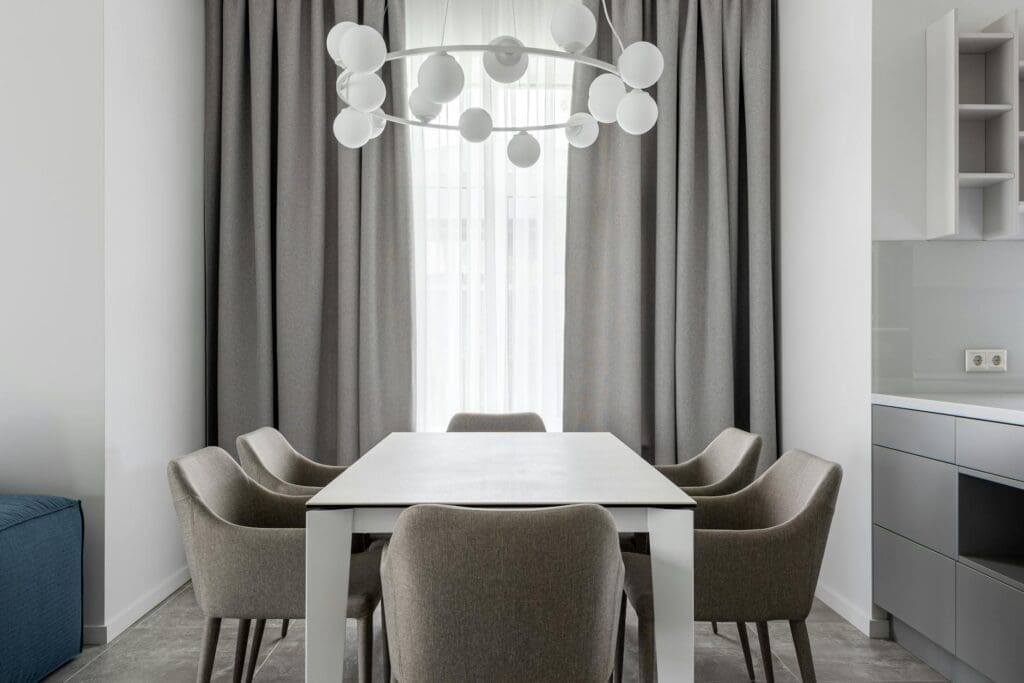
This is the sweet spot where you have real options. A rectangular table between 60-72 inches can seat six to eight people, making it perfect for growing families or regular entertaining. Expect to pay $400-$1,000 for mid-range options in wood or wood veneer, or $1,500-$3,500 for solid hardwood pieces that’ll last decades.
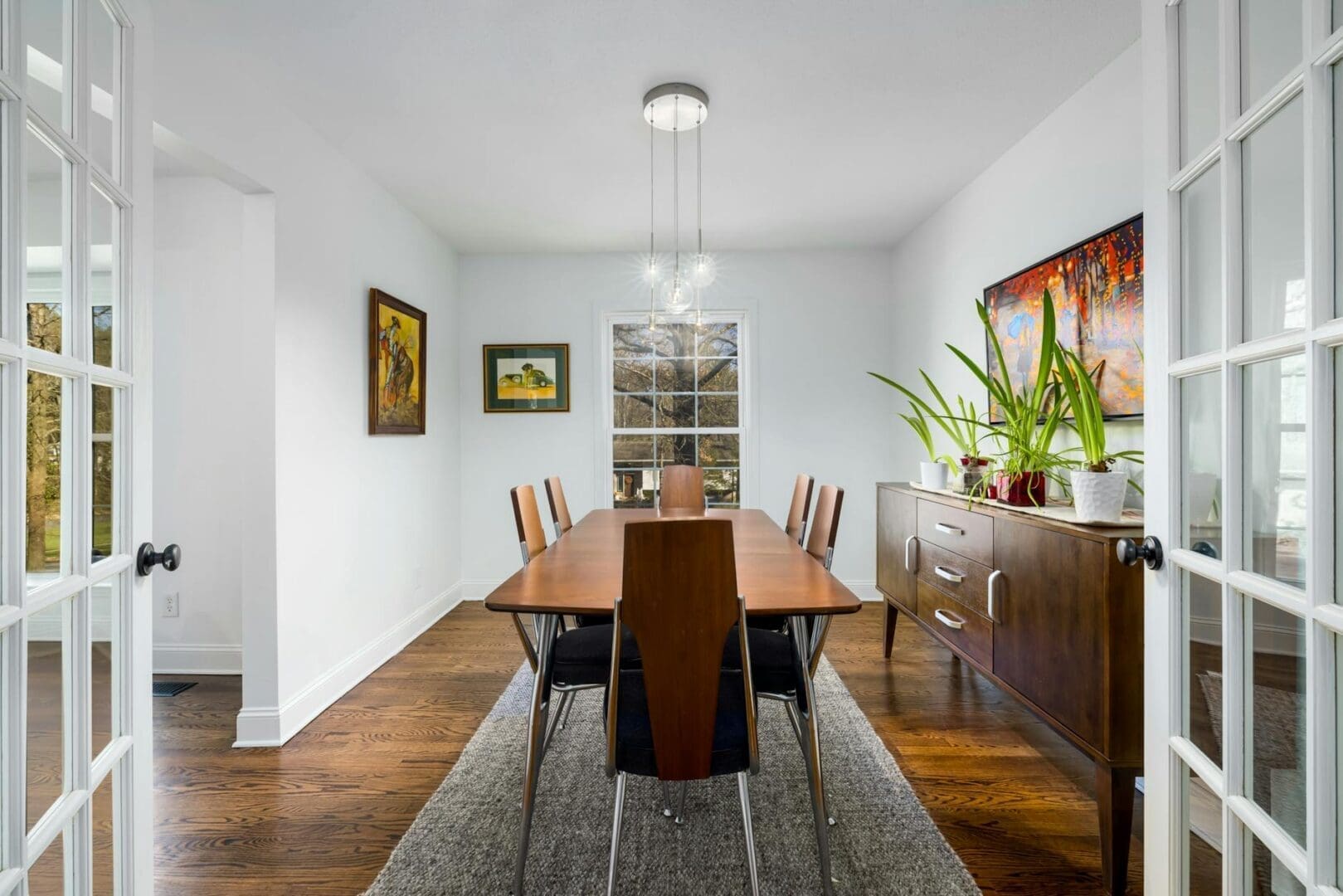
The classic centered layout works well here: place your table in the middle of the room with a chandelier or pendant light hanging 30-36 inches above the tabletop. This creates symmetry and allows even clearance on all sides. You’ll have room for a credenza or buffet along one wall, which adds valuable storage and serving space during meals.
Consider traffic flow when positioning your table. If there’s a clear path from the kitchen to another room, angle your table slightly or offset it to keep that walkway open. You don’t want guests squeezing past chair backs every time someone needs to pass through.
This room size also accommodates accent pieces that enhance the space without crowding it—a bar cart in the corner, a china cabinet along the wall, or even a small reading chair by a window. These elements make the room feel intentional rather than sparse.
Large Dining Rooms (Over 200 Square Feet)
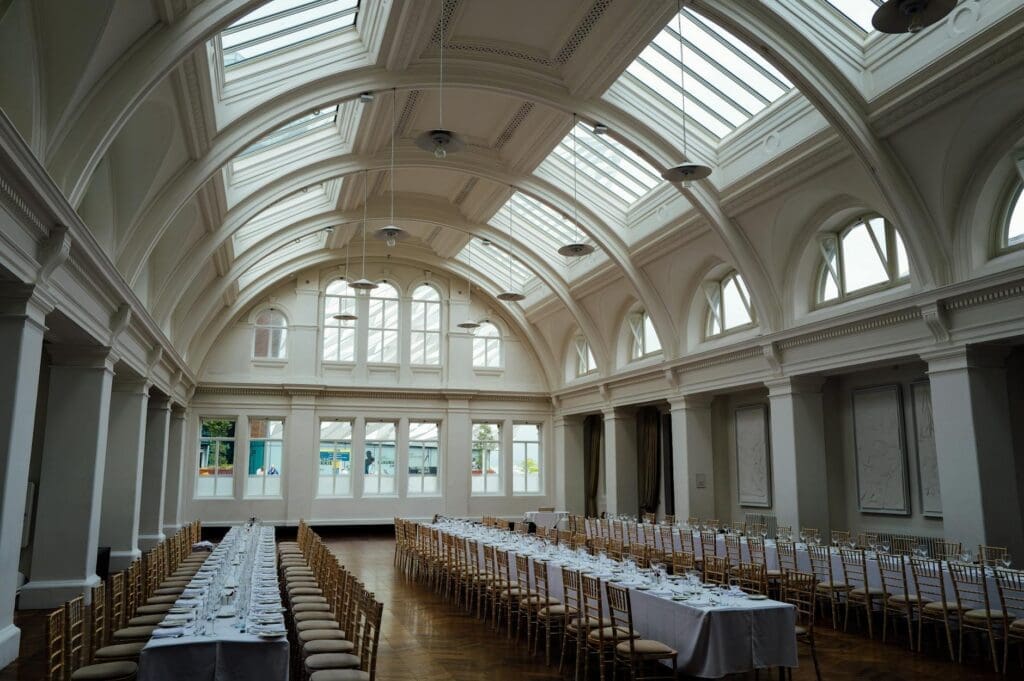
A spacious dining room presents a different challenge: how to create intimacy in a room that could feel cavernous. An oversized table is your anchor piece here. Look for options 84-120 inches long that can seat 8-12 people. High-end dining tables in this range start around $2,000 and can easily reach $5,000-$10,000 for designer pieces or custom builds.
The key to large rooms is creating zones. Your dining table and chairs form the primary zone, but you can add a secondary seating area with a small sofa and side table near a window, or create a bar station with a cabinet and a pair of stools. This layered approach makes the room feel purposeful rather than empty.
Don’t push all your furniture against the walls—that actually makes large rooms feel bigger and less inviting. Float your table away from the walls, leaving at least 48 inches of clearance, and use area rugs to define the dining zone. A rug should extend at least 24 inches beyond the table edges on all sides so chairs remain on the rug even when pulled out.
Large-scale artwork, an impressive chandelier, or a dramatic mirror can help fill vertical space and draw the eye upward, which balances the room’s proportions and creates a more intimate atmosphere.
Whatever your room size, the right layout makes dining more comfortable and your space more functional. Start with accurate measurements, choose appropriately scaled furniture, and arrange pieces to encourage both easy movement and good conversation. Your dining room should invite people to linger, and a thoughtful layout makes that happen naturally.
Shopping for a dining table when you have a family of six means you need something that works for Tuesday night homework sessions, weekend pancake breakfasts, and holiday dinners with grandparents—all without taking over your entire dining room. The right table makes family life easier. The wrong one? You’ll feel it every single day. Let’s […]
If you’re working with a compact dining area, you’ve probably already discovered that square and rectangular tables can feel like furniture Tetris. Round dining tables are often the smartest solution for small spaces—they eliminate sharp corners that eat up valuable square footage, create better traffic flow, and somehow make a room feel more spacious even […]
There’s nothing quite like the panic of realizing your dining table seats six but twelve people are coming for dinner. If you love hosting but don’t have space for a permanently large table, an expandable dining table might be your perfect solution. These clever pieces let you keep things cozy for everyday meals while accommodating […]