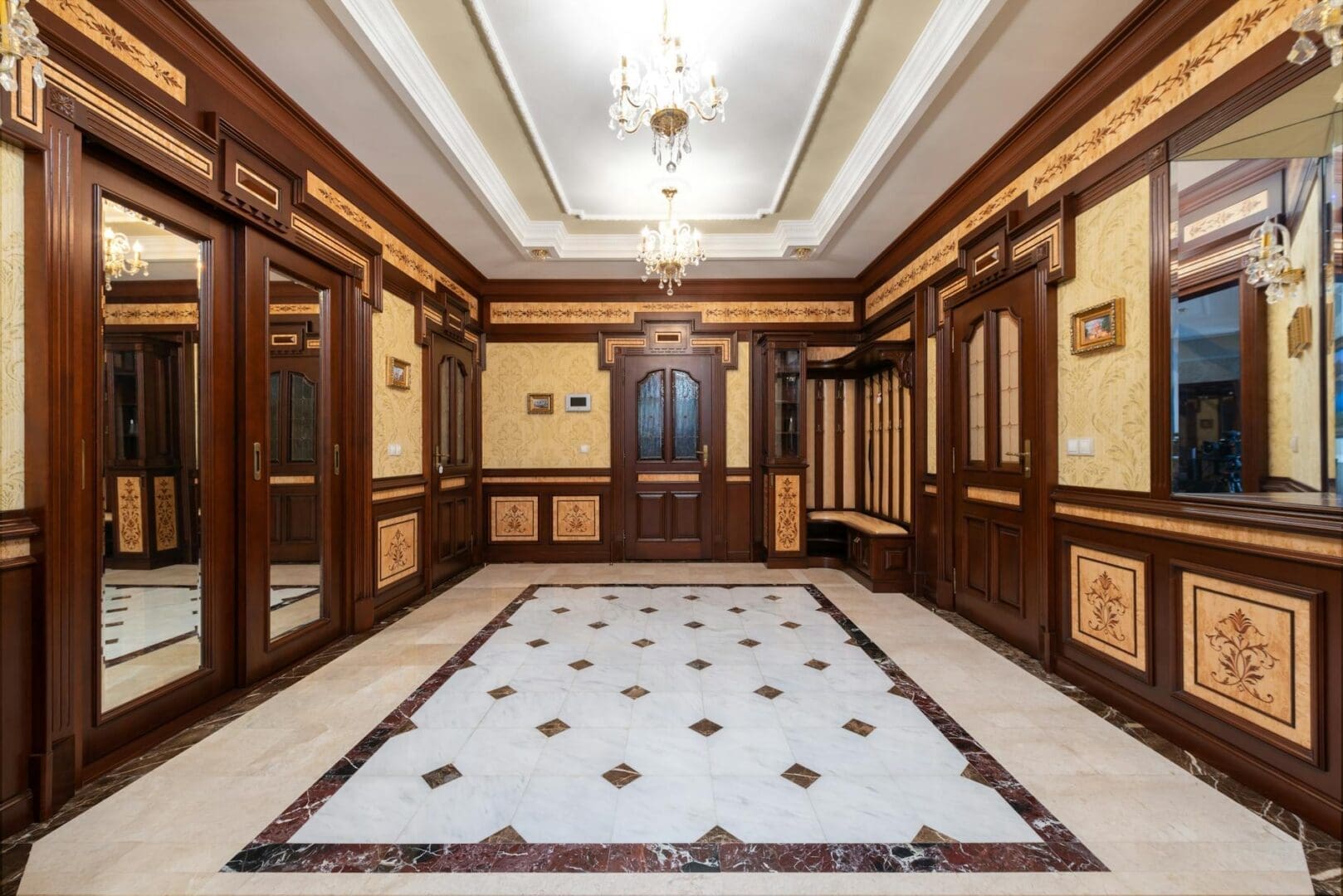
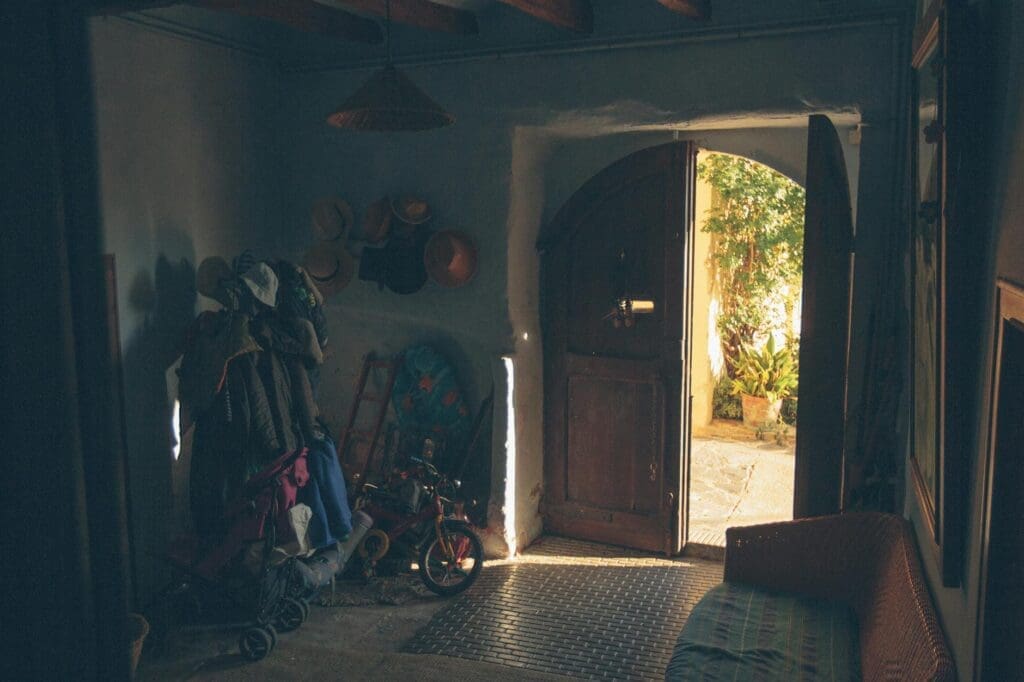
Your entryway sets the tone for your entire home, and the lighting you choose plays a starring role in that first impression. Too small, and it disappears. Too large, and it overwhelms. Get it right, though, and you’ll create a welcoming space that makes both you and your guests feel instantly at home. Let’s walk through exactly what to consider so you can find the perfect fixture.
Getting the Size and Scale Right
This is where most people stumble, but there’s actually a simple formula to follow. For foyers and entryways, add the length and width of your space (in feet), then convert that number to inches. That’s your ideal fixture diameter. So a 10-foot by 12-foot entryway works well with a 22-inch wide chandelier or pendant.
Height matters just as much. If you have a two-story foyer, you have room for a dramatic statement chandelier that can be 5 to 6 feet tall. For standard 8 to 9-foot ceilings, look for fixtures between 20 to 27 inches in height. The bottom of your fixture should hang at least 7 feet above the floor to prevent any tall guests from encountering it unexpectedly.
When your entryway includes stairs, position the fixture so the bottom aligns roughly with the second-floor landing. This creates visual balance and ensures adequate lighting for both levels.
Choosing Between Fixture Types
Your ceiling height and entryway style will guide you toward the right fixture type. Chandeliers work beautifully in spaces with at least 9-foot ceilings and create instant elegance, whether you prefer traditional crystal designs or modern geometric shapes. Expect to spend anywhere from $200 for budget-friendly options to $2,000-plus for designer pieces.
Pendant lights offer a more contemporary feel and work particularly well in smaller entryways or those with lower ceilings. A single large pendant or a cluster of smaller ones can make a striking statement. These typically range from $150 to $800.
For ceilings at or below 8 feet, semi-flush and flush mount fixtures are your best friends. They’ve come a long way from the boring builder-grade options of the past. Look for designs with interesting metalwork, glass details, or drum shades that add personality without dropping too low. Quality options start around $100 and go up to $600.
Matching Style and Finish to Your Home
Your entryway lighting should hint at the design story throughout your home. Traditional homes shine with brass or bronze fixtures featuring classic details like curved arms or alabaster shades. Modern spaces call for clean lines, geometric shapes, and finishes like matte black, brushed nickel, or polished chrome.
Transitional fixtures bridge both worlds with simple silhouettes elevated by interesting materials like seeded glass, natural rope wrapping, or mixed metal finishes. These versatile pieces work with various decorating styles and won’t feel dated in a few years.
Consider the other metal finishes in your entryway too. Your lighting doesn’t need to match your door hardware exactly, but it should coordinate. If you have warm-toned metals like brass or oil-rubbed bronze elsewhere, a similar finish in your lighting creates cohesion.
Practical Considerations for Daily Living
Think beyond aesthetics to how you’ll actually use this space. Bulb type matters more than you might think. LED-compatible fixtures save money long-term and work with dimmer switches, letting you adjust brightness from bright and welcoming when guests arrive to softer and more intimate for everyday use.
If your entryway lacks natural light, choose fixtures with multiple bulbs or higher wattage capacity. Three to four bulbs providing a combined 300 to 400 watts (or LED equivalent) typically light an average entryway well.
Installation requirements deserve thought too. Some chandeliers require professional installation, especially if you’re replacing a simple flush mount with a heavy chandelier that needs additional ceiling support. Factor in $150 to $300 for electrician costs if you’re going this route.
Finding the right entryway lighting brings together measurements, style preferences, and practical needs. Start by measuring your space and ceiling height, then narrow down fixture types that work with those dimensions. From there, choose a style that reflects your home’s character and includes features like dimmers and LED compatibility that make daily life easier. The result will be an entryway that welcomes you home beautifully every single day.
A cramped entryway with shoes scattered everywhere isn’t just frustrating—it’s usually the first thing you and your guests see when walking through the door. The good news? Even the smallest entryway can stay organized with the right shoe rack. The challenge is finding one that actually fits your space without making it feel even more […]
That pile of shoes by the door isn’t going to organize itself, and your coats deserve better than being draped over the nearest chair. A coat rack with built-in shoe storage solves both problems in one piece of furniture, making it perfect for entryways, mudrooms, or even bedroom corners where clutter tends to accumulate. The […]
A cramped entryway doesn’t mean you’re doomed to trip over piles of coats or hunt for misplaced keys every morning. The right coat rack can transform even the tiniest entry into an organized, welcoming space. The challenge is finding one that holds what you need without making your small entryway feel even smaller. Consider Your […]