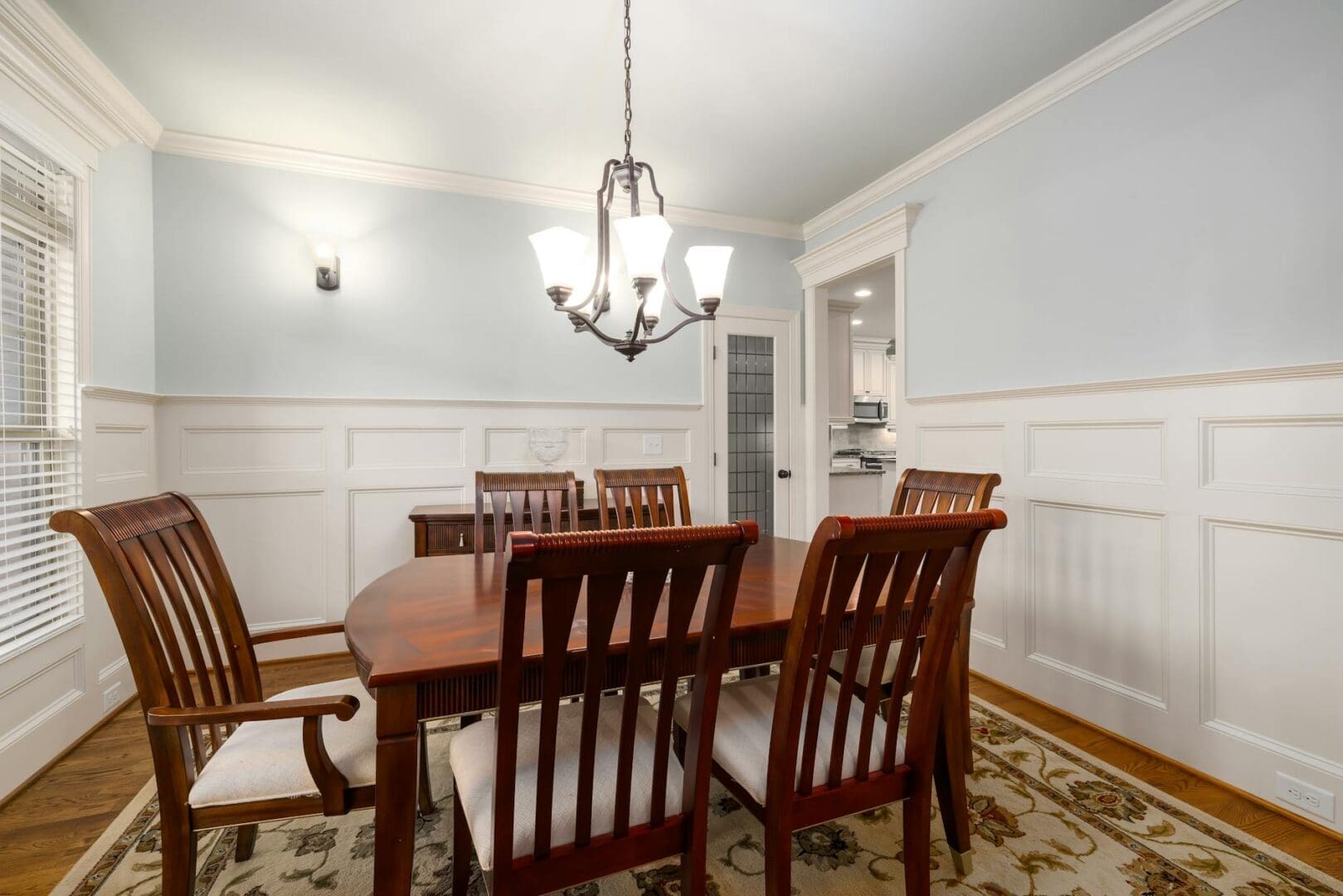
There’s something magical about a beautiful chandelier that transforms a dining room from simply functional to genuinely special. But standing in a lighting showroom or scrolling through endless options online, you might feel overwhelmed by the choices. Too big and it’ll dominate the room. Too small and it looks like an afterthought. The good news? Getting the right chandelier isn’t as complicated as it seems once you know what to look for.
Getting the Size Right
This is where most people get stuck, but there’s actually a straightforward formula to follow. Measure your dining table’s length and width in feet, add those two numbers together, and convert that sum to inches—that’s your ideal chandelier diameter. For example, a table that’s 6 feet by 4 feet would call for a chandelier around 10 inches in diameter (6+4=10).
For rectangular tables, you can also consider linear chandeliers or multiple pendants. A good rule: your fixture should be about one-half to two-thirds the width of your table. This creates visual balance without overwhelming the space. If your table is 40 inches wide, look for chandeliers between 20-27 inches wide.
Height matters just as much. Your chandelier should hang 30-36 inches above the table surface. This height keeps it out of sightlines during conversation while providing proper illumination. If you have especially high ceilings (above 9 feet), add 3 inches of chain or rod length for every additional foot of ceiling height.
Choosing the Right Style
Your chandelier should feel like it belongs in your home, not like it wandered in from someone else’s design board. Traditional crystal chandeliers with their prismatic drops work beautifully in formal spaces and pair well with classic or transitional decor. Expect to spend anywhere from $300 for basic designs to $2,000+ for genuine crystal pieces.
Modern and contemporary dining rooms shine with geometric chandeliers, Sputnik designs, or sleek drum shades. These typically range from $250-$1,500 depending on materials and size. Farmhouse and rustic styles call for wood bead chandeliers, wrought iron fixtures, or wagon wheel designs, usually priced between $200-$1,000.
Don’t forget about mixed-metal finishes, which have become incredibly versatile. Brass and bronze add warmth, while chrome and nickel bring a cooler, more contemporary feel. Black and matte black fixtures work across nearly every style, from industrial to modern farmhouse.
Understanding Your Lighting Needs
A chandelier isn’t just decorative—it’s your primary light source for meals, homework, and game nights. For proper dining room illumination, you’ll want 30-40 lumens per square foot. A 120-square-foot dining room needs roughly 3,600-4,800 lumens total.
Pay attention to bulb type compatibility. LED-compatible fixtures offer the most flexibility and energy efficiency. Look for chandeliers that accept multiple bulbs rather than a single source—this distributes light more evenly and gives you dimming options. Speaking of which, installing a dimmer switch is one of the best investments you can make. It lets you shift from bright task lighting during dinner prep to softer ambiance for entertaining.
Consider whether you want uplighting, downlighting, or both. Uplighting bounces off the ceiling and creates ambient glow, while downlighting focuses illumination on the table. Candelabra-style chandeliers typically provide uplighting, while drum or bowl fixtures direct light downward.
Material and Maintenance Considerations
Think about your real life before falling in love with a fixture. Crystal chandeliers are stunning but require regular dusting and occasional deep cleaning to maintain their sparkle. Glass and metal fixtures are more forgiving and typically need just a quick wipe-down every few months.
If your dining room connects to the kitchen, consider how cooking residue might affect your chandelier. Sealed or smooth surfaces clean more easily than intricate metalwork or fabric shades. For homes with high humidity, choose rust-resistant finishes like stainless steel, brass, or powder-coated metals.
Budget fixtures ($150-$400) often use painted finishes that may chip over time, while mid-range options ($400-$1,200) typically feature better-quality materials and finishes. Splurge-worthy pieces ($1,200+) offer superior craftsmanship, genuine materials like hand-blown glass or solid brass, and usually come with better warranties.
The right chandelier pulls your entire dining room together and creates the atmosphere you want for every meal and gathering. Take your measurements, consider your daily needs alongside your style preferences, and trust your instincts. When you find a fixture that checks the practical boxes and makes you smile every time you see it, you’ve found the one.
Did You Know? The Declaration of Independence Was Likely Written in a Windsor Chair As America celebrates 250 years of independence, it’s worth looking at one of the quieter witnesses to that history: the humble Windsor chair. Thomas Jefferson is said to have drafted the Declaration of Independence while seated in an unusual revolving Windsor […]
Shopping for a dining table when you have a family of six means you need something that works for Tuesday night homework sessions, weekend pancake breakfasts, and holiday dinners with grandparents—all without taking over your entire dining room. The right table makes family life easier. The wrong one? You’ll feel it every single day. Let’s […]
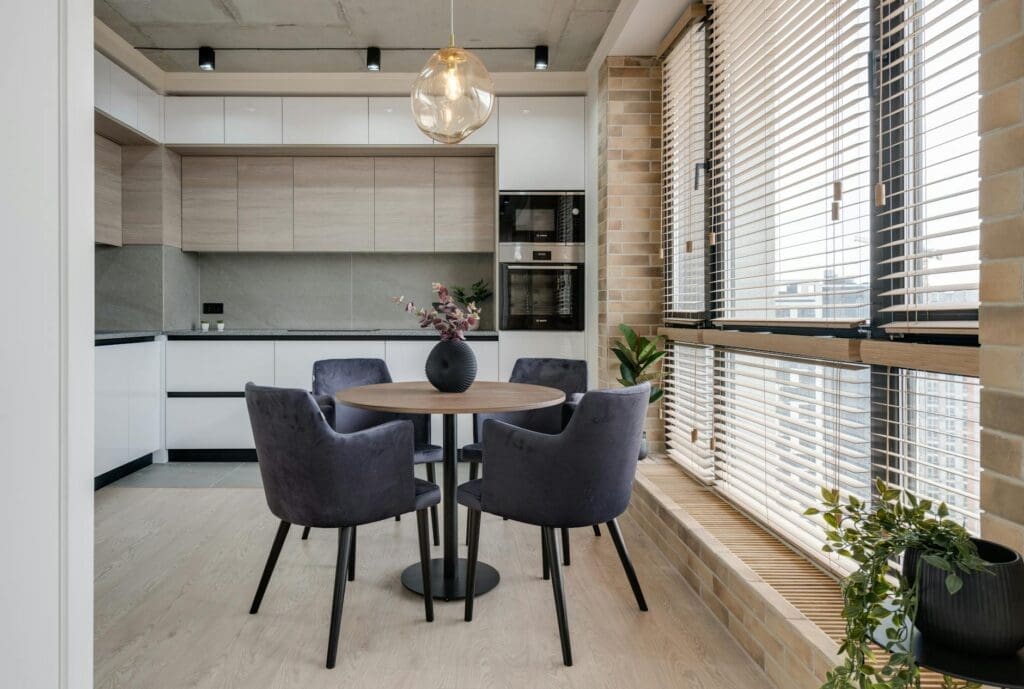
If you’re working with a compact dining area, you’ve probably already discovered that square and rectangular tables can feel like furniture Tetris. Round dining tables are often the smartest solution for small spaces—they eliminate sharp corners that eat up valuable square footage, create better traffic flow, and somehow make a room feel more spacious even […]