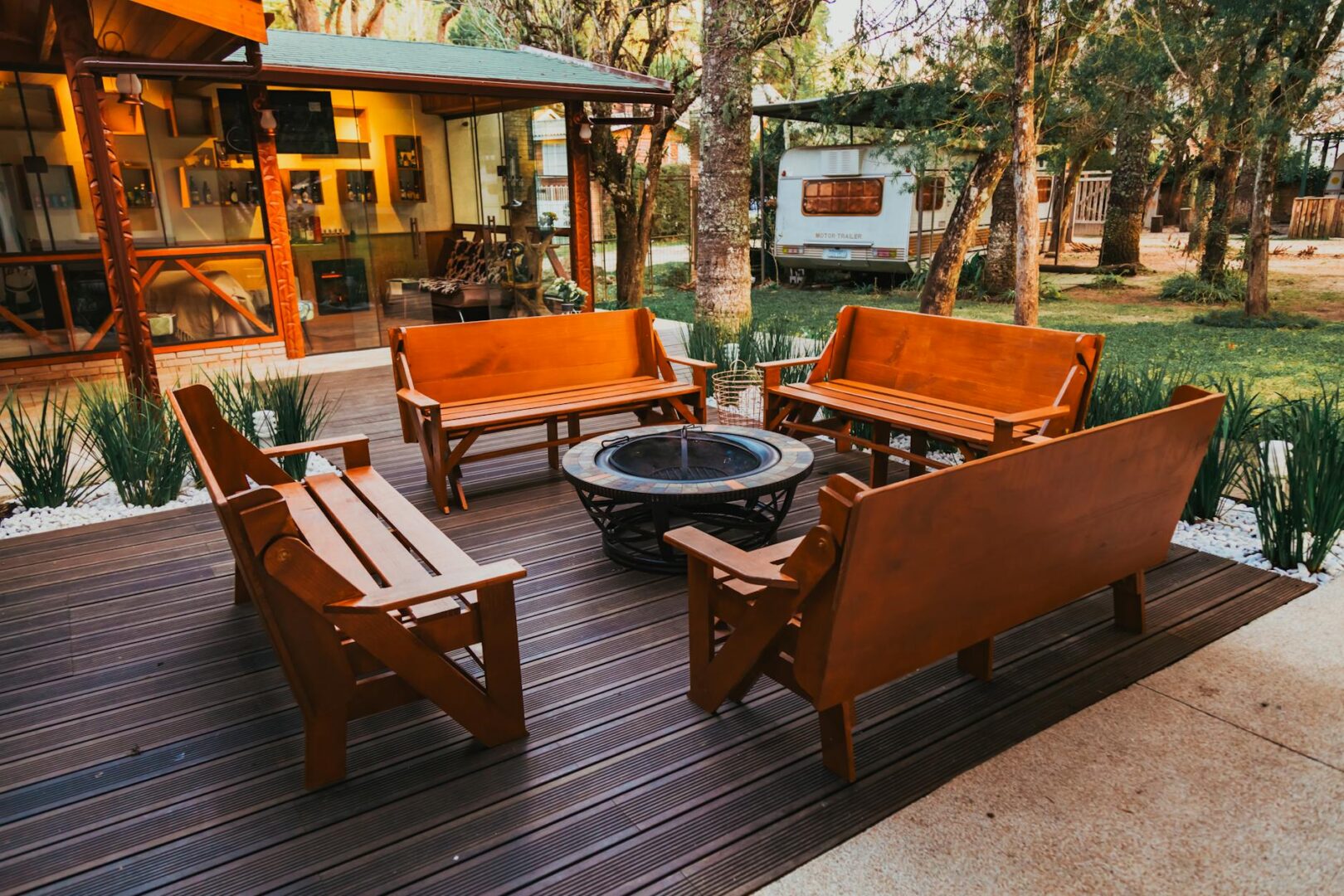
You’ve got the fire pit, but standing there trying to adjust logs with a random stick from the yard isn’t exactly the sophisticated outdoor living moment you imagined. The accessories market wants to sell you everything from decorative poker sets to specialized ash vacuums, but what do you genuinely need versus what’s just taking up space in your shed?
Let’s cut through the clutter and focus on the essentials that actually make fire pit ownership easier, safer, and more enjoyable.
The Non-Negotiables: Safety and Maintenance Tools
Some accessories aren’t optional—they’re about keeping your home safe and your fire pit functional. A fire pit lid or cover is your first essential purchase. It keeps out debris, prevents water accumulation that leads to rust, and stops curious animals from exploring. Expect to spend $30-$80 for a basic vinyl cover, or $100-$200 for a heavy-duty canvas or metal option that’ll last years.
You’ll also need a proper poker and tongs set. Skip the decorative brass sets that look pretty but feel flimsy. Look for tools that are at least 30 inches long (keeping your hands safely away from heat), made from thick steel or iron, and have comfortable grips. A solid set runs $40-$100. Many people think they can skip this, but adjusting burning logs with inadequate tools is both dangerous and frustrating.
For wood-burning pits, an ash removal tool or bucket makes cleanup infinitely easier. Metal ash buckets with lids ($25-$60) let you safely remove and dispose of ashes while they’re still warm, rather than waiting days for complete cooling.
Comfort Accessories That Actually Matter
The right accessories transform your fire pit from a nice feature into a space you’ll use constantly. A spark screen is crucial if your fire pit didn’t come with one—it contains flying embers without blocking your view of the flames. Look for screens with easy-access doors for adding logs without removing the entire cover. Budget options start around $50, while custom-fit screens for specific pit models run $100-$200.
If you’re serious about cooking over your fire, a grill grate designed for your pit size makes it possible. Adjustable height grates ($60-$150) give you temperature control, while swing-away arms ($100-$250) let you move food on and off the heat easily. Make sure you measure your pit’s diameter carefully—grates that don’t fit properly are unsafe and annoying.
Heat-resistant gloves specifically designed for fire handling ($20-$40) are worth having if you cook outdoors regularly. Regular oven mitts won’t cut it for extended heat exposure or handling cast iron over open flames.
Fuel and Fire-Starting Essentials
How you start and fuel your fires impacts both ease of use and safety. A quality fire starter kit beats lighter fluid every time—look for options with natural firestarters, fatwood sticks, or fire-starting squares. These products ($15-$35) light easily without chemical smells or dangerous flare-ups.
For wood storage, a log rack near your fire pit area ($40-$150) keeps fuel dry, accessible, and looking intentional rather than like a random pile. If you use a gas fire pit, keep it simple—you’ll just need lava rocks or fire glass to cover the burner, which typically costs $30-$80 depending on the size of your pit and whether you choose basic lava rock or decorative glass.
A moisture meter for firewood ($15-$30) might sound excessive, but burning wet wood creates excessive smoke and creosote buildup. If you source your own wood or buy in bulk, it’s a small investment that improves every fire.
What You Can Probably Skip
The accessories market is full of items that sound useful but rarely get used. Decorative fire pit surrounds and ornamental screens often interfere with actual fire maintenance. Elaborate tool sets with six or more pieces give you duplicates you don’t need—a poker, tongs, and maybe a brush cover everything. Fire pit tables that fit around your pit sound clever but usually make it harder to access the fire for maintenance.
Specialized cleaning products aren’t necessary—basic tools and elbow grease handle most maintenance. And those decorative ceramic logs for gas pits? The standard lava rock works just as well for a fraction of the price.
Start with the safety essentials and one or two comfort items that match how you’ll actually use your fire pit. You can always add more accessories later, but you’ll probably find that a well-chosen core set of tools serves you better than a shed full of specialized gadgets. The best fire pit setup is one you’ll actually use regularly, not one that requires ten minutes of equipment wrangling before you can light a match.
There’s something wonderfully ironic about the Adirondack chair’s origin story. Back in 1903, Thomas Lee was vacationing in Westport, New York, frustrated by the lack of comfortable outdoor seating that could handle the sloped terrain of his property. So he built a wide-backed, slatted chair with a reclined seat—and accidentally created an icon. Today, you’ll […]
Nothing pulls together a patio quite like an outdoor rug—it defines your seating area, adds comfort underfoot, and makes the whole space feel more intentional. But get the size wrong, and it can look like a bath mat floating in the middle of your deck or a carpet that swallows your furniture whole. The good […]
You’ve found the perfect outdoor rug to tie your patio together, but three months later it’s faded, mildewed, or falling apart. Sound familiar? The material makes all the difference when it comes to outdoor rugs that actually last. Unlike indoor rugs that live cushy lives away from the elements, your outdoor rug needs to handle […]