You’ve been scrolling through vintage furniture listings for weeks, bookmarking sideboards that catch your eye. But when it comes time to actually buy one, the questions pile up: Is that teak or walnut? Will it fit your dining room? Should you spend $800 or $2,500? Mid-century modern sideboards are investment pieces that anchor a room, so let’s break down exactly what to look for.
Getting the Size and Proportions Right
The classic MCM sideboard typically runs between 60 and 72 inches wide, though you’ll find compact versions around 48 inches and statement pieces stretching to 84 inches or more. Before you fall in love with a specific piece, measure your wall space and leave at least 6 inches of breathing room on each side—these pieces look cramped when wedged in too tightly.
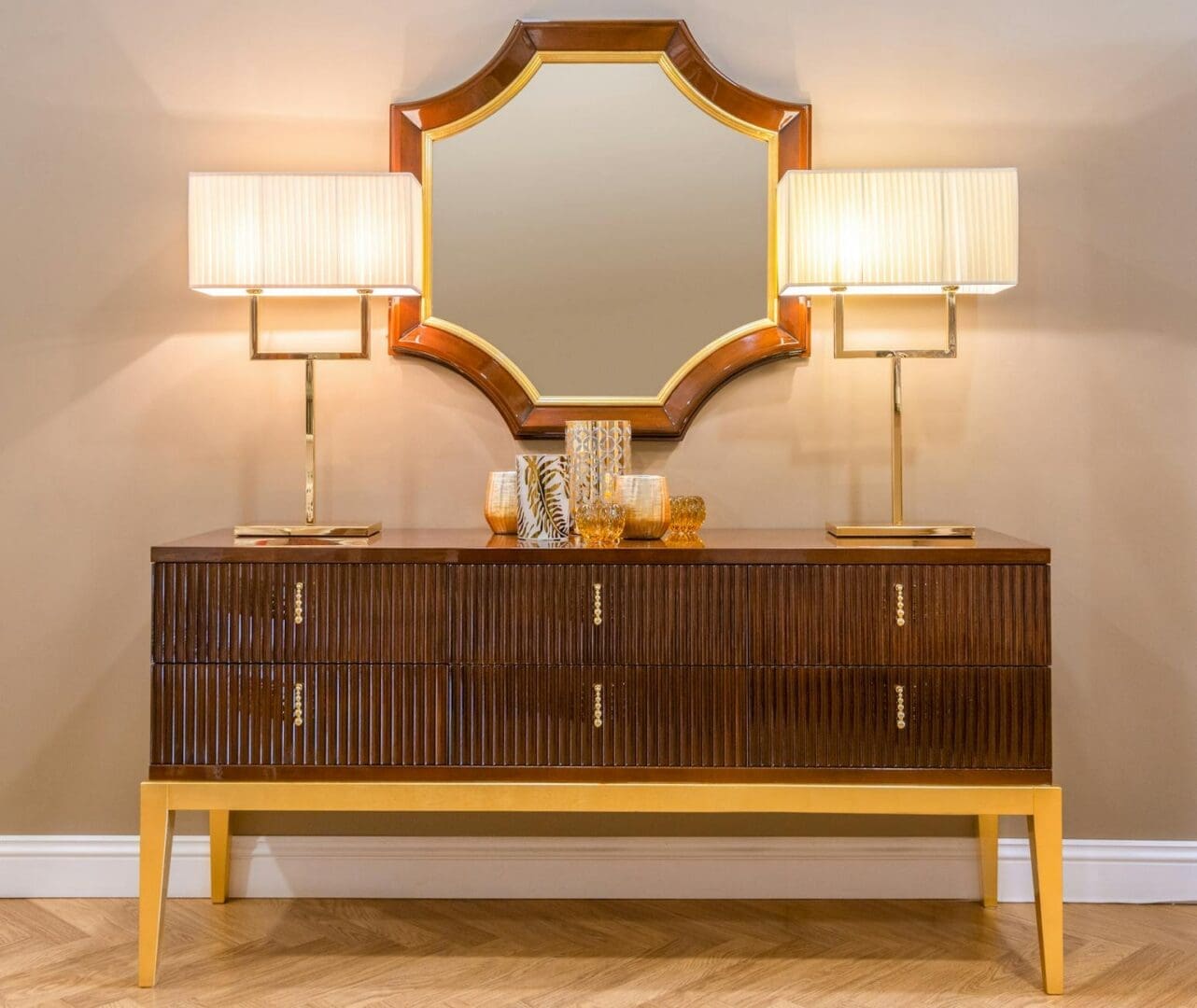
Height matters more than you might think. Most authentic mid-century sideboards sit between 28 and 32 inches tall, which creates that signature low-slung profile. If you’re planning to hang art or a mirror above it, this lower height works beautifully. Depth usually ranges from 16 to 20 inches, giving you substantial storage without jutting too far into the room.
Consider what you’re storing, too. Those sliding doors hide adjustable shelves perfect for serving pieces and barware, while drawers (usually lined with felt or cedar in quality pieces) handle linens and flatware. If you’re a vinyl collector, check interior dimensions—some sideboards accommodate records perfectly, while others fall just short.
Materials and Construction Quality
The wood species largely determines both the look and the price tag. Teak dominates the mid-century sideboard world, prized for its rich honey tones and natural durability. Walnut offers deeper, chocolate-brown hues with dramatic grain patterns. Rosewood brings luxury-level richness but commands premium prices. You’ll also find well-made pieces in oak, which tends to be lighter and more affordable.
Quality construction reveals itself in the details. Look for dovetail joints in drawers—those interlocking “fingers” signal solid craftsmanship. The doors should glide smoothly on their tracks, and tambour doors (those slatted roll-top styles) shouldn’t stick or separate. Tapered legs should feel sturdy, not wobbly, and if there’s a designer label or manufacturer stamp inside a drawer, that’s a good sign you’re looking at something legitimate.
Vintage pieces often show wear—minor scratches, slight fading, or hardware patina actually add character. But avoid pieces with deep gouges, water damage rings, or veneer bubbling unless you’re prepared for restoration work.
Authentic Vintage vs. Modern Reproductions
Here’s where it gets interesting. Genuine vintage sideboards from the 1950s-70s typically start around $1,200 and can easily reach $3,000-$5,000 for designer pieces by makers like Arne Vodder, Hans Wegner, or American manufacturers like Bassett and Broyhill. You’re paying for craftsmanship, solid wood construction, and authenticity.
Modern reproductions offer the MCM aesthetic at friendlier price points—usually $600-$1,500. These newer pieces often use veneers over engineered wood rather than solid hardwood, and the joinery won’t match vintage quality. That doesn’t make them bad choices, especially if you love the style but need to stick to a budget. Just know what you’re getting.
West Elm, Article, and Room & Board all make well-designed MCM-inspired sideboards with clean lines and quality finishes. They lack the vintage soul but offer warranties and consistent sizing that fits modern electronics and storage needs.
Making It Work in Your Space
A mid-century sideboard isn’t just storage—it’s a focal point. These pieces shine in dining rooms as stylish buffets, but they’re equally at home in living rooms (hello, media storage), entryways (drop zones with serious style), or even bedrooms as low dressers.
The beauty of MCM design is its versatility. A teak sideboard pairs just as well with contemporary furniture as it does with other vintage pieces. The warm wood tones complement both neutral and bold wall colors, and those clean lines prevent the piece from overwhelming smaller spaces.
Think about functionality before you buy. Need cable management for media equipment? Look for pieces with removable back panels or pre-cut cord access. Using it in a dining room? Prioritize drawer space for linens. Setting up a home bar? Interior shelving for bottles and glassware becomes essential.
The right mid-century modern sideboard brings warmth, storage, and that perfectly balanced aesthetic to your home. Whether you’re hunting for an authentic vintage treasure or choosing a quality modern reproduction, focus on proportions that suit your space, construction quality that’ll last, and a finish that makes you happy every time you walk past it. Trust your instincts—when you find the right piece, you’ll know.
Shopping for a dining table when you have a family of six means you need something that works for Tuesday night homework sessions, weekend pancake breakfasts, and holiday dinners with grandparents—all without taking over your entire dining room. The right table makes family life easier. The wrong one? You’ll feel it every single day. Let’s […]
Standing in front of your kitchen island or home bar, trying to decide between swivel and stationary bar stools, you’re probably wondering if that rotating seat is worth the extra cost—or if it’s just a gimmick. The truth is, both styles have their place, and the right choice depends on how you actually use your […]
There’s nothing worse than ordering bar stools online, waiting for delivery, and discovering they’re way too tall or awkwardly low for your counter. You’re left hunching over your breakfast or dangling your feet like a kid at the grown-ups’ table. The good news? Getting the right bar stool height is actually straightforward once you know […]