If your bedroom feels more like a place you collapse at the end of the day rather than a sanctuary you actually want to spend time in, you’re not alone. Modern bedroom design in 2026 is all about creating spaces that balance minimalist aesthetics with genuine comfort—think clean lines that don’t sacrifice coziness, and technology that enhances rest rather than disrupting it.
The Foundation: Platform Beds and Low-Profile Frames
The modern bedroom starts with the bed, and platform beds continue to dominate in 2026. These low-profile frames create an open, airy feeling that makes even smaller bedrooms feel more spacious. Look for designs with integrated storage drawers underneath—this solves the eternal problem of where to stash extra bedding without adding bulky dressers.
When shopping, you’ll find platform beds in three main categories. Budget-friendly options in engineered wood start around $300-$500 and work beautifully for apartments or starter homes. Mid-range upholstered platforms ($700-$1,200) add softness and come in neutral linens or textured bouclés that feel current without being trendy. Splurge-worthy solid wood or leather frames ($1,500-$3,000) become genuine investment pieces that anchor your room for years.
Pay attention to height—modern platforms typically sit 12-18 inches off the ground, creating that signature floating look while remaining practical for most people to get in and out of comfortably.
Color Palettes That Actually Help You Sleep
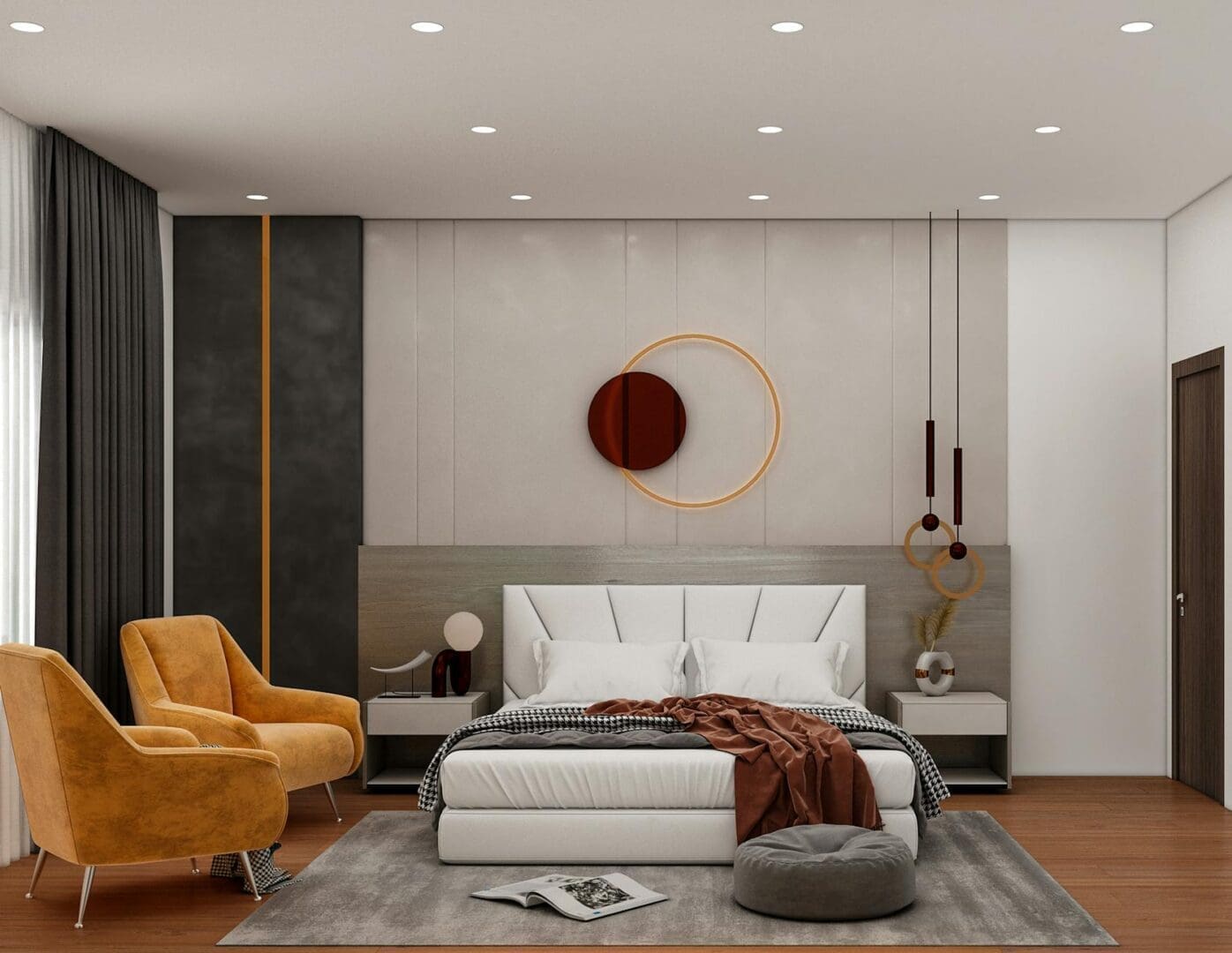
The all-white minimalist bedroom is officially over. Modern bedrooms in 2026 embrace warmer, more grounded color schemes that research shows actually promote better rest. Think soft terracottas, warm grays with brown undertones, deep olive greens, and the surprising newcomer—muted navy blues.
The key is creating a tonal palette rather than stark contrasts. Start with one main wall color, then layer in bedding and furniture in shades two or three tones lighter or darker. This creates visual interest without the stimulating effect of bold contrasts.
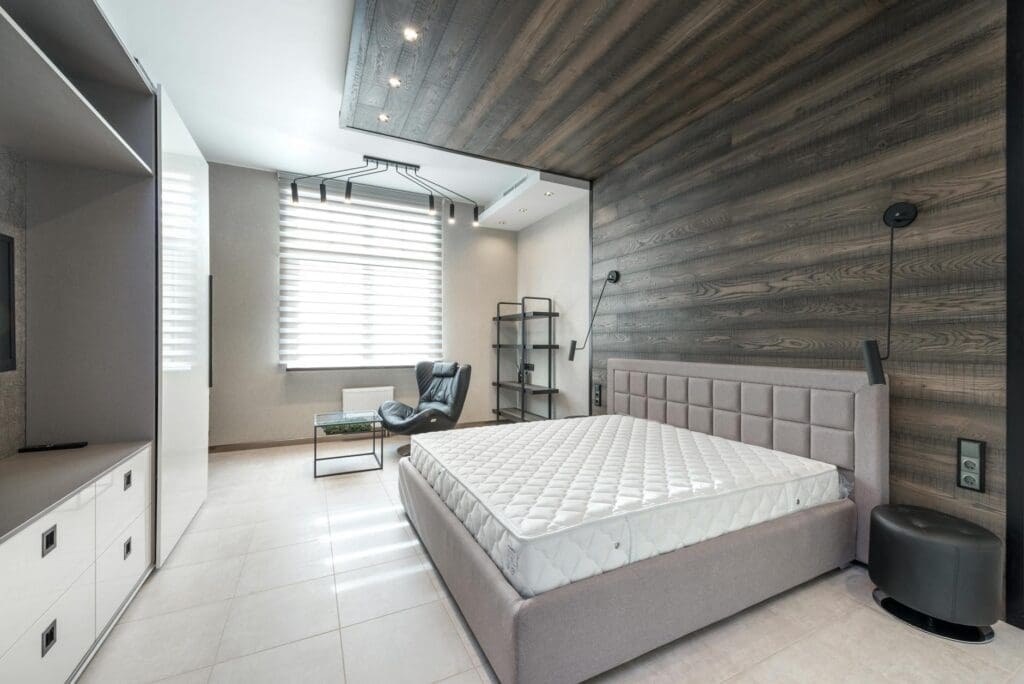
Accent walls have evolved too. Instead of one dramatically different color, consider textured wall treatments—wood slat panels, subtle geometric wallpaper, or even concrete-effect finishes that add depth without overwhelming the space. These typically run $150-$400 for a standard accent wall and make a significant impact.
Smart Storage That Doesn’t Look Like Storage
Modern design hides the clutter without sacrificing accessibility. Floating nightstands with single drawers keep surfaces clear while providing just enough storage for essentials. Wall-mounted shelving above the bed—positioned at least 8-10 inches above the headboard—displays a few meaningful objects without the visual weight of traditional furniture.
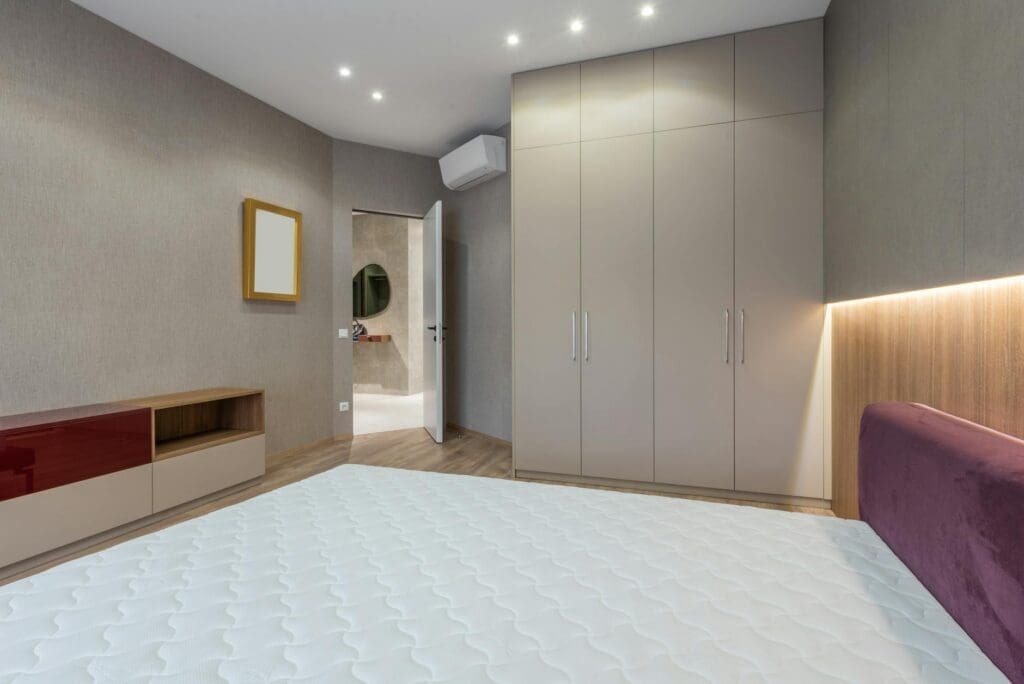
For clothing storage, consider the wardrobe comeback. Modern armoires with clean lines and integrated lighting offer a sophisticated alternative to closets or visible clothing racks. Budget versions in laminate start around $400, while solid wood pieces with soft-close doors and customizable interiors range from $1,200-$2,500.
The real game-changer is under-bed storage that’s actually designed for it. Look for bed frames with hydraulic lift mechanisms that raise the entire mattress platform, revealing cavernous storage underneath. It’s more expensive upfront ($800-$1,800) but eliminates the need for additional furniture.
Lighting Layers and Smart Controls
Modern bedrooms need three types of lighting working together: ambient overhead lights on dimmers, task lighting for reading, and accent lighting for atmosphere. The twist in 2026 is how these integrate with smart controls.
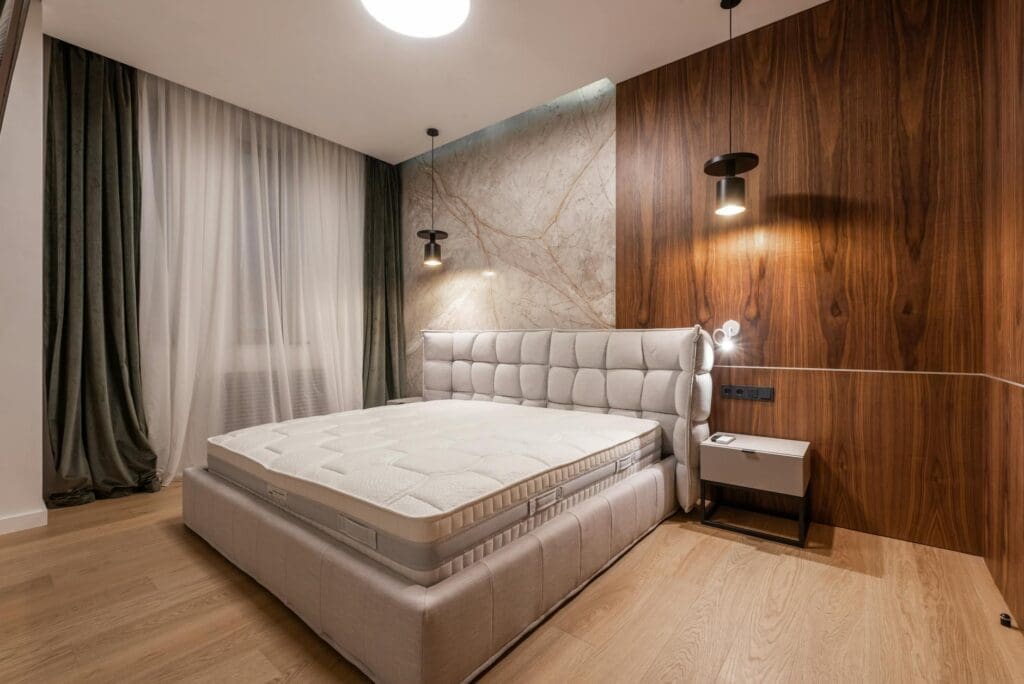
Pendant lights flanking the bed replace traditional table lamps, freeing up nightstand space. Look for adjustable models with warm LED bulbs (2700K-3000K) that won’t interfere with your sleep cycle. Budget-friendly options start around $60 per pendant, while designer fixtures run $200-$400 each.
Smart bulbs and switches let you create “scenes” for different times of day—bright and energizing for mornings, warm and dim for evenings. Even basic smart lighting systems ($100-$200 for a bedroom setup) make a noticeable difference in how the space functions throughout the day.
Your bedroom should work as hard for you as you do for everyone else. The modern bedroom designs gaining traction in 2026 aren’t about following rigid rules—they’re about creating a personal space that genuinely helps you rest, recharge, and face whatever comes next. Start with one major change, whether that’s upgrading your bed frame or rethinking your lighting, and build from there as your budget allows.
If you’ve been tossing and turning on an old mattress, you already know it’s time for a change. But walk into any mattress store or browse online, and you’re immediately hit with the big question: memory foam or innerspring? Both have passionate fans, and honestly, both can give you great sleep. The real answer depends […]
You’re shopping for a mattress online, and every product description mentions firmness: “medium-firm,” “plush,” “extra-firm.” But what do these terms actually mean for your sleep? The frustrating truth is that mattress firmness isn’t standardized across brands, which makes comparing options genuinely confusing. One company’s “medium” might feel like another’s “firm.” Let’s break down what firmness […]
If you weigh over 230 pounds, you’ve probably experienced the frustration of a mattress that sags within a year, leaves you waking up with back pain, or feels like you’re sleeping in a hammock. The truth is, most standard mattresses aren’t built with heavier bodies in mind. But the right mattress can give you the […]